The Sociological Imagination and Mindfulness: Knowledge Acquisition, Thoughtful Choice, and Possibility

Photo by Simon Migaj on Unsplash

When people think of, and talk about, mindfulness, they are usually drawing from a frame that mostly focuses on the individual and their psychology. That is the most popular way to think about mindfulness.

However, I think there are possible benefits to considering mindfulness from a sociological perspective, which might have implications for society as a whole.

Let’s first take a look at what mindfulness is, which will require examining the psychology of mindfulness. We will also take a practical look at the practice of mindfulness, and lastly will consider a new way to look at mindfulness, which is through a sociological perspective.

Mindfulness and Individual Psychology

I’ve practiced mindfulness and meditation the past couple of years. Though relatively new to mindfulness and meditation, I do know that mindfulness, and the theory and practice of it, are focused on the individual and their psychology.

Mindfulness is about focusing one’s attention on the present moment, on the thoughts that are occuring in that present moment, and the emotions and bodily sensations that accompany those thoughts (Lexico, 2020).

It is about becoming more aware of how your thoughts drive your behavior, and how that behavior, then, is a product of your thinking.

I’ve written in other posts that humans are programmed to create narratives, or stories, about their experiences. It is how people make sense of the world. However, when you create stories about your perceived reality, these thinking patterns can also overdramatize reality, which can cause pain and suffering.

Though we can speak of mindfulness as a theory, it is best, in my opinion, talked about in regard to practicing mindfulness.

Practicing Mindfulness

Practicing mindfulness is about creating an awareness around the way you think so you can disrupt negative thinking patterns, and replace them with positive ones. You can also think about it like, replacing those overly dramatic thought patterns, or stories, with reality. Creating distinctions between what really happened, and what you believe happened based upon your overly dramatized thoughts.

And, of course the thoughts that we draw upon to create an overly dramatized story are grounded in past experiences. These experiences can be something that happened recently, however, often they are from long ago, such as childhood experiences.
Photo by MI PHAM on Unsplash

When we create a storied reality, rather than experiencing reality as it is, or as it is happening, we are creating the possibility, and probability of more suffering.

Humans are drawn to drama. Drawn to creating it, and living in it, yet it is not the only way to live. We can shift our thinking by practicing mindfulness, creating increased awareness within ourselves that recognizes when we are living in our heads, as it were, instead of living in the moment.

Meditation is another tool utilized in a mindfulness practice. Practicing meditation can slow down the reactive mind, increasing the possibility of noticing when you are creating negative thought patterns, or are confusing reality with a story from long ago.

There is a lot of research on mindfulness and the distinct advantages on overall mental health, which is why we mostly see mindfulness written about in regard to the individual, or psychology. However, after practicing mindfulness for a couple of years, I can see far reaching implications for employing mindfulness across society.

However, before we look at mindfulness and the potential positive impacts on society, let’s take a look at the study of sociology, which takes group behavior as its research focus.

Sociology and the Sociological Imagination

The study of sociology is the study of group behavior. More importantly, it is the understanding that can develop when one considers their place within a broader social context (Mills, 1959).

In 1959, C. Wright Mills wrote:

What they need, and what they feel they need, is a quality of mind that will help them to use information and to develop reason in order to achieve lucid summations of what is going on in the world and of what may be happening within themselves. It is this quality, I am going to contend, that journalists and scholars, artists and publics, scientists and editors are coming to expect of what may be called the sociological imagination (Mills, 1959).

In short, the sociological imagination is about understanding your place within a given society, or cultural context. It is about understanding how the social construction of that society or culture impedes, and or advances your particular milieux.

Photo by Katie Jowett on Unsplash

With that knowledge, one can better understand how their own personally context, and associated socialization and development, to a certain degree, were shaped by the social or cultural order in which they live.

That you are embedded within a broader social context, and having an awareness of how that context functions, is important to how you think, feel, and behave. It also helps us understand people in our context, those we know, and those we don’t, yet interact with.

Sociology and the Sociological Imagination in particular, help us understand the broader context within which we live, which provides us more information about how we relate to that social or cultural context, and how others in our immediate context also relate to that social or cultural context. Simply, it provides us more knowledge and a new way to think about and see our environment.

The Sociology of Mindfulness

When I think about the sociology of mindfulness , I’m thinking about people using mindfulness to gain an even deeper understanding of 1) their particular position in the social and or culture order in which they live; and, 2) how the knowledge of their position in the social and cultural context combined with practicing mindfulness might create more time for people to choose their next actions more thoughtfully.

As I’ve described in other posts, humans have reactive minds, which means that we often react to our environment with little time to think about the actions that we are creating and taking.

Mindfulness is the practice, as was aforementioned, of slowing down that reactive process. When the reaction process is slowed down, we have more time to choose the next action we want to take.
Photo by Austin Neill on Unsplash

If we have an increased likelihood of choosing a next action that we have actually considered thoughtfully, we have the opportunity to actual create new ways of being, understanding, and living. If we do not, we simply reproduce actions that we’ve taken before. And, if we create these new choices within a social or cultural order in which we fully understand, we have more power.

This, then, for me is the crux of the sociology of mindfulness. The intersection of conscious choice, and our own individual relationship to and within the social and cultural order in which we live.

When I searched the internet for the sociology of mindfulness, most of what I found was describing using mindfulness inside of sociology classes (WW Norton and Company, Inc. 2014). I also found one that talked directly about the sociology of mindfulness, and the possible impacts of considering mindfulness in regard to self-management and personhood (Huesken, 2019).

I did not, however, find an article that directly addressed the ramifications of practicing mindfulness on the social or cultural order. Though I did not find an article addressing the aforementioned, I do believe that practicing mindfulness is important to both the individual and the society or culture in which they live.

Further, I believe that developing a sociological imagination alongside a mindfulness practice may help people:

  • Better position themselves in their social or cultural contexts
  • Develop a state of mind that allows them to understand the social and cultural contexts more deeply in regard to their own individuality
  • Create more time to choose actions more thoughtfully within these contexts.

I’ve studied sociology for many years, and have practiced mindfulness and mediation these past couple of years; the combination of which, have created a deeper understanding for me of my position within the social order, and of the benefit of having more time to think and choose my next actions more thoughtfully.

When we have the time we need to choose our actions more thoughtfully, and are armed with more knowledge about the society in which we live, we create new possibilities for ourselves and all of those around us.

References

Lexico. (2020). Lexico, Powered by Oxford. URL.

Mills, C W. “The Promise [of Sociology]” Excerpt from The Sociological Imagination. New York: Oxford University Press, 1959. URL.

W.W. Norton and Company Inc. (2014). Sociology and Mindfulness Meditation. URL.

Huesken, Aaron. (2019). Mindfulness, Self, and Society: Toward a Sociological Critique of Mindfulness Based Interventions. Queen’s University
Kingston, Ontario, Canada. April 2019. URL.

#mindfulness, #social-and-cultural-order, #sociology, #the-sociological-imagination, #thoughtful-choices

Handwritten Letters and Life Skills: Keeping Simplicity Alive for Future Generations

Photo by Green Chameleon

Since the COVID-19 health crisis began, and the associated shelter-in-place order was established here locally, I’ve been receiving handwritten letters from my niece and nephew.

When my sister told me that the twins were tasked with creating and sending out handwritten letters, I thought, oh joy! What a great way for two 10 year olds to spend parts of their day. With all the current technological distractions, these letters seemed like such a great idea, a break for them, and ultimately, a gift for me.

At the time, what I didn’t consider was how much I would enjoy receiving and reading them. Nor could I have imagined how much fun it would turn out to be to write them back.

I am old enough to have lived during a time when in-home computers were just gaining traction. At that time, handwritten (or typed) letters, like landline phones, were a part of people’s everyday experience. Not the case today.

It got me thinking about life skills, and how important it is for children and youth to have the opportunity to develop skills, even when, maybe especially when, these skills are not as sought after today. It is important for many reasons, one of which is the necessity to keep these skills alive for future generations. Why?

Because there is an elegance to the written word, like there is in understanding how to balance a checkbook, or creating a meal that doesn’t include “food” from a box. And, it is our job to teach children and youth these skills.

There are a myriad of these life skills that, due to technological advancements, are not as utilized today. In fact, some are out right not taught in schools, or in homes across the country. Why?

Some of the lack of education in life skills has to do with the way K-12 education functions today. Some of it has to do with the fact that people are busy, and don’t always spend the time necessary with their children teaching them these skills, especially as they enter their teenage years. Or, they think they’ll pick them up along the way.

As a parent, I have also fallen into the trap of being busy and assuming that the kids would pick up this or that skill along the way. Yet, what I have learned is that they will not always pick them up. We must teach them these skills.

Though the life skills referred to in this post are quite simple, we make them seem complex, as today there is an easier way to get to the outcome, or result. For instance, it is much easier to look up a word on an online thesaurus, or dictionary website, than it is to use an actual thesaurus or dictionary. Do we assume then that children and youth will simply know how to find, let alone utilize a thesaurus and or dictionary? We should assume not.

We often make the simple complex. It is a pattern most humans have, and one that I’ve referenced in several other posts. It is often harder to find the simpler path, yet strive for it we should. Because we can make something complex, does not mean it should be complex. In fact, it really means that it should be simple.

If making things simpler is something we should strive for, then teaching children and youth basic life skills, which are not as in fashion today should be a goal of every parent and or caretaker. Why?

Because if we don’t teach them these skills, who else will?

#generations, #life-skills, #psychology, #self-development, #simplicity, #sociology, #youth-development

The Need for More Grace and Humility Now and in the Future

This week, I’ve been reflecting upon grace and humility. I am thinking about grace as in goodwill towards others, and humility as in being humble. I do believe that the need for grace and humility are now more important than ever. And yet, I find myself also thinking that larger doses of both grace and humility would be beneficial for society regardless.

We live in a fast-paced society, where the expectation to do more is always present. And the expectation to do more, has a corresponding quality, which is to want more, and or feel we need more.

All three of which, the expectation to do more, want more, and need more, often superseded qualities like grace and humility. For instance, in the hunt for that next promotion, or raise, we might inadvertently run right over a fellow human being, such as a colleague or a peer.

I am in no way suggesting that developing, or creating, the determination necessary to excel in one’s work in order to gain a promotion or pay increase is in some way an issue. It is not. It is, rather, the way we handle ourselves on the way, the journey, to that result that can be an issue.

I’ve written in other posts that humans often get caught up in focusing too much, or even solely, on a result. And, when that result is all we can “see” the tendency to be less present to others in our environment goes up; and, when we are less present to those around us, we are also less present to how we treat them.

Right now, you may be thinking, are they saying that competition is in some way bad? No. Competition is needed and necessary. We are, however, talking about how we compete. We are talking about competing while displaying both grace and humility.

I was telling part of the team I work with today that one of the insights I’ve received from the COVID-19 health crisis is that slowing down is not only necessary, it is needed. Slowing down to take in all that is around us, including those we are in competition with.

As states around the country start to create action plans on reopening, businesses will likewise create their plans on how they are going to reopen. Additionally, these business owners, especially small ones, will consider what other services and or products they should invest in to increase their relevance in a very unknown and unpredictable market.

These business owners will also research their competition to better understand how the particular niche they are creating will fill a need and also be profitable.

As business owners consider their options, I am suggesting that showing each other grace and humility will be an advantageous tool. Grace and humility will ultimately be advantageous as fear of the unknown will continue to be present for everyone.

Sharing with each other, then, the grace and humility that comes with an understanding that we have all been affected by the COVID-19 health crisis, positions us all to benefit from each other’s unique perspective and knowledge base.

For sure, some have been more affected by the COVID-19 health crisis than others. Yet all of us have been affected, and will continue to be affected by COVID-19 long after the headlines dwindle to the background, and a sense of “normalcy” begins to return.

At the outset of this post, I stated that grace and humility are qualities that are needed now more than ever, and that overall society could use additional doses of both grace and humility regardless. Grace and humility were needed pre-COVID-19, are needed now during COVID-19, and will also be needed post-COVID-19.

Extending grace and humility to your fellow human being can create a context where competition can thrive in an environment that values each of us as the unique contributors to society that we are.

My invitation to you is to remember that when things are busier than ever, whether that be now, or in the months to come, to slow down, take in all that is around you, and extend grace and humility to your fellow human beings.

#business, #competition, #covid-19, #grace, #humility, #psychology, #self-development, #sociology

Creating and Maintaining Relationships: What else is there?

Is there anything else in life besides creating and maintaining relationships? Not sure? Well, let’s take a look.

We know that humans are social animals. Regardless of whether you consider yourself an introvert or extrovert matters less than the ultimate knowing that humans need and depend on other humans. That is a fact.

If right now you are saying to yourself, no, that’s not true, I am independent, and self-reliant, always have been, always will be. Okay. Yet, think about your day. How many times did you interact with someone today? Did you go to the grocery store? Did you get gas, or stop by a coffee shop?

If you answered yes to any of the above, then you have been dependent on another human being today. Factually, we make it through very few days where we don’t depend on another human being for something.

Take my week. Though we are in the midst of a massive health pandemic, and I only got in my car two or three times, I’ve been in constant communication with the team I work with, went to the grocery store twice, and got gas once. Not to mention all of the walks I’ve been on this week, and the random people I’ve said hello to, and interacted with.

We are drawn to each other, and need each other.

Understanding that humans are social animals, and are drawn to each other, creates the realization that developing new relationships, and maintaining the ones we have, are two of the most important things we do on a daily basis. Not only are we drawn to, and dependent on each other, we also grow through each other.

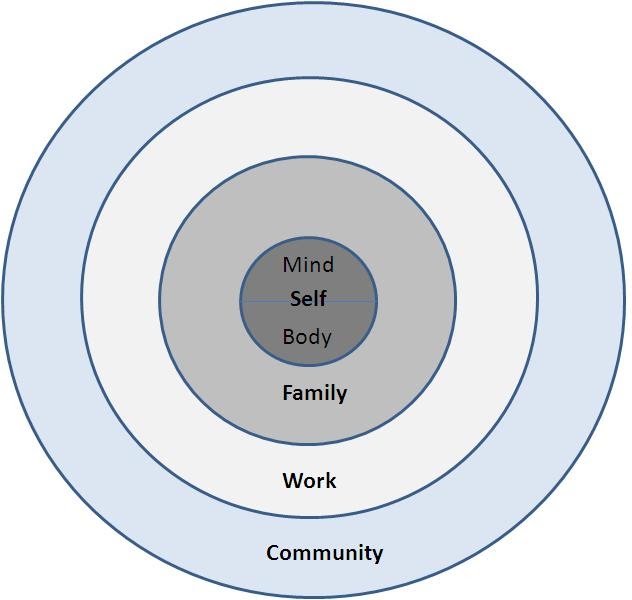
These relationships, such as acquaintances, friendships, peers, colleagues, familial, romantic, all of them, are one of the ways we grow. Growth starts with the individual, yet quickly moves out in a concentric circle to include the aforementioned.

Fostering these relationships then becomes very important. Often, however, I feel like we take them for granted.

The need to honor the relationships in our lives is of utmost importance. As is, acknowledging those around us that help us grow, even when the relationship is difficult. Maybe, especially when it is difficult. As I have written elsewhere, it is in the most uncomfortable situations that we find the most growth. And, building relationships is no exception to this rule.

As you embark on this weekend, remember that relationships are all around us. We need not limit our thinking about our relationships to only those people that are close to us, for the relationship you have with the person that serves you your coffee, or fills your tank is also an important relationship in your life.

#creativity, #freinds, #human-development, #psychology, #relationships, #sociology

COVID-19 and the Art of Possibility

Possibility: Noun – a thing that may happen or be the case.

I’ve been thinking more about possibility this week. What’s possible in our new landscape? Are the same things possible today, as were possible 6 months ago? Not sure? Me either, so let’s take a look.

The Art of Possibility is about creating a context. A context specific to new ways to think about old and or new problems or issues. It is about letting go of preconceived notions of what is possible in a given situation.

The psychology of possibility is rather simple. Let go of the past, be in the present, and create the future from where you stand today, seeing reality as it is. Not how we think it is, rather how it really is.

Seeing reality as it really is means being aware of our thinking patterns, and knowing when we are limiting ourselves by presuming or assuming we know all there is to know about a problem, issue, or situation we are faced with. Facutlay, humans know very little – if you don’t believe this blogger, read a little Socrates.

The sociology of possibility involves creating traction with those around us in the art of possibility. As I’ve written elsewhere, humans are social animals, and rely upon connections with other humans. It is only natural then that groups will function in accordance with the language they use to describe their shared reality. If that language is about limitation then limitation is what they will see and create. If, however, that language is about possibility, then possibility is what they will see and create.

The possibility of possibility is about remaining open to new ideas, new understanding, and letting go of the notion that we know. Seems simple, yet can be difficult, as human beings are in some ways programmed to think they know more than they do, which is where vulnerability comes in. Being open means being vulnerable.

Be vulnerable today in some way. Create and share a possibility with someone in your context, and, or create and share a possibility here. Either way, create and share. What else is there, really?

Until next time…

#covid-19, #creation, #creativity, #human-development, #possibility, #psychology, #sociology, #vulnerability