Leadership in Practice Series Part 2: Creating 90-Day Priorities Inside of a 10-Year Vision

This image has an empty alt attribute; its file name is matt-noble-bptmnn9jsmq-unsplash.jpg
Photo by Matt Noble on Unsplash

Once your vision is created, then what? Regardless of whether it is a 10-year, 5-year, or 3-year vision, you will need to put plans in place that will connect the daily work to that vision. That is how your 10-year vision will become a reality.

What, then, are the first steps to ensure that your weekly, monthly, and quarterly work connects to the long-term vision?

In this article we will walk through the process we went through to connect the 10-year vision to our 90-day priorities. First, another question.

Where does a leader start when they want to ensure that everyone’s daily work on the team, or in the business or organization they belong to is contributing to the long-term goals?

Let’s take a look.

Start with the 10-year Vision and ask yourself a couple of questions.

  • What are the goals of the 10-year vision?
  • What are the metrics of the 5-year plan?
  • What will the current year look like?

Let’s look at each question, one at a time.

What are the goals of the 10-year vision?

Once the vision is created, it’s time to create the goals that will drive all of the work. However, before you move on to creating those goals, which will drive the objectives and priorities, ask yourself what your vision will look like in reality.

What will the revenue and service look like, what will the staffing model look like, will you add positions between now and then?

Once you’ve asked yourself these questions, or ones that are more important to your particular vision, start to build out what that vision will look like in reality. Here is an example, vision first, then what it will look like in reality.

Here is the vision

This image has an empty alt attribute; its file name is img-2774.png

Here is what it will look like

This image has an empty alt attribute; its file name is img-2775.png
Note that the word profit in this instance is referring to department reinvestment funds.

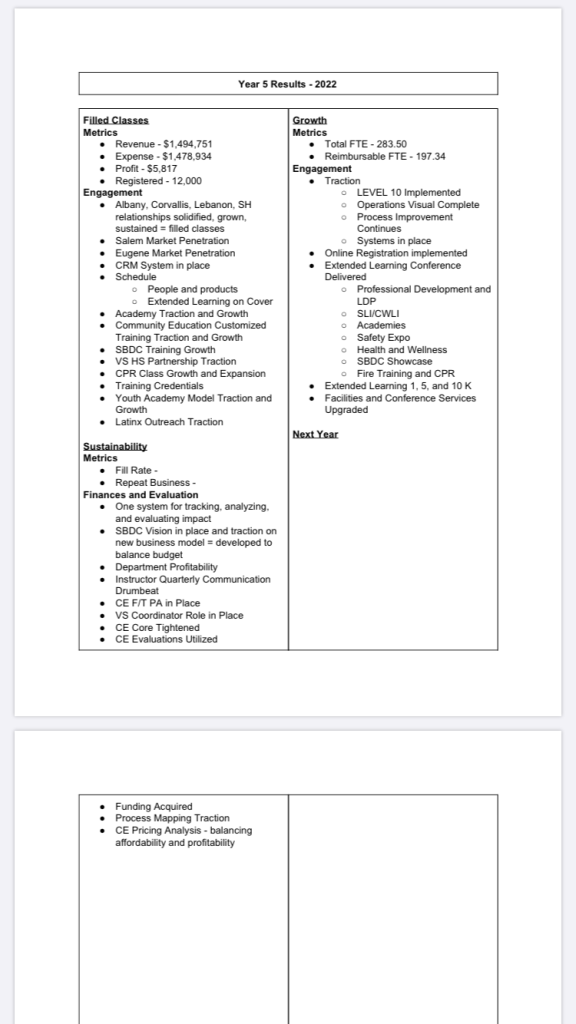
Once you’ve created the 10-year vision, and also know what it will look like, you are ready to work backward. When I went through this exercise last year, I started this part of the planning session with year 5. I looked at the previously designated metrics and asked myself what they would look like in reality. For instance, what would revenue look like, and how many people would we serve.

What are the metrics of the 5-year plan?

Here is what that looked like
This image has an empty alt attribute; its file name is img-2777.png

It is a wonderful exercise to start with the larger 10-year vision and to work backward to the 5-year plan, creating more clarity as you go. It is how you begin to connect the 10-year vision with the work you need to do today.

Once you’ve worked backward to year 5, you are ready to work backward once again to year 3, or whatever the current year is for your team, business, or organization. It is important to continue to get clearer on what the future reality will look like.

What will the current year look like?

Year 3 Department Objectives

This image has an empty alt attribute; its file name is img-2780.png

As you continue to work backward from the 10-year vision to year 5, to the current year you are planning for, in this example, year 3, the objectives that will lead the team to that 10-year vision do become more clear. Important.

And, as these objectives become more clear, so will the priorities that will drive each person’s work. For instance, in our year 3, we had 1-year objectives, which we executed on in 90-day chunks. Meaning that we focused on moving forward our yearly objectives with 90-day priorities that would shift as needed, yet the objectives would remain the same.

Year 3 Staff Objectives

This image has an empty alt attribute; its file name is img-2776-1.png

Once you get to 90-day priorities, it is time to create a coaching model that will mirror all of the aforementioned. Fully discussing this coaching model is for another article, yet I would like to share with you the simple template we created, so you can see how a 10-year vision can connect to a staff member’s daily work.

Coaching Model Template

This image has an empty alt attribute; its file name is img-2782.png

Though you can only see a portion of the form, you can see the overall process, where the yearly objectives (on the left) are connected to the department objectives (on the left in bold), while the specific priorities and actions to move that work forward are on the right. Fun.

A couple of weeks ago, I wrote the following article, One BHAG, Two BHAG, and Creating a Disruption Vision, in which we discussed the possibility of creating a disruption vision or BHAG inside of a 10-year vision. And now, the planning process we’ve walked through in this article is being recreated. The difference?

Because there is so much change right now, we have a 1-year BHAG, which lives inside of the 10-year vision, and 30-day priorities, instead of 90. I am in the process right now of re-instituting one-with-ones so that we can discuss, plan, and create our next actions one month at a time. Allowing us the pivotability, and flexibility needed.

Very well. There you have an example, with tools, on how you can connect your team, business, or organizations’ 10-year vision to the work that needs to be done daily to ensure that the 10-year vision will live in reality.

Be well, and lead well.

You can reach Jeff Flesch at fleschj@linnbenton.edu

Originally published on servantleadershipcoaching.com

#10-yearvision, #creating90-daypriorities, #creatingavision, #developmentandgrowth, #goalsetting, #howtocreatevision, #leadership, #leadershipdevelopment, #leadershipinaction, #leadershipinpractice, #long-termvision, #strategicplanning, #strategicthinking, #strategy, #team, #teambuilding, #vision, #visionandstrategy

Leadership in Practice Series Part 1: Getting into Action, Keeping Relationships Strong, and Iterating Your Business Model to Stay Relevant During COVID-19

This image has an empty alt attribute; its file name is ambitious-creative-co-rick-barrett-ltiywsbbhei-unsplash.jpg
Photo by Ambitious Creative Co. – Rick Barrett on Unsplash

I’ve written about leadership on this site a few times, so I’m doing something new over the next few days. I’ll be posting some articles I’ve written on leadership. New content on this site, and a conversation that is relevant and important right now. Enjoy. 🙂

Leadership in Practice Series Part 1

What do leaders do when everything they’ve prepared themselves and their teams for is suddenly, within hours, less relevant than ever before? Less relevant as a massive health pandemic, COVID-19, crosses the Atlantic Ocean and shows up in the United States. Not sure? Though I’ve lived it for these past three months, I’m not sure either. So, let’s take a look at what happened, and some of what I’ve learned these past three months.

COVID-19 Takes Root Locally

In early March I received an ominous email from by boss, which read something like this: if the College suddenly needs to close with little to no notice, what is your plan to continue service? Wait, what? At the time, I was admittedly ignorant about the scope of the COVID-19 health crisis in the United States, and the speed at which the virus was making its way towards the West Coast. What to do?

Well, I acted as I would have under any other circumstance. I sent the team the query, gave them a due date for feedback, which was extremely short, and gathered the information. I then rolled the information up into a document to share with my boss. We did this all within 48 hours.

I’ll be the first to admit that the plan was extremely basic, as our business model is one that requires, at least I thought so then, an in-person experience. Within two weeks of creating that plan, we found out that the College was going completely online to finish the Winter Term. Because, at the time, we did not have online or remote classes or training, we cancelled the last week of Winter Term to ensure the safety of our students and clients.

Get this. You are in your third term of the academic year, you just cancelled the last week of the term, and you are actively registering for spring, which is typically the strongest term of the year. And, your sales volume is up about 30% over the previous year. Now what do you do?

Get Into Action and Start Creating

In the next two weeks, it became very clear that the College would also be completely online and remote for Spring Term. What did we do? We started creating.

Here are some of the things we did.

  • We emailed all 200 instructors and asked if they would teach their in-person class remotely – note, at the time we had no systems or processes in place to offer these classes.
  • We moved all of our Professional Development on-campus training to Fall Term.
  • We communicated with all of our instructors, clients, partners, and students, letting them know about the College’s direction. We also inquired with other Colleges as to their plans, which was a very helpful decision. It gave us sight that other Colleges were also going remote, if they had the capability and financing.
  • We created an operations plan out of thin air. Here are a few examples of that plan.
    • Daily remote operations check-in’s.
    • Remote one-with-one’s as needed.
    • Twice-a-week remote registration staff meetings.
    • Weekly remote all-staff department meetings.
    • Bi-weekly program meetings.
    • Each staff member identified their top three remote work priorities.
  • We created many new processes, which included new ways to:
    • Register students and clients
    • Interact with all of our instructors, and clients
    • Track student enrollment
    • Process payment
    • Engage and market our products and services to the community

The point is, we did not sit back and wait for someone to explain the “how to” of the COVID-19 health crisis. There is no such thing. There never was, and never will be. You create on the fly, you do the best you can, and you serve.

You create possibilities where none ever existed before. You listen to your team, and to every idea they have. And, you take action on the best ones – the ones with the most impact.

You also continue to foster, and grow the team, which ensures you are continuing to grow the relationships with your instructors, students, and clients – those relationships are everything.

Keeping Relationships Strong

I’ve always said that relationships are everything. Really, they are. Nothing happens without high-quality relationships. Nothing. Everything is predicated on the strength of the relationships you have with those around you. However, working and living inside of the COVID-19 health crisis has taken my thinking and belief that relationships are everything to another level entirely.

Let’s take a look at a couple of the things we did to ensure that our relationships stayed strong during this most uncertain time.

  • Continue Creating Safety
    • Your team must feel safe to pursue the unknown with you. I believe this is true all the time, yet when your entire business model gets thrown out the window by a pandemic, and everyone is also concerned about their own physical safety, it is even more true. Having and continuing to create safety for your team is of utmost importance.
  • Create Even More Consistency and Structure
    • Another thing that was/is important, is the ability to create structure and consistency. When you are living in a highly unstable time, where change happens sometimes on a daily basis (hourly even), creating a consistent operations communication plan is critical. People must be able to depend on regularity, especially with so much uncertainty.
  • Create New Ways to Engage With Your Clients and Students
    • When we learned that the print schedule, which lists all of our experiential classes, was irrelevant, as all the in-person classes advertised were now in the process of being converted to remote classes, or were being cancelled, we pivoted and created a new digital schedule format. We then created processes to ensure we were collecting information needed, to digitally communicate with our students.

Now, let’s take a look at a couple of things you can do when your current business model, which was functioning well, is no longer relevant.

Recreating and Iterating Your Business Model

As was aforementioned, when COVID-19 began locally, our business model was functioning well, yet would become irrelevant if we did not act quickly. Here are a couple of the things we did to stay relevant.

  • Let Go of What Worked in the Past
    • One of the things we recognized very early on, was that we would have to create several entirely new business models – and, that work continues today. It can be hard to let go of a business model that is profitable. You must, however, when you are faced with a situation where that business model is no longer relevant or sustainable. If you don’t, your competition will pass right by you, and you will be out of business.
  • Create New Business Models that Fit the Current Reality
    • When we began to pivot our business models, we created on the fly, and, as was aforementioned, got all of our instructors into the conversation very early. Having strong relationships with our more than 200 instructors created the possibility that we could begin to deliver remote classes, something we had never done before.
  • Continue to Iterate the Business Models as Needed
    • We continued to iterate the business models as needed, and have continued to add new components, and take out others, as we’ve learned what has worked best. As humans, we have a desire to want to implement something that will be effective, and then stand back and watch it work. However, it’s not always that simple. Often it is not, in fact. Especially during such an uncertain time. So, when something is not working, get rid of it, and try something new. We’ve done that, are doing it now, and will continue to do it as often as needed.

All of the aforementioned sounds simple, and it was not. There was also a ton of uncertainty, fear, and anxiety that went with the plans and actions we’ve created and taken these past three months. Within myself, and within the team. However, we did not let that fear and anxiety stop the work that needed to get done.

Additionally, we have wonderful instructors. They are the main reason why we were able to offer 43 remote classes in Community Education spring term, and 73 for summer. The College was also extremely supportive, allowing us the space we needed to innovate.

The lessons I’ve learned in leadership these past three months are just now starting to surface. I feel very lucky to have had the opportunity to learn more about myself, and our team these past three months. I knew they were a resilient bunch, yet their level of resilience surpassed even my expectations.

Now as businesses start to reopen, we are continuing to consider what our next steps will be. No one can ever know the future, and, sometimes, as the COVID-19 health crisis proved, the best laid plans can go asunder. However, if you are up to the task, you can thrive in an environment that is completely unknown to you. You take one step at a time. You continue to foster your relationships, be who you are, and create anew over and over again; and, you watch and learn from all of the wonderful people around you.

Questions for you

  • What have you done to stay in action in your business (or life) during the past 6 months?
  • How have you kept relationships strong through all of the recent changes?
  • How have you iterated your business (or life) model to stay relevant and grow during COVID-19?

Look forward to hearing your stories!

Originally posted on servantleadershipcoaching.com

#buildingreslience, #covid-19andleadership, #creatingchange, #iteratingyourbusinessmodel, #keepingrelationshipsstrong, #leadership, #leadershipcahange, #leadershippractice, #relationships, #servantleadership

A Favorite Quote and Reminder

Smithsonian Magazine

“Every great dream begins with a dreamer. Always remember, you have within you the strength, the patience, and the passion to reach for the stars to change the world.” -Harriet Tubman

Goalcast

Dream. Create. Lead.

#changingtheworld, #creatingchange, #dreamer, #dreams, #harriet-tubman, #leadership, #leadershipvalues, #passion, #quote, #strength

Creating and Maintaining Relationships Part 4: The Relationship System

Photo by Nick Owuor (astro.nic.visuals) on Unsplash

Have you ever thought about how relationships work? I mean how they function within the systems and spheres that we move through? It is an interesting question, and one that we will explore in this post.

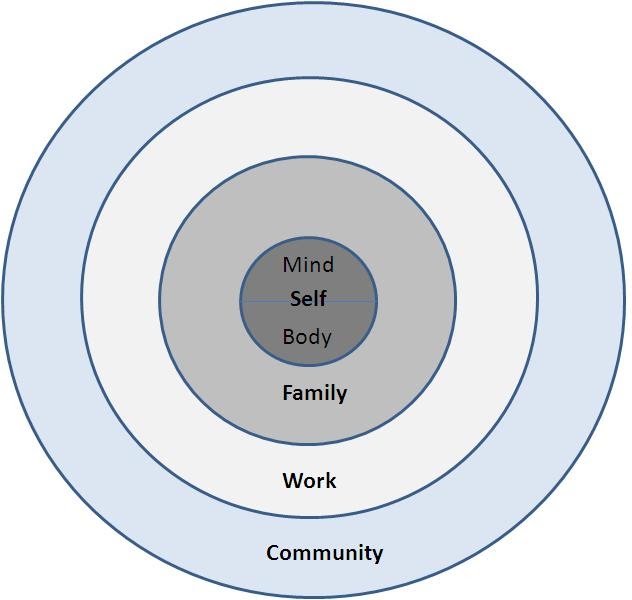
In my first post on relationships, Creating and Maintaining Relationships: What else is there?, I write about how all relationships start with you, and go outward. Here is the diagram from that post.

Now, in this post, we are going to expand on this simple relationship diagram, so we can see the movement that occurs through each of these relationship spheres. Let’s start with the relationship we have with ourselves, as it really does all start there.

Relationship with ourselves

In the post, The Self-Development Tips Series 1: The Art of Loving Yourself, I write about the importance of developing a highest-quality relationship with ourselves. That, in fact, learning how to love ourselves is the very first step in having other high-quality relationships. It is a must. Really.

Without a high-quality relationship with ourselves, we cannot create high-quality relationships with others. Why? Because if we don’t know how to take care of ourselves, to love ourselves, we cannot give care and love out to others. Not in a sustainable way.

We must first develop deep care and love for ourselves, then that same deep care and love will go out from us to others.

Photo by Alex Block on Unsplash

Relationships with Family

Once we have a high-quality relationship with ourselves, we can truly be there for our family. In being there, I mean have open, honest, and loving communication with each other; developing those high-quality relationships along the way.

In the post, Creating and Maintaining Relationships Part 3: Understanding Our Emotions and Strengthening Our Relationships by Slowing Down, I write about the importance of noticing when we are being inattentive to how we feel. Important.

When we are inattentive to our emotions, and are reacting without pausing, there is a higher likelihood that arguments with our partners will become more common. These pauseless reactions also function the same way with and toward our children.

It is important to note that we are not reacting to our environments in this way intentionally. Fully understanding how we are reactive, includes learning about our “triggers.” What are they, whom are they with, and why do we have them? Once we know, we can create space to pause, think and reflect, and then choose a different action.

All of which when combined with having a loving relationship with ourselves, free of blame and shame, creates whole new possibilities with the relationships we have with our family.

Photo by Tyler Nix on Unsplash

Relationships at Work

In the post, Three Transformational Leadership Skills, I write about developing high-quality relationships at work. Developing these relationships, like the ones we have with family, also starts with ourselves.

Once we are clear on who we are, and how we think and feel, we can develop work relationships that are strong and long-lasting. In the article I note three essential skills all leaders should develop in order to create these high-quality relationships.

  1. Authenticity – knowing who we are is the first step, then being who we are all the time is the next.
  2. Safety – creating a safe environment with the team you lead, or work on, is essential. People will not be authentic with you unless you are also authentic, and they feel safe.
  3. Transparency – being forthright about the state of the business, and issues that arise, are also important. Sharing with the people you work with is important for them to feel included, and valued.

These three skills, of course, are also important for us to develop in our personal lives. It works like that. What we develop for ourselves, we end up developing for everyone around us.

Relationships with the Community and The Greater World

How we develop ourselves, and our relationships then goes out from us and into the community, and, yes, the greater world. When we create a focus on our inner development, people around us develop, and the community also develops. That is movement.

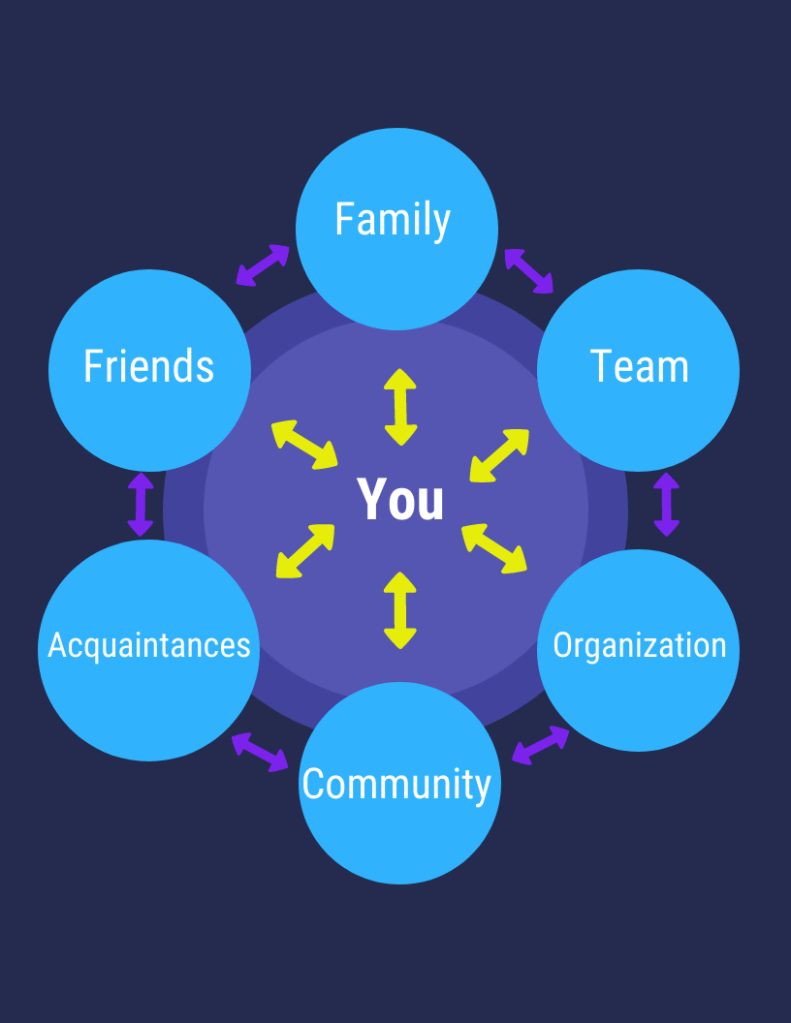
The movement is part of the way the relationship network, or system works. Here is a simple illustration that goes a bit further than the above referenced system image, showing that we are connected through everyone we know, ultimately, to all people.

By continuing to add more contexts into the above illustration, you can create more complexity in how the relationship system is interwoven.

Ultimately we are connected to everyone, and everything, and what we give out, comes back to us. All contexts are also connected, sometimes directly, and sometimes indirectly, as the above illustration also shows.

Whether the connection is direct or indirect matters less, than the realization that all that we do on this planet as human beings touches each other in some way. Important.

Relationships are so important. Really. The relationship we have with ourselves is the starting point, and, as you can see, it is only the beginning of how we, as human beings, end up touching everyone and everything around us. Even when we don’t know about it.

These relationships and all that we give and get from them are crucial to moving society forward. Without them, there would be no movement.

Know that every action you take to develop and grow yourself also grows your family, friends, teams, organizations, communities, and the greater world.

Develop well.

#authenticity, #community, #connection, #developingourselves, #development, #developmentandgrowth, #emotionalintelligence, #grwoth, #leadership, #loveeachother, #loving-yourself, #relationships, #relationshipsystems, #safety, #theworld, #transparency, #weareallconnected, #workrelationships