It was great to put a period on the lengthy second installment of the Leadership Series. In installment 3, we will look at creating and developing teams. Will be fun.
Alright, and next week?
Well, I already have another Haiku scheduled, as well as a Tanka poem. I also have an article on intention and the last installment in My One Thing: Creating Alignment in Our Lives.
I also have some new ideas, which I’ll get to writing about in the next month or two. Here are a few of those ideas.
The Leadership Series Part 3
A new series on leadership, called Leading from Within
An article on the law of attraction
And, of course, I’ll have new entries in both the developmental moments and reflection series in the next few weeks.
Alright, how about birthdays.
Birthdays
Well, my oldest son turned 21 this week, and my youngest will turn 17 in May. Phew. It is hard to believe, and then not, that these boys are so grown.
I am so impressed with who they are becoming as young men, and am so proud of them both. A lucky father, am I.
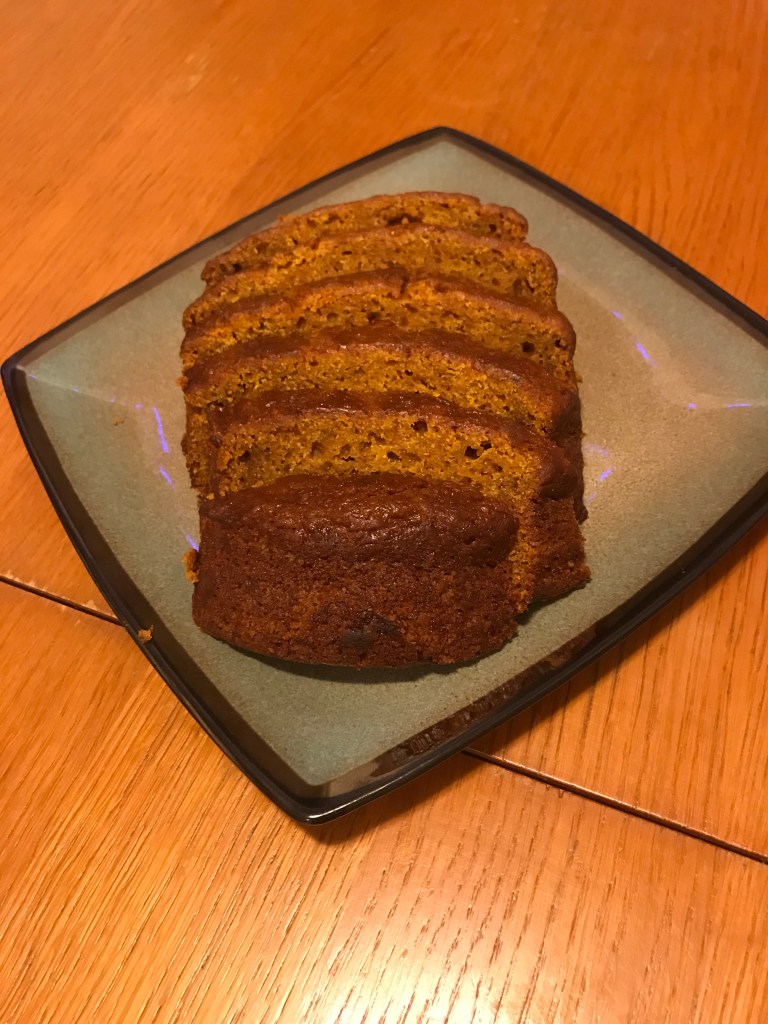
Alright, Justin’s birthday was this past week, so he was over Saturday night, and I made a spinach salad with baked tofu (breaded with panko and slightly fried), and brown sugar butternut squash bread.
Both were super tasty, though I will write that the bread was a little sweet for my tastes. Here is the recipe for the bread, and a couple of pics.
Corvallis, Oregon 2021
Fun!
Overwhelm
As I already mentioned, last week we had our busiest week of registration since the pandemic started. Of course, this also means that the team was super busy, and, each of them, at different times and at different levels, experienced overwhelm. Yes, me included.
On Wednesday it occurred to me, though not for the first time, that we are all inundated with stimulation, and it occurs differently inside of the pandemic. Meaning, many of us are on technology more than ever before; and it is needed and necessary to move our work forward.
However, being aware of creating quiet space is also needed and necessary. I think it is needed more now than ever before, and necessary to keep us centered and in balance.
Thus, I sent the team the following message on Wednesday. Subject line: Please read today: Taking the time needed.
Hi all, Phew, what a busy week! I am so impressed by each of you, by the work and possibilities we continue to create for our community. A record number of registrations continue to come in! And, just as our record number of registrations is a beautiful thing to see and be a part of, we have all felt, in some way this week, overwhelmed by the work we are engaged in. I’ve said what I am about to write, in just about every meeting this week. We all need to create time to put the work down, and just be. Be outside in the sun, if it is sunny as it is today, be in a quiet space in our homes, be, well, wherever you can create time for yourself that is away from technology and stimulation. I am asking each of you to continue to create this time for yourselves when needed. You will see on my calendar today at 1 pm, a walk scheduled. I will be away from my computer and phone for 45 minutes. Please do the same when you can. It can be 10 minutes, 20, or longer, just take that time, and be. Great work this week, team!!!!! Jeff
CORVALLIS, OREGON, 2021
Now, I’ve written before about being overstimulated, and being overwhelmed is similar, and, in fact, can function the same way.
We all need time away from everything and everyone.
As you move throughout your week, I invite you to create this time for yourself. Create time for yourself, to be with yourself. Just for you.
And, take that time to breathe, witness all that surrounds you and is within you, and just be.
Alright, so I recently took up writing haikus, as many of you know, and am having a fantastic time. I’ve posted one thus far, and have three others scheduled, and then this weeked?
Well, along with the other writing I’ll do, I plan to spend time reflecting upon new ideas for a few more haikus.
What am I learning? Good question. A lot actually. Let’s take a look.
Haikus
A haiku is a poem, which was created in Japan in the 9th century, that contains a 5-7-5 syllable sound pattern, which is elegant, beautiful, and challenging to craft. There are a few distinctions between traditional haikus, and more contemporary haikus.
For instance, in traditional haikus, there are some very explicit rules. Here is an example, taken from Your Dictionary.
There are only three lines, totaling 17 syllables.
The first line is 5 syllables.
The second line is 7 syllables.
The third line is 5 syllables like the first.
Punctuation and capitalization are up to the poet, and need not follow the rigid rules used in structuring sentences.
A haiku does not have to rhyme, in fact usually it does not rhyme at all.
As you conduct more research, however, you find that contemporary haikus are less strict, and can take on numerous forms, as you can see from the above example. It’s super interesting, and a lovely learning experience.
Tanka
There is also a poem called the tanka, created in Japan in the 7th century. Unlike the haiku, which is 17 syllables, the tanka is a 31 syllable poem, typically in the syllable sound pattern, 5-7-5-7-7.
Here is an example of a tanka poem.
八雲立つ 出雲八重垣 妻籠みに 八重垣作る その八重垣を
Layers of cloud in the sky I am here, ‘Izumo’ country to protect my sweet wife I will make layers of fences eight layered surrounding our home
Now, I am just taking up writing haikus, so tankas will have to wait, yet there are similarities between the two; and, in fact, a tanka (the 7-7 sound pattern) can be added to the haiku. It might, then, look something like this, using my first haiku as an example.
Slowly, the rain falls, we rejoice in the moment. And then it is gone. I await the next moment, frenzied feeling of delight.