Now I’m working on a third; the social construction of reality. Yep. And, why is understanding the social construction of reality important? Hm. Power.
As we discussed in 4 Reasons Why Language Is Power, how we describe our reality in language, whether we are describing something internal or external to ourselves, is powerful. It is in essence the reality that we know.
Writing the piece on the social construction of reality is really fun; and, I hope you will all enjoy it.
Right, so integrity. What’s the deal with integrity? Important, yes? I’ve actually read a couple of posts in the past couple of weeks that have mentioned integrity, and I am excited to add my lens to the mix this week.
I think about integrity a little differently, which simply means I conceptualize, internalize, and practice integrity in a way that pushes on the traditional notions of integrity.
It is important to investigate definitions, to push on them when needed, and to conceptualize them differently when they don’t work as intended.
The definition of reality and truth, as we will discuss in the social construction of reality is a good example of this notion, as is the post I am writing on integrity. Will be fun.
Maintaining a growth mindset, which I will also write more about in the next couple of weeks, by remaining curious means that we get to take in all of the wonder that surrounds us.
That’s important right now. Maybe more important than ever before.
Remaining curious means taking time for yourself. Taking time to be quiet, to walk by yourself, for yourself, to reflect, to question, to contemplate, and to discover.
When we take time for ourselves, we get back so much more. It is a paradox. Often people think that being continuously busy is the way to get back more, or to progress more, or to move themselves forward more.
And, being active, actively creating the life you want to manifest for yourself is important, yet, not at the expense of your own internal contemplation, reflection, and discovery time.
Example? Sure.
Yesterday, I came home from a very busy day, and immediately took a nap. Yep, been doing that more often. Feels good. Refreshing.
I then got up, had a little something to eat, and started working again. And, guess what? I became frustrated? Why?
Because I had essentially gone from work, to sleep, and back to work. What did I do?
I stopped, turned out the light, and meditated for 30-minutes. And?
Inside of that meditation I had a couple of really nice insights, which then fueled the rest of my evening. Meaning that I switched from work, to writing, and developed this week’s ideas for my blog.
My invitation to you on this wonderful Tuesday evening is to remember to take time for yourself. Unplug, go for a walk, meditate, just sit. Do whatever it is that you do to refresh your inner-self.
It is in this space where curiosity and everything else in life for that matter lives; and, where you will find the answers to the questions you are asking yourself right now.
Have you ever heard of the Highly Sensitive Person (HSP)? Hm. Either way, know that although I’ve been a highly sensitive person my whole life, I had never heard this phrase until about 2 years ago. Here’s what happened.
About 2 years ago I was at a team building event, and we had one of our instructors come and talk about the highly sensitive person.
It only took about 10 minutes for me to get it. Yep. Then?
As I reflected upon the information I received at the teambuilding, and the new information from the book, so many things occured to me about my childhood, youthood, and adulthood.
I could clearly see my high sensitivity, what was then labeled as shyness or actually derogatorily called being sensitive.
I internalized my shyness and sensitivity as a problem for many, many years.
What I could have never known as a child, youth, or even as an adult previous to a couple of years ago, is that being a highly sensitive person is also a paradox, and a gift. Yep. How, you ask?
Sure. One, question first.
What do you think of when you imagine someone that is highly sensitive; or what association do you make? It’s okay. It’s not a judgement.
Did you see someone in a position of weakness, or in need of help? It’s okay if you did, today it’s normal.
What I am showing you is that in language being sensitive is associated with weakness; and, that that same language is what is used to experientially socialize children to think of high sensitivity as a weakness.
Now, though I am pleasantly surprised that the definition leads with receptivity and capability, it soon enough gets to easily hurt or damaged. Unfortunate, and just plainly not ture.
What is true is that being a person with high sensitivity, like most things in life, is a paradox. How, you ask? Right, well, let’s take a look shall we.
First, let’s explore high sensitivity. Now, know that my experience with the topic of high sensitivity is in being a person with high sensitivity. Meaning, that I’ve not read much about the topic.
Having high senstiivty pretty much means as it sounds. That, in some aspects, people with high sensitivity are more sensitive to external and internal stimulation.
Here are a couple of examples.
People might be highly sensitive to light, sound, touch, taste, smell, and emotions, both their own, and other peoples. There are many ways these sensitivities manifest, which you can check out on the Highly Sensitive Person website.
More often than not, people that have high sensitivity do not know it. Some don’t ever end up knowing it, and some, like myself, do. Approximately 15 to 20% of the population has high sensitivity.
The issue with not knowing, is that people with high sensitivity may end up internalizing their sensitivity as a problem, which is unhealthy and can be destructive.
Many people with high sensitivity end up using unhealthy coping mechanisms, like substance abuse, to bury their sensitivity and inability to understand and cope in more healthy ways.
I label high sensitivity as a paradox to push the limits of language and experience, of what is known. Important. Example? Of course.
I know several people with high sensitivity; and, all of them are clear and strong.
Yep, they are sensitive, and sensitive in different ways, yet that sensitivity makes them clearer and stronger.
A paradox.
In language, as we discussed, sensitivity is associated with a weakness, or deficit, which is simply not the case.
When people that are highly sensitive know about their sensitivity, they can learn to cope with their higher sensitivity, and, in many cases, higher emotional input and output in more healthy ways.
Further, because emotions are felt more, both internal and external, it provides the highly sensitive person with a gift.
The gift of feeling more, knowing more, and loving more.
Another gift is being able to sense where people are at emotionally. Super helpful always, and even more so in leadership roles.
It gives you the opportunity to meet people exactly where they are, free of any judgement. You understand your emotions more, and so you understand other people’s emotions more too. It works like that.
Being a person with high sensitivity has been a journey from thinking for many, many years that I was broken to the realization that I am clear about my emotions and stronger for my sensitivities. Much Stronger.
If you think you might be a person living with high sensitivity, I recommend you take the sensitivity quiz on the Highly Sensitive Person website.
Regardless of whether you are a person living with high sensitivity or not, it is important to remember that our senses and emotions are part of being human. We all have them.
Yes, some people are more sensitive than others to their senses and emotions. However, we all need to take the time to understand our sensations and emotions; time to be with them, and greet them with compassion and grace.
Along the way, please also don’t forget to continue to extend yourself that same compassion and grace. You deserve it.
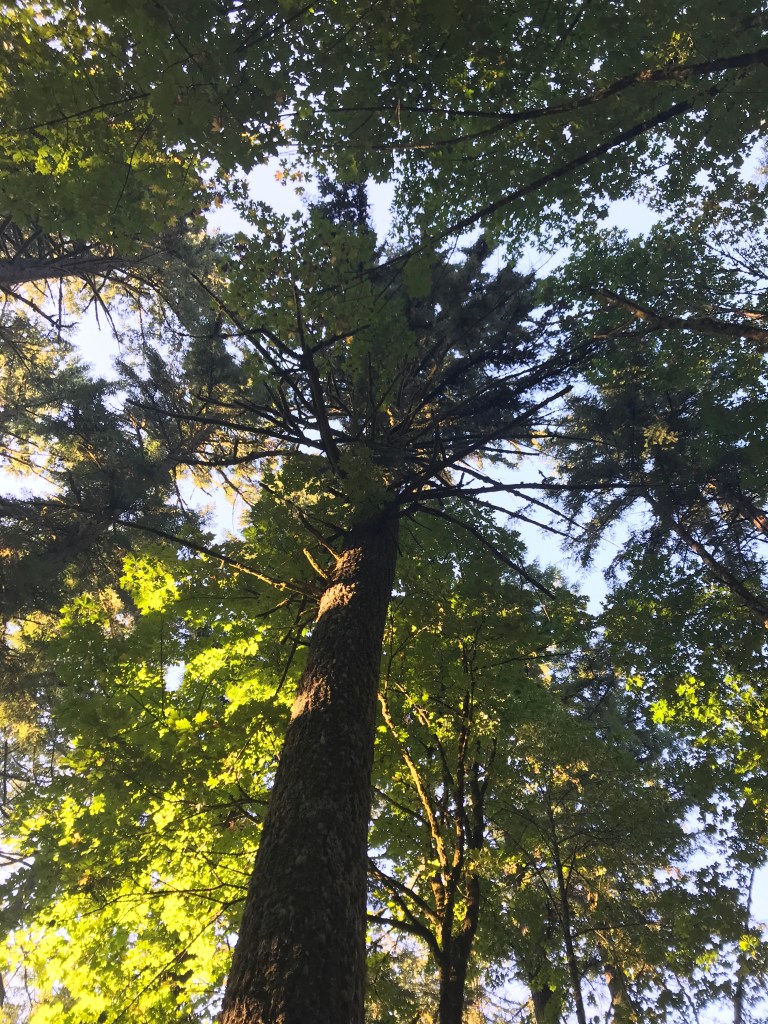
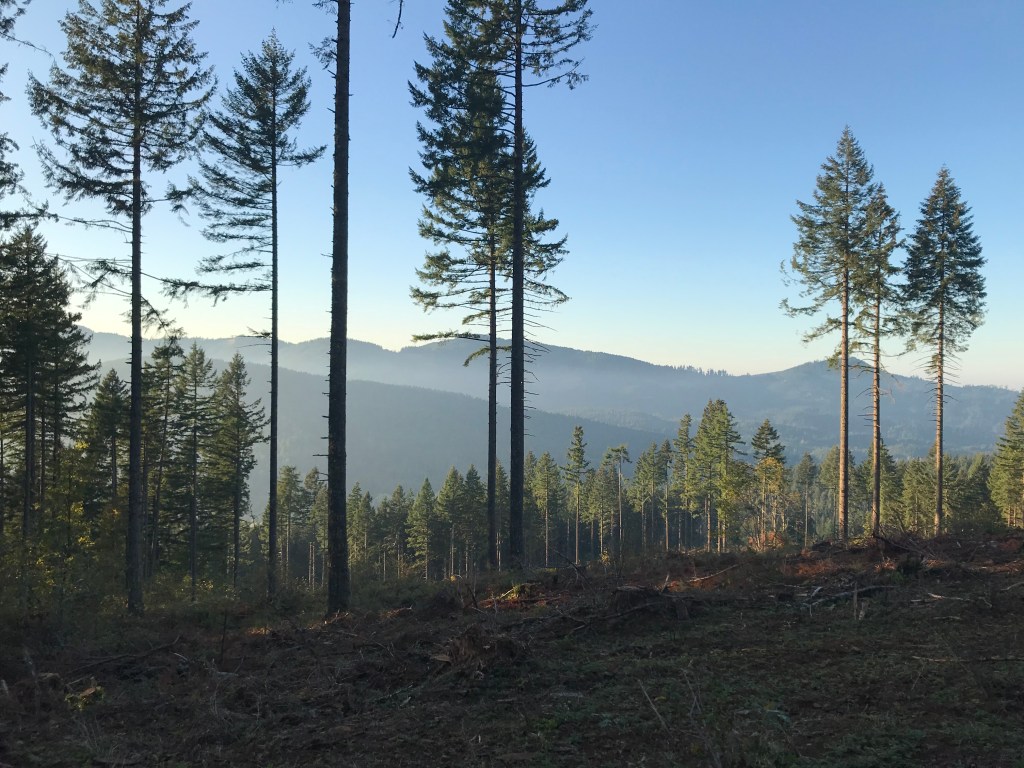
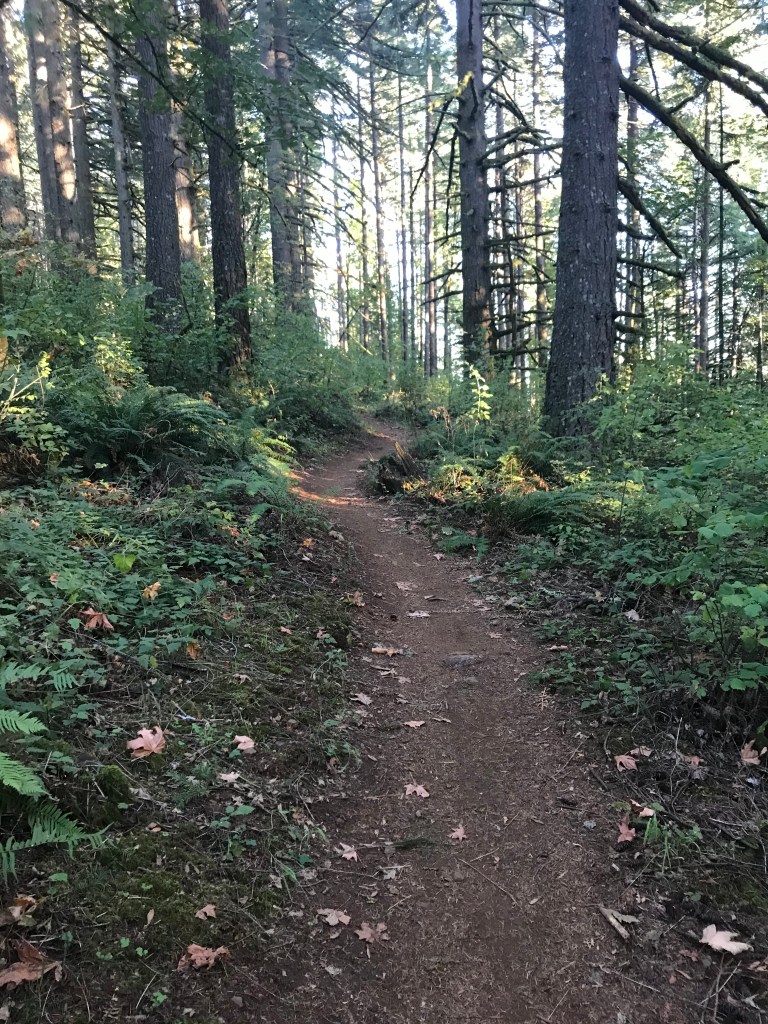
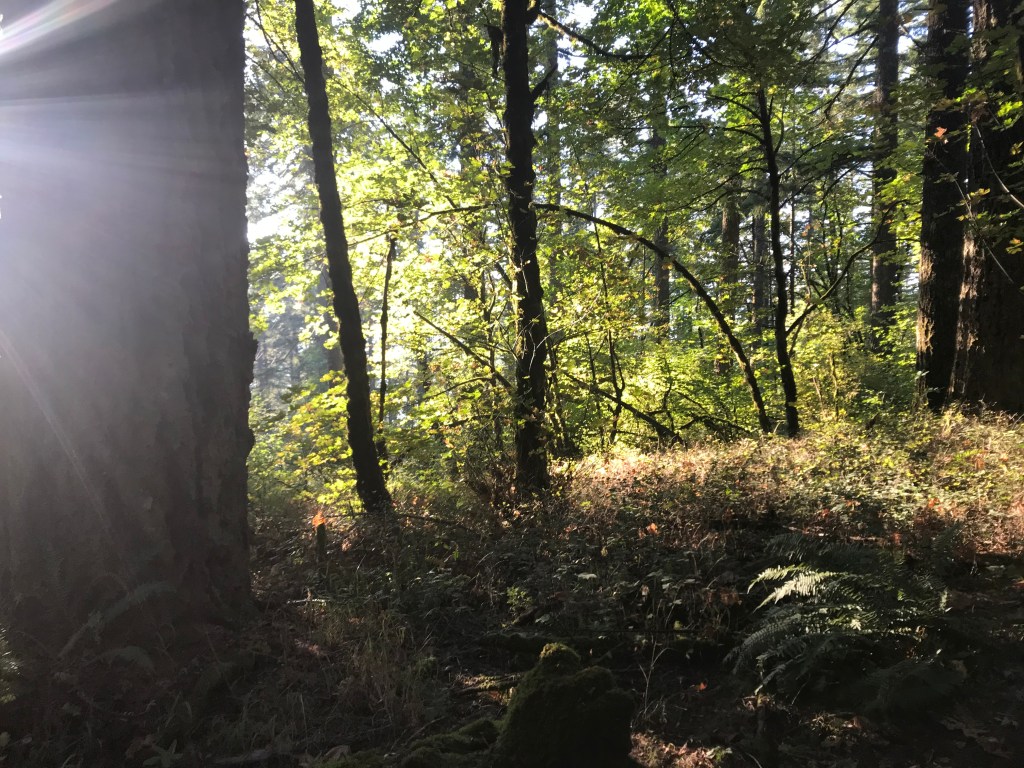
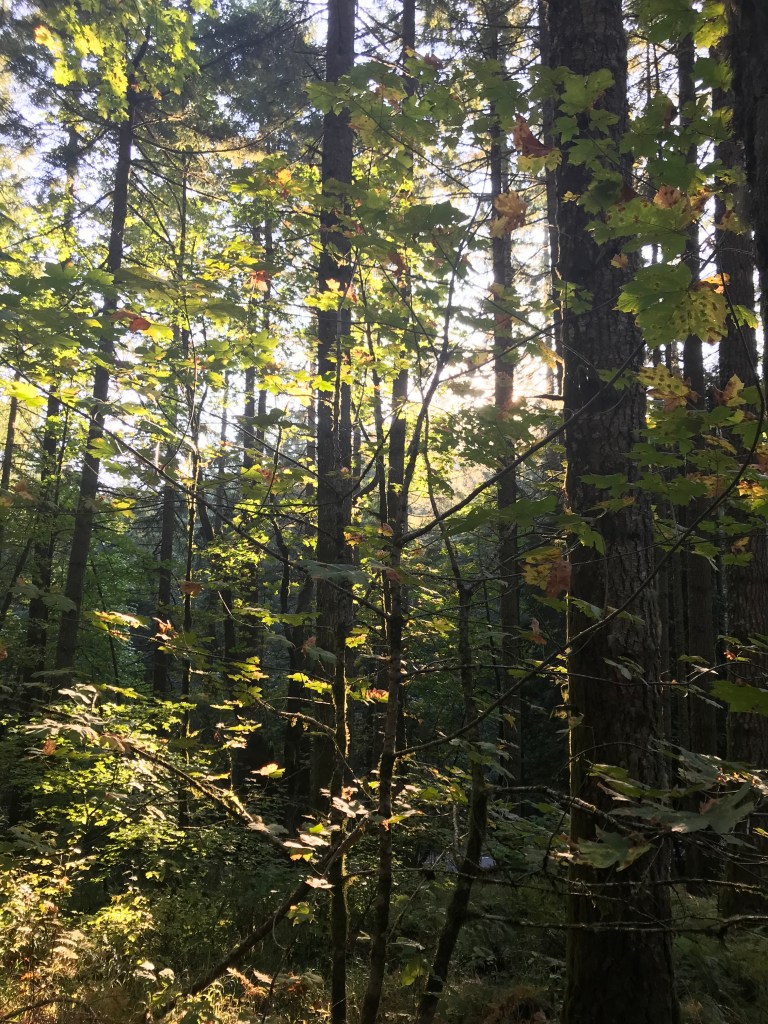
It’s almost the rainy season in the Pac Northwest, so getting out in the sunshine today was a must. Was gorgeous out today, as you will see in the pics below.
While I was hiking this poem occured to me. 🙂
Nature’s bounty Human failings
Separate though They seem
Inextricably connected They are one
A mirror
Of both bounty And failing
One in breath One in mind
Two inseparable Joined in A hindered hearted delight
As I was walking back to my office this past week, and I entered into the breezeway just around the corner from my office, I looked up just as I came under the overhanging second floor. Why?
To see if the second floor was aligned with the top of the building. Wait, what? Yes, I did. Why, you ask?
“Don’t let anyone rob you of your imagination, your creativity, or your curiosity. It’s your place in the world; it’s your life. Go on and do all you can with it, and make it the life you want to live.” Mae Jemison
There are so many good quotes about staying curious. Why? Well, let’s take a look at why; yet, as always, I’d like to first define curiosity. Here we go.
There. When we remain curious, we are actively acknowledging there is much more in the world to know about than is known. Yes, by us, and by everyone else for that matter.
I’ve written many times about the known and unknown, and, essentially, that it is the space between the two where people choose to grow or not.
We can choose to go back towards what is comfortable, known, and remain as we are today; or, we can choose to go towards what may be uncomfortable, unknown, and grow.
Those that are naturally curious, are intrigued by the smallest things in life. Things that other people might pass right by without even noticing.
In fact, I think people that are curious have a keen awareness of themselves, which means they also have a keen awareness of the world around them.
7 Reasons Why Remaining Curious Can Move You From a Fixed Mindset to a Growth Mindset
1. Recognition of the unknown
When we know that there is much more to learn about the world, and everyone in it, than we actually know, we are instantly curious.
Being curious is about being real with ourselves about all that we know, and all that we don’t.
Just writing that last paragraph makes me smile. Smile because I know everytime I leave my house, there is an opportunity to learn something from someone. Always curious. Fun.
2. Replacing what is known with new knowns
And, as we learn more about the world from other people, we get to replace some of our knowns with new knowns. How?
Well, humans often get stuck inside of limited thinking. Thinking that because they are an expert in a certain field, that their learning is complete. No so.
Every topic and subject is incomplete from a perspective of all there is to learn. Really. Every topic and subject.
When you are in a conversation with someone that proposes that their perspective is the final perspective on a topic, you can smile internally knowing that is not so, and remain curious about the topic.
I guarantee you there is more to learn and to know.
3. Remaining hopeful about the future
When we are curious, we are naturally hopeful about the future. We have to be. Why? Because being curious means believing in a future where growth and new possibilities flourish.
More, it means actively creating that future every day. One idea, goal, or dream and corresponding action at a time. Beautiful.
4. Recreating ourselves each day
Curiosity, like all things, starts within. When we do our internal work, inquiring into why we think and feel the way we do, we are actively interested in recreating ourselves often. Every day, in fact. Really.
In each moment lives the possibility of something new, a new possibility for that moment, and then, yes, the corresponding context, and the greater world. It starts with us, and goes out from there.
And, as we recreate ourselves, we also create a new sense of self. We let go of the person we were, and welcome the developmental iterations that will come as a byproduct of our own curiosity and interest in ourselves.
And, guess what?
When we treat ourselves with this kind of respect, that respect, along with the curiosity and interest, go out to others. It will infect them with a renewed sense of who they are as a human being.
Wonderful to watch and be a part of.
6. Reinventing the contexts we engage with
As we recreate ourselves each day, we also reinvent the contexts that we’re engaged with. Why?
Because, as we recreate ourselves, we are leading a transformational process that will affect everyone around us. It has to.
And, as we reinvent our contexts, we get to invite other people to participate in our curiosity. Our curiosity, yes, about ourselves, first, and then our curiosity with other people, the work they do, the possibilities we see as a product of the work we are doing in ourselves. Much fun.
7. Remembering our truth
When we remember our truth about the human being we are, and the future human being we are actively creating each day, we stay curious. Curiosity is a transformational practice.
When we remain curious, we get stuck less often. We feel more connected to ourselves and to everyone else around us.
We are, in effect, living our lives as a child would, full of wonder and hope. Knowing that dreams do come true, because we actively see them come true all the time.
When we live our truth, we see the world through a whole new lens; and, part of that lens is a lens of the curious being that we are all meant to be.
When we are actively curious, question all things, we are living in a growth mindset, which really just means that we are open to learning about all things from all people.
We are open, flexible, and eager to learn.
A growth mindset is about learning as much as we can, and then using that knowledge to create the life we want to live. Each and every day.
Curiously pondering everything around us, wondering, dreaming, and then taking all that we learn and applying it to our lives.
The post got me thinking more about curiosity, and how important being actively curious is to life in general, and then even more so, some would say, to innovation and leadership.
You may be asking, how did you get there from the post about writing and the distinction between theory and practice? Good question.
Because when you are actively curious, you are always looking. Looking for things to wonder about, to ask questions about, to, really, know more about.
Right now, I am working on a new post about curiosity, which starts with something like,
do you remember being a child and looking around and seeing everything, really, everything, in your context as a wonder?
Children have that sense of wonder about the world. Why? Well, in part, because they’ve not been socialized into thinking and/or acting in a particular way.
At that stage of development, everything is possible. All of it. And, you know what? It’s possible to live that way as an adult, every day. Really, it is. How do you ask? Well, we will discuss that more in the forthcoming post.
For now, I’d like to send you a few quotes about curiosity, as we head into this lovely weekend.
“I have no particular talent. I am merely inquisitive.” Albert Einstein
I’ve written before and said many times that it is in the spaces where vulnerability occurs that innovation will also occur. Well, when we are vulnerable, we are also naturally curious. I think we can safely say that
vulnerability + curiosity = innovation
That’s fun.
As you walk through your weekend, take a look around, wonder about the things you see, ask questions you normally wouldn’t, and see what you end up knowing more about.
As some of you know, I started practicing meditation about three years ago; taught to me by someone that spent 15 years in India. And it has been one of the most important developmental inquiries in my life. So, of course, when I read that title, I was like, wait, what?!
Of course I read it. And?
The writer completely missed the point of meditation. Further, the “expert” the writer draws examples from throughout the article is questionable, at best, as an authority on meditation.
Well, what followed then was an important distinction for writers that came as an insight of reading the article. The distinction? Yep, here we go.
I’ve written a couple times about the importance of making the distinction and understanding the difference between theory and practice. The distinction between the two is paramount in organizational development and education.
Yet, what I’ve been reflecting upon more this past week is just how important the distinction between theory and practice is for writers. Yep.
As I’ve been writing for years, I think I’ve always understood this distinction, yet it’s really only been the past three years that I’ve really known about it. Did you catch the distinction? Ah, if you did, excellent, if not, never fear.
Before we get into the discussion of theory and practice, let’s define our terms.
Very good. Now, what do you see? Yep, it’s pretty straight forward.
Theory is about idea generation. About trying to explain something to the best of one’s ability by rationalizing the knowledge one has about a subject through their intellect. Yep, that’s about it. Practice?
Different. Practice is about doing something. It is about understanding a subject through the practice of actually doing that subject; and, then explaining that subject through the practical knowledge now possessed.
Now, both are needed. Yep. We need both intellectual knowledge and practical knowledge. However, theoretical knowledge can never supersede practical knowledge. Why?
Because no matter how much we know about a subject, we can never really know about that subject until we engage in it. Example? Sure.
Let us say I want to create a new budget. One that will connect all of my daily spending to my bank accounts, which will then funnel back to a spreadsheet that I can track daily.
I can theorize about how a new budget system like this might work by reading about it, however, I will never really know if it will work for me until I try it. Simple, right? Yep.
Why, then, is this important to writers? Because when we write, and we are writing about something that we are theorizing about, we should own it.
We should let the reader know that the piece they are reading is a theoretical exploration, not a practical one. Why?
Alright, here are
3 Reasons Why Writers Should Know About the Distinction Between Theory and Practice
1. Transparent
Being transparent about the subject matter we write about is important. It’s important to our own development, as writers, yes, and as human beings; and, it’s also important to the reader.
When we write about a topic that we know intellectually, that’s fine, write about it that way. Letting the reader know that you are conducting a theoretical exploration is just fine, and needed.
Have you ever heard the phrase theory informs practice, and practice informs theory? It’s true.
When we theorize about how something might work, we will only ever really know if that theory will hold true by conducting an experiment, yes, or by simply doing it. Yep.
And, when we do something, like create the budget from the aforementioned example, we will learn things we did not, could not, theorize about; and, we can then recreate the theory in light of this new information. Finished? Nope, not quite. Why?
Because someone else might conduct the same experiment with the budget system, let’s say, and get a completely different outcome, or experience. Yep.
I once had an instructor that would say, show me any theory, and I can show you a mitigating variable for that theory. Meaning another idea that would change the outcome of the experiment, or experience.
Therefore, it is very important when writing to elaborate on the knowledge that we currently have, both intellectually and practically. It helps readers know where the limits of our knowledge is, and where they can pick up from, if they choose, and move that knowledge forward.
In owning the limitations of our own knowledge, whether it is intellectual or practical, we are being thoughtful. I love reading an article or a book about a topic where the author has been intentional in communicating the limits of their knowledge.
As a reader, this kind of commitment from a writer garners a whole different level of trust from me. And, I am more likely to read more of their work.
Being thoughtful about our own limitations is an important thing to do; though, it will probably feel awkward and scary. Human beings don’t usually like to own their own limitations.
Yet, I would argue that owning our limitations is not, in and of itself a limitation. Rather, owning our limitations is a starting point, a strength.
A place from where we can grow and develop. Learn more, both intellectually and practically.
And, in that growth, guess what? We learn more, which means we can do more, and be more. We can write more. More about what we know about. Both intellectually and practically. Fun.
Of course. When we stand in our truth, we get back way more. Though owning a limitation feels scary, it is the only way we can ever grow and develop. If you have no limitations, or rather, areas to grow yourself, then there is nothing to ever read, or really do.
Life inside of that world, where we know all there is to know, is finite. That world is the limited one.
However, when we are truthful about our own developmental opportunities, we immediately become unlimited. Why?
Because we have now taken a stand to learn more, to develop more, and to possibly transform the person we are today into a whole new iteration. A new self that stands in the reality, or truth, about themselves. That is powerful. A paradox?
Yes, and no. The whole world is full of paradoxes like this one.
We are fearful of the exact thing that, when embraced, is the key to relinquishing that exact fear. That is life as a human being on this planet.
Alright, so there are 3 Reasons Why Writers Should Know About the Distinction Between Theory and Practice. And, to be clear, this distinction is important for every human being. Really.
It is important in all aspects of our lives. When we are clear on the areas we want to develop and grow, we can engage with people in meaningful conversations and create contexts to move those aspects of ourselves forward.
We can learn more, become more, and then, yep, do more.
It has occured to me in writing this post that I can do a better job of letting readers know about the limits of my intellectual and practical knowledge.
Though the focus of my writing is, and will continue to be, on both my intellectual and practical knowledge, writing this post has brought a new awareness of this topic to the fore of my consciousness; and, for that I am grateful.
Every time I write an entry in this series, I usually write something like, phew, what a busy week. See, I did it again. Well, it is busy and also quite wonderful. 🙂
Alright, here’s what I’ve been up to the past two weeks.
Writing
This past week, I wrote a couple of articles. In case you missed them they were as follows:
Well, I am currently working on a couple of new pieces, which include an article on the mind, one on being a Highly Sensitive Person (HSP), and one on writing. Fun.
I am also considering writing something for a periodical publication. It’s been a while since I’ve submitted anything like this, and am wondering about the periodicals to send to. If you’ve got an insight for me here, I would greatly appreciate it.
Strategy
This week is my strategy week at work. Meaning that I don’t take meetings unless absolutely necessary, and I work on creating the next couple of years of work for the team I work on.
Of course, these are drafts we are talking about here, as the team I work on is highly collaborative, and will have tons of input for me on anything created this week.
It is a nice time to reflect upon where we’ve come as a team, remember where we are going, and begin to fill in all of the work needed to be completed for us to get there. It’s fun.
About two years ago I learned about High Sensitivity. At that time, I had never heard about it before, and was sort of stunned. Meaning that I could see myself in all that was being talked about, and yet, was in some ways resistant to the idea that I might be a Highly Sensitive Person (HSP).
Upon reflection, and a little reading, I came to the, not hard to make, determination that I was an HSP, and had always been.
Certain feelings I always had, and things I felt more in my environment than other people, made more sense to me than ever before. Was truly a transformative moment for me.
I am reflecting upon my HSP’ness now in preparation for the article I will be writing later this week.
If you’d like to learn more about being a Highly Sensitive Person, here are a couple of books I highly recommend.
If you are still interested, here is a cool questionnaire you can take to see how you rate on the sensitivity scale. I just took it again for fun, and rated a 19. Definitely highly sensitive. 🙂
Both of the books are wonderful, and I highly recommend them if you are interested in Leadership and or Eastern Spirituality. Funny, they are both very alike in that regard. Interesting how that works.
Not sure what the next book will be, yet, this past week I did create a new possibility. What, you ask? Of creating a local remote book club. Yep. There are two other people interested at this time. I’m hopeful to get 2 or 3 more people.
As I was pursuing the book club idea, sending out invitations, it got me thinking about a blogger book club. That might be kind of fun. What do you think?
What is your purpose? Do you know, or have you ever considered it; I mean, really considered it? Like, written it down, reflected upon it, and used it to interact with people you know, or meet?
Well, I’ve been thinking a lot the past few weeks about purpose. And, just today it dawned on me that authenticity is a very important concept to the development of your purpose. Really. How, you ask. Well, let’s define our terms, and then we’ll discuss it.
Alright, there we go. Now, we can see from these definitions that purpose is about setting an intention to achieve something; and, that authenticity is about being true to who we are.
Important. Why?
Because in order to set an intention to create your purpose, you must be true to who you really are; not the person you were, or the person people tell you you are. A very important distinction.
If you create a purpose that is imbued with ideas about your past-self or with ideas about the person you believe people want you to be, your purpose will not inspire you, nor will it inspire anyone else.
Okay. Let’s take a look at
10 Reasons Why Developing Your Purpose is Dependent on Being Authentic
1. Inspired
In order to be inspired, and to inspire others, you must believe in your purpose with both your head and heart. A must. When we develop a purpose that is connected to our authentic-self, the human being we know ourselves to be, we are instantly inspired.
2. Dedicated
Living a purpose-driven life is hard work. Really, it is. It takes dedication. And, when we create our purpose directly from our authentic-self, we have a deep well of dedication. A well, that, at times, seems like it will never empty. A beautiful feeling.
3. Passionate
When we are true to who we are, we are inspired, yes, and we also have deep passion for all that we do. Why? Because when we are authentic, the purpose we create will naturally connect to all aspects of our lives. Work, family, friends, everyone, and everything.
4. Persistent
When you are living your purpose, you will meet many challenges. It’s part of it. However, when our purpose is connected to our authentic-self, you will get up every time you fall down. Every time. You will persist under any and all circumstances. You must have created your purpose from your authentic-self to be present to this level of persistence.
5. Resilient
A natural byproduct of living a purpose-driven life is developing more resilience. You have to when you are constantly challenged in pursuit of your purpose. When your purpose is created from your authentic self, you will develop more resilience than you ever thought possible. Amazing.
When we are connected to our authentic-self and purpose, we are also interested in developing and growing. We are open with people about who we really are. And, when we are open and true to who we are, opportunities for growth sprout everywhere.
7. Vulnerable
When we are authentic and living a purpose-driven life, opportunities to be vulnerable arsie often. These opportunities are driven by you, and those you surround yourself with. When we are vulnerable, people we are close to feel safe and also venture into vulnerable spaces. Beautiful.
8. Loved
When you are true to who you are, love arises more often. Love for yourself and the human being you are, and love for those around you. When you are authentic and living your purpose, you feel more love, are more love, and give out more love. It just happens.
9. Complete
When you are authentic, and are creating and moving your purpose into the world, you feel more complete. You are more complete. Notions of hiding parts of yourself begin to disappear, and you give yourself and everyone around you that completeness. They can feel it, and know it, as you practice being the human being you are.
10. Driven
Authenticity and purpose align to create more drive. More drive to continue to create your purpose from the space of your authentic-self. And, when you are driven, the people you choose to surround yourself with are also driven. Driven to change the world one action at a time. A wonder.
It is amazing how being the authentic human being we know ourselves to be can transform so many aspects of our lives. It can, and does.
When we remove the barriers that have been handed to us and created by ourselves, we can begin to live the life we’ve been thinking of, hoping for, and dreaming about. How?
Dedicate time to yourself, for yourself. Reflect upon the work you are doing right now. Is it the work you’ve been thinking of, hoping for, and dreaming about? Yes, wonderful. And, if not?
Begin to let go of the person that you were socialized to believe you are. Really. Begin to let go of those concepts, restrictions, and limitations, and get in touch with your authentic-self.
Once you are in touch with your authentic-self, begin to create the life you’ve been thinking of, hoping for, and dreaming about. Create your new life by taking one step at a time toward getting in touch with your authentic-self.
As you take these steps toward your authentic-self, your purpose will show up. Why? Because, your purpose already lives inside of you. Inside of the authentic-self you know yourself to be.
Anyone can create a why, right? You get a prompt, why do you do what you do? You answer. Yet, that’s not quite it. If your why is disconnected from your authentic-self, people will not be attracted to it; why?
Because they will know/feel that you are being inauthentic.
It is, then, super important when creating our whys to be the authentic human being you know yourself to be. Let go of preconceived notions of who you think other people believe you are, and write your why from the space of who you know yourself to be. Important.
See, creating a why, or a purpose statement, is not about pleasing someone else, it’s about you. About the person you are today, the person you are creating yourself to be tomorrow.
When you get clear on your purpose, and convey your why from a place of authenticity, people will be attracted to it. They will see themselves in you. And, when someone shares their why with you, you’ll know if they’re being authentic, and, if they are, you will probably be attracted to them.
I’ve been following more and more sites the past couple of weeks, and have been truly inspired by all that I’ve read. From food recipes to articles on grief and trauma.
In the event someone hasn’t told you recently, you are making a difference in the world. Each one of you.
Human connection is such a wonderful experience, and to connect with each of you, though distanced we are, is such a joy, and honor.
My cousin literally just sent me a new message via LinkedIn, and shared with me a beautiful story about the Good Night Lights. Have you ever heard of this? I hadn’t. Take a look. Beautiful, and moving.
Good Night Lights
I went to the site and was moved to tears. Why? Well, it is, yes, a beautiful story. And, then, it got me thinking about each of you, and the work you continue to do on your individual websites.
See, it isn’t about moving an entire population of people, or providing them access to you and your ideas, all at the same time. It’s about touching one person at a time.
One person, then becomes two people, which eventually becomes thousands, as many of you can attest to; and, thousands can become millions.
You are an inspiration, and I thank you for the opportunity to know you in the way I do today.
Here are three quotes on authenticity that I love.
A Quote
“Authenticity is a collection of choices that we have to make every day. It’s about the choice to show up and be real. The choice to be honest. The choice to let our true selves be seen.” Brene Brown
“As I began to love myself. I found that anguish and emotional suffering are only warning signs that I was living my own truth. Today I know this is authenticity.” Charlie Chaplin
I’ve written a lot about vulnerability lately. Why? Well, for many years, I avoided vulnerability at all costs. Really, I did. I was not interested. Actually, I was disinterested to the point of high levels of anxiety. Today? Not the case.
Today I believe that, although being vulnerable is hard work, it is where all the wonders of being a human being live.
Wonders like innovation, resilience, love, compassion, and much more.
In fact, writing an article like this just a short two years ago would have been impossible. Too vulnerable, too much unknown, too much anxiety. We can pretend, or feel as if, anxiety is only our issue. Let me tell you unequivocally, it is not.
Many, many people all across the world suffer from anxiety. An aside, real quick, promise.
I was once in a therapist’s office, and they were talking to me about anxiety levels, and I said something like, I believe the entire population of the United States suffers from low-grade anxiety. What did they say? Yep, that’s true.
Now, I could write more about that, however, I’d like to get back to the current topic. Vulnerability.
I believe that vulnerability is important to our individual development. Showing us where we have growth opportunities if we choose, to be vulnerable, and grow into and eventually out of these opportunities. That’s development.
I also believe that vulnerability is a transformational space, which anyone can enter. Of course, of their choosing, when they are ready. What happens, you ask, when you are vulnerable on a regular basis?
Well, many things. However, I think there are 4 things that are distinct to being vulnerable where we get back much more by being vulnerable than we do by making the choice to not be vulnerable.
The 4 C’s of Vulnerability: Why Vulnerability is Transformational
1. Connection
There is something about being vulnerable that exposes us to more of our own humanity. And, when we are exposed to more of our humanity, we get to know more about everyone else’s humanity. It works that way.
And knowing both about our own humanity, while also knowing about everyone else’s, gives us more sight about our shared humanity.
Connecting more deeply to the similarity of those around us. When we can connect with others in that way, we get more out of our relationships. Really.
Think about the relationships you have. Are you able to be vulnerable? Hm. If not, well, you may want to rethink those relationships. Why?
Because to be vulnerable you must be in a context that is safe, and with people that you trust. If you are not, vulnerability is way too scary, and rightfully so.
When we are vulnerable, we are exposing parts of ourselves that we don’t normally expose. And, it takes safety and trust to get there. It does.
Therefore if you are in relationships with people where vulnerability is out of the question, I would question the need for those relationships. Hard. Yet, might be needed.
When we are in a safe space, with people we trust, we can be more open, and inside of that openness, being vulnerable becomes more available.
And, as was aforementioned, when we get to share that vulnerable space with someone else, we transform that relationship into something quite different. Beautiful.
2. Compassion
Another quite lovely byproduct of being vulnerable is the opportunity to develop more compassion.
See, when we are vulnerable, we have the opportunity to experience grace for ourselves in doing something that makes us either nervous, fearful, or anxious.
We may not always extend ourselves that grace and the accompanying compassion, yet it is there. As was aforementioned, I was actively disinterested in vulnerability for many years. Over 20 in fact.
However, that does not mean I was never vulnerable. I was. And, inside of those vulnerable moments, some of which were long moments, I did not extend myself grace, nor the accompanying compassion. Nope.
Yet, know that developing more compassion for yourself inside of being more actively vulnerable, is possible. How do I know? Because I am actively vulnerable on a regular basis today. Every day in fact.
Anyone that participates in contexts and experiences that stretch them, that make them feel vulnerable, deserves grace and compassion; and, I can provide both to myself today. Growth.
Another opportunity inside of being vulnerable more often, and developing more compassion for yourself, is that you will also develop more compassion for others. It works that way.
Anytime we can extend ourselves more of something, we can now also extend it to others. And, believe me, everyone can use more grace and compassion today. Seriously.
Inside the space, you create to be more vulnerable, while extending to yourself and everyone else around you more grace and compassion, you have transformed yourself and that relationship.
In those precious moments, our shared humanity is realized, and we can recognize ourselves in each other. It is a beautiful experience. Connecting with another human being on that level is transformation.
It takes courage to be vulnerable often; and, when we are more often vulnerable, we get to develop more courage and resilience. Often, I think, people believe that some people have courage and resilience and others do not. Not true.
Like any other skill set, courage and resilience can be developed.
You can grow yourself into a more courageous and resilient self by doing things that are outside of your comfort zone.
And, it just so happens that being vulnerable is outside of most people’s comfort zone. I would actually argue that it is outside of everyone’s comfort zone. That is the nature of vulnerability inside of being human.
When we create the opportunity to grow into a more courageous and resilient self, we also get to model that behavior for people around us.
Family, friends, coworkers, acquaintances, and, yes, even people we don’t know at all. Inspiring.
And, inside of creating more inspiration in this world by being more open and vulnerable, developing ourselves, while also showing others that developmental growth is possible for them too, you get transformation.
Transformation for yourself, yes; and, transformation for those that choose to journey with you into vulnerable situations and contexts, which are created by stepping out of your comfort zone and into spaces that are vulnerable.
When we have deeper connections with ourselves, and likewise, with people close to us, built upon safety and trust, there is an increased likelihood of more collaboration. Fun.
Though I think I’ve always naturally gravitated towards collaborative contexts and people that share a collaborative spirit with me, I was not always available to these types of contexts or people.
Remember, I actively avoided and resisted my own vulnerability for a long time, which also means that I, in many ways, missed out on deeper relationships with people where collaboration was more possible.
Now, I am surrounded by these types of contexts and people.
Even with people that I at one time did not share this type of connection, that connection is more apparent today. And, it can be for you too.
When we are available to a natural human inclination within us to share ourselves with others, to connect with them deeply, and to share all that we have to offer, we are or have become natural collaborators. Really. At that moment, or in those moments, it is true.
A byproduct of entering into collaborative contexts more regularly also means that there is a higher likelihood for innovation to occur. And, inside of innovative contexts transformation is regularly apparent. Why?
Because when we are vulnerably collaborating, we are out on a limb, deeply connected to others in that safe and trusting context, where courage flourishes, as does innovation. And, what often follows innovation is transformation.
In closing, I will also offer that where there is the possibility of developing more of a vulnerable self, there is also the possibility of developing less nervousness, fear, and anxiety.
What I’ve learned in the past three years, is that avoiding and resisting things that make us uncomfortable only brings more nervousness, fear, and anxiety. An example? Sure.
When I was working in the private sector, before going back to University at 33, I worked for several large corporations; and, at one of them, I wanted desperately to be promoted into a leadership role.
Well, at that time, I had a great supervisor and mentor, and that goal became a reality.
As many of you know, when you are in leadership roles, the need to speak in front of groups, your team, business, or organization is rather mandatory. It’s part of it. How did I feel about that? Horribly anxious. Really. Sky-high anxiety.
I remember the first time being in front of the group, I would eventually lead, at a district meeting. I had a 5-minute speech to give. 5-minutes, that’s all. Might as well have been an hour. Phew.
I was so anxious that the paper I was using for a guide, actually I was reading directly from it, was shaking like a leaf in my hand. Actually, my whole body was shaking like a leaf. Really.
Well, I continued to take on small parts in the meetings, 5 minutes became 10, and 10 developed, over time, into giving entire 1 to 1.5-hour district meetings to the group by myself. The point?
It took time. One step at a time. Bite-sized chunks, as they say, within a context where safety and trust were present.
And, yep, I developed more courage, resilience, much deeper connections with that team, and we did become highly collaborative. Fun.
Since that time, I’ve led several teams, including the team I am on right now and have taught at University. Transformation.
And, you can also be a part of a vulnerable transformation. It’s not complicated, yet it is, as we’ve discussed. Difficult.
Yet, when you take it one step at a time, one action at a time, knowing that it is a process, not a light switch, you can rest in ease knowing that if you persist you will be doing vulnerability more often.
And, guess what? Without even knowing it you will have developed deeper connections, more compassion, and courage, and you will probably find yourself in collaborative contexts more often.
Vulnerability is transformational, and you can partake in it if you choose. Choose well.