Leading From Within

An Exploration of 4 Years Inside A Non Credit Department at the Local Community College

Linn-Benton Community College - Home | Facebook
Linn-Benton Community College, Albany, Oregon

As I continue to reflect upon the last 4 years in the position I hold at the College, I learn more about myself, and about being a human being on this planet.

It is funny to think that leading a team at a small community college in Albany, Oregon, would provide insights of this kind, and yet, they do. Why?

Because no matter where you lead, it’s you doing the leading, for one, and two, all contexts to some extent are the same. Yes, the challenges, people, systems, and structures, are different, yet you are there, and you are always getting to know, and developing yourself and other people. Same.

After spending time in leadership in the private sector, and now having done so in the public sector, there are several things that we will discuss in this new series that are similar; and, in some ways, mirror each other.

In this first installment in this new series, I will lay out a brief outline, if you will, of the posts to come. It will be a way to set the stage for the concepts we will discuss, unpack, and walk through together.

I’m going to frame this first entry, and the following entries, by year, which will provide us a base from which to work through the narrative to follow. Ready? Alright, here we go.

Photo by Jon Tyson on Unsplash

2016-17

I remember well when the job description for the position I currently hold, Director of Extended Learning at Linn-Benton Community College, landed on my desk. I was working in a program at the college, which was struggling, and in threat of being eliminated. In fact, the program has been eliminated.

I looked over the position description, talked to my wife, friends, and family, and took a walk with a colleague, who asked me this question. Are you an operations man, Jeff? Whoa. Was I?

I was very unsure, and needed to think about it. Here are some of the considerations I made previous to applying to the position, which, I think, are quite generalizable.

  • Reflecting upon my work and academic career.
  • Reflecting upon what I would bring to the position.
  • Doing research about the position.
  • Having conversations with the hiring supervisor.
  • Having conversations with staff in the department.

There were more, bet you get the idea. It is important when making a life change to make all of the considerations and reflections we feel necessary. What happened? Well, I ended up saying this to my then wife.

If it was meant to be, we will know by getting the offer; and, if not, then not.

Of course, you know that I got the offer, and have been in the position for almost 4 years. And, what was the first year like? Hell and heaven all rolled into one. Kinda like life.

2017-18

The first year, especially the first six months, was extremely painful. One of the most painful experiences of my life. Why? Because all day every day, I was outside of my comfort zone. I was also, at this time, not treating my mind and body very kindly.

Here is what the first year looked like.

  • Breakdown central.
  • Remembering who I am.
  • Development outside of the college.
  • Life coach.
  • Breakdown to breakthrough becomes a reality.
  • Relationship development, with myself, and the team.

I say often when talking about that first year, that that was the year of relationships. Yes, we did other things, which I’ve written about in other posts, yet the basis for almost every action that year was developing deeper relationships with ourselves and each other. Painful in many ways, yes, and beautiful in many more.

Photo by Mimi Thian on Unsplash

2018-19

In the second year, things started to move. Meaning, we began to move, well, almost like a team. We were getting closer, and yet, had a lot more work to do.

Here is what the second year looked like.

  • Process and system improvement.
  • People in the right positions.
  • Vision, mission, goals.
  • Developing priorities.
  • Metrics and measurement.
  • Internal advocacy.
  • External relationships.

As we then moved into year 3, the team became more aligned, and we began to get traction in all areas of our business. As a matter of fact, in the fall of 2019 we were on pace to grow our service to the local communities by another 10%. Amazingly fun.

2019-20

Then, as we moved from fall to winter, we continued our alignment trajectory, and, of course, you all know what happened in early 2020. Yep. A pandemic.

Here is what that looked like.

  • Team alignment.
  • Gaining traction.
  • Filled classes, growth, sustainability.
  • Pandemic?
  • Reprioritizing.
  • Creating 5 new business models.
  • Community response.

Initially, we were wrestling with questions, such as could we deliver completely remote classes. At that time, we did not have remote offerings, so there were no processes or systems to draw upon. Yet, we ended up taking all 5 business models completely remote, and the community response was stellar.

Photo by Ian Schneider on Unsplash

2020-21

As we entered year 4, all 5 programs were either creating and delivering remote classes and training, or would be by the fall of 2020. And, there was a lot of work to do to continue the momentum we created earlier that year.

Here is what that looked, and well, is like.

  • Creating all new processes and systems.
  • From disruption to sustainability.
  • Filled classes, growth, sustainability.
  • Engagement, relationships, conversion, process and priorities.
  • Planning for the future.
  • 10 business models?

And for next year? Well, I’ve actually been reflecting upon this question quite a bit. Someone asked me recently, what do you see for our work as we, at some point, begin to offer in-person classes again. First, I think offering in-person classes again is still in the distant future, yet I do have some thoughts.

What’s Next?

As we move into the second-half of the 2020-21 school year, we are offering new classes and training, and filling them up with local community members.

I see a 2 to 3 year slow progression from completely remote classes and training, to what I think will be a hybrid-model of both remote and in-person classes and training in the future.

What will the percent mix be of remote and in-person classes in the future? I don’t know. I do think, however, that, unlike when the pandemic started here locally, it will not be sudden. It will take time.

And, that’s okay. There is no rush. We will meet the community needs as they change. That’s part of what we do, and what we do well.

Alright, that completes the overview of the Leading From Within series. I look forward to future posts, where I can share, in more detail, how each of these years has impacted me as a leader, and, even more importantly, as a human being.

#alignment, #business, #coaching, #development, #engagement, #grwoth, #humandevelopment, #leadership, #leadingfromwithin, #ledaershipdevelopment, #metrics, #pandemic, #relationships, #strategicthinking, #systems, #teamdevelopment

A Blogger’s Diary 1/10/21: On Writing, Work, The Remote Book Club, and Difficulty

Photo by Chris Chow on Unsplash

Well, we’ve now just about completed our first full week of the new year, which means, well, many different things for people. For me? It means that I’m back at the College, and we are continuing to move our work forward. I’ll talk more about that in a minute. For now?

Let’s take a look at this week’s posts.

Phew, that’s fun. Now, how about next week?

Well, I’m happy to report that I’ve been scheduling posts in advance, so I already know some of next week’s posts, which include a few poems, haiku#2, and two more articles on development. One of the articles is on having difficult conversations, and one is the last entry in part 2 the Leadership Series.

I am also working on two new articles, which will not be posted for a couple weeks. One is on creating intention, and the second is on the law of attraction. They should be super fun.

Alright, as it was my first week back to work in a week-and-a-half, let’s take a look at how that went.

Photo by airfocus on Unsplash

Work

I’ve been in this current position for almost 4 years now, so the break was, well, awesome, and different. Different in that, there was more time. I didn’t work as much, so had more time for writing and other endeavors. Was nice.

However, by the last weekend of the break, I was ready to see the team. We had a great first week back, registrations are stronger than they’ve been since the beginning of the pandemic, which means we are serving more and more people each term. Amazing.

The team is well. They are continuing to use both their heads and their hearts to move our work forward, which is, well, essential.

I’ve written before about making sure we use both our heads and our hearts in our lives, well, actually recently, so will simply state here, that it is super fun to see the team’s growth, our collective growth, and the growth of each individual. Super fun.

Photo by airfocus on Unsplash

Remote Book Club

I am happy to write that the remote book club is alive and well. As you may recall, we are reading, Killing Commendatore, by Haruki Murakami.

Now, I’ll admit my bias, as I have before, I am a huge Murakami fan, so I love this book. Thus far, the book is about journeying. Journey’s that occur inside ourselves and outside ourselves. It is quite fascinating.

We are only about half way through the 700+ page book, which means we will not finish it until sometime in February.

I look forward to the discussion we will have in about three weeks from now, should be pretty amazing.

Photo by engin akyurt on Unsplash

Difficulty

This past week I was more present to the word, or concept of, difficulty. For many reasons, one of which is, yes, the article I wrote about difficult conversations; and, also the continued difficulties due to the pandemic.

I am leaving you this week with the Monday message I have scheduled for the team, which will go out tomorrow morning.

Here we go.

This past week, I’ve been reflecting upon the word, or concept of, difficulty. Why?

Well, the entire world has experienced many difficult things this past year. And, whereas, yes, we are beginning a new year, it is part of my everyday practice and work to recognize that more difficulties lie ahead.

However, understanding that there will be difficulty does not mean that there will only be things that are difficult.

One thing, of the many, I’ve learned this past year, is that it’s actually inside of life’s experiences, which are difficult, where we learn more about, well, everything. More about the world, the nation, the state, our local community, the college, our team, and, yes, about the human beings we are today.

I’ve also learned that no experience, or concept, such as difficulty, is free from their conceptual counterpoint. In this example, we can use the word, or concept, easily, as the counterpoint to difficulty.

When we experience something that is difficult, we know it’s difficult because we’ve also experienced things in our life that are easier. They go together. Always have, and always will. It’s how life works.

My invitation to you?

To remember, when life is giving you things that are difficult, that they will pass, and that, in some ways, when we get life experiences that are difficult, they make us appreciate the easy stuff that much more.

Corvallis, Oregon, January 2021

Wow, I’ve never used the “pull quote” function in WordPress before. That’s fun. Alright, back on track.

We will always get things in life that are difficult. It is inevitable. However, we will also get things in life that are easy, also part of life. They are, in fact, one. Inseparable. Meaning?

Enjoy them all, as you are able, my friends, and live your life to the fullest extent possible.

Have a lovely week.

#bloggers-diary, #blogging, #business, #diary, #difficult, #easy, #education, #harukimurakami, #leadership, #pandemic, #remotebookclub, #work, #writing

A Developmental Moment #4: What Does Influence Mean and Why Does it Matter?

The Differences Between Internal and External Influence and Their Relationship to Service

Photo by Blake Wisz on Unsplash

As I was pondering the next developmental moment, and was considering influence as a topic, I had to stop, and reflect upon the past three years. What to say about influence?

Well, as with most things in my life today, an insight did occur, which will now come out through me and to you. Fun.

Alright, so influence is an important topic when you are leading teams; and, well, I do believe it is an important topic in everyone’s development, regardless of their iteration of self-development, or their interest in leadership. Why?

Because, we all will, at some point, apply for a job, need to grow our network, and, or, seek new areas of self-expression. And, to be fully self-expressed, or, rather, to self-express yourself fully, it is nice to understand the concept of influence. Let’s do just that then. Take a look at how I interpret the concept of influence.

Ready? Good. Here we go.

influence

verb /ˈɪnfluəns/ 

to have an effect on the way that someone behaves or thinks, especially by giving them an example to follow.

influence something, influence how, where, etc. to have an effect on a particular situation and the way that it develops.

Oxford Learner’s Dictionaries

There we go.

Alright, so here’s what we have for influence; to have an effect on a particular situation and the way it develops, or the way that someone behaves or thinks, especially in regard to providing them an example to follow.

Now let’s discuss influence in two different ways. Let’s take a look at internal influence, and external influence. Both are important, and both are needed. Here we go.

Photo by Christina @ wocintechchat.com on Unsplash

Internal Influence

When I write the phrase internal influence, I am referring to your influence within the business, organization, or institution in which you work.

Understanding influence as an opportunity to build cultural capital inside of the business, organization, or institution in which you work is important for a leader to consider. If your influence wanes, it may be hard, for example, to garner political support on a project your team is working on.

However, if your influence is strong, or even adequate, garnering support will be easier. Pretty simple.

What I’ve found to be most true about internal influence is that being who you really are is of utmost importance. Meaning, to be the authentic leader you know yourself to be.

Yes, we all have to make concessions at times, and, yet, we all have the creative power to effect change. And, this is true, even when our influence is bourgeoning.

A quick aside. Influence, like most things in life, lives along a spectrum. Meaning, that influence is not binary. You gain influence over time; and, it takes time.

Maybe you’re asking yourself, okay, well, how do we create influence, and effect change. Here are a few important considerations for those interested in increasing their internal influence.

  1. Relationships – as I’ve written many times, everything starts with relationships. The one we have with ourselves, yes, and then with everyone else. Being in a relationship means having easy and difficult conversations. Remembering this truth is important in leadership.
  2. Questions – asking questions is always an important step in creating influence. Often, people shy away from asking the tough questions. Ask them. It is important to your own development, and that of your teams.
  3. Creativity – being open, flexible, and innovative, is an important aspect of influencing the future. Without creativity, the past is the future, a stamped reproduction. Thus, being open to new ideas, those from your peers, and your team is essential.
  4. Integrity – doing what we say we are going to do is important to all aspects of our lives, and there is no exception in creating influence. If we are unable to make it to a meeting, or are going to be late, communicate. Open communication ensures that we are always keeping everyone in the conversation, and keeping our integrity intact.
  5. Authenticity – be who you are. You are just as you are supposed to be, so embrace your unique-self, and let that shine. There is only one you, which means there’s not another person on the planet that can create influence, or anything else for that matter, just like you. When we are authentic, people know, and respect our truth. And, if they don’t? Remember, that’s their issue. Not yours. Be who you are.

Alright, there are five examples, and considerations for you, on how to create influence within a business, organization, or institution. Remember, influence takes time to cultivate. It’s kind of like gardening. You must water your relationships, questions, creativity, integrity, and authenticity, and, when you do, you will see your influence grow.

Photo by Macau Photo Agency on Unsplash

External Influence

External influence is similar to internal influence, and yet, also different. You can use the five considerations aforementioned with those clients, students, or customers, that are external to your business, organization, or institution. And?

There are a couple more strategies for you to consider. Here we go.

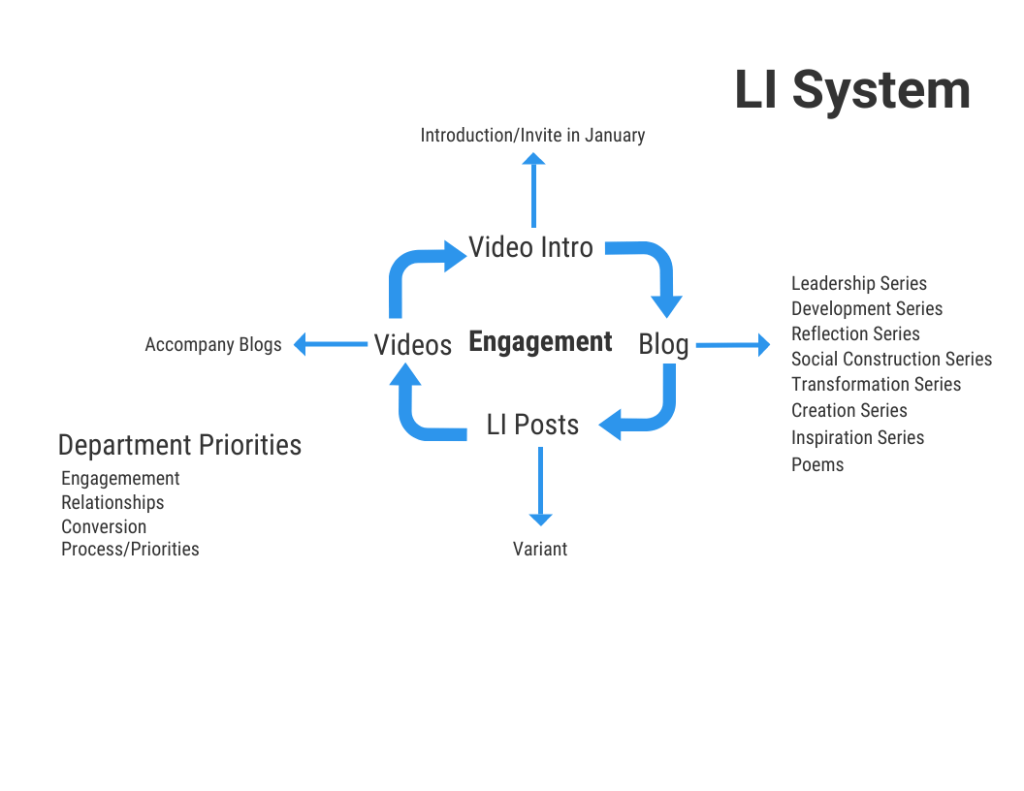
  1. Engagement – being fully engaged at all times with those you serve is important. Meaning, that it is important to create an engagement system that you can rely upon, which will ensure your engagement is, well, like a drum beat. Your clients, students, or customers need to rely upon your engagement pattern. I write about developing my LinkedIn engagement system in the post, A Blogger’s Diary 12/27/20: On Writing, Goal-Setting, Systems, and the Holidays, which can serve as one of many examples to draw upon.
  2. Consistency – a drum beat, or pattern, on which your clients, students, or customers can rely. Important. There are lots of ways to ensure you stay on track with your engagement. You can calendar your engagements, enter them into a project management software system, or keep them in a planner. The tool matters far less, than the output of making sure to engage regularly and consistently.
  3. Reciprocity – relationships are built upon many things, and reciprocity is one. Being in relationships means sharing yourself with your clients, students, or customers. And doing so in a genuine way. Remember, people know when we are inauthentic. They can see, hear, and feel it. Just be who you are, and reciprocate.
  4. Value – our clients, students, or customers want to know they are valued. They would like value, and to know they are valued. Both. Providing value comes in many forms, and it’s not always, actually rarely, monetary. It’s about being there for your clients, students, or customers. Taking care of them, treating them with kindness, and valuing their needs.
  5. Service – in the end, it’s all about service. All of it. The service we give ourselves, and the service we give out to our clients, students, or customers. When we value our service, we are always looking for, and creating, new ways to serve. Whether that is through a new business model, a new product, or a new service. Really. Ultimately, it’s about understanding the need, reflecting on that need, and creating a bridge for that need.

Internal and external influence matter. It’s not about ego. We are leaving ego at the door. It’s about service. About taking care of people. Finding out what they need, and working with them to fill that need.

When we are in relationship with people, we are in a unique position to serve.

And, as we continue to serve, our influence grows. Influence grows as we grow and deepen our relationships. The relationships we have with those we serve. Ultimately, it’s our peers, teams, clients, students, and customers that let us know about our influence.

When we have movement in our relationships, we can see it and feel it; and, when we have traction, we know, because reciprocity flourishes as we enter into new relationships each day. And, as we enter into more relationships, our service grows; and, yes, we also grow. Fun.

#authenticity, #consistency, #creativity, #development, #developmentalmoment, #engagement, #externalinfluence, #influence, #integrity, #internalinfluence, #leadership, #leadershipdevelopment, #questions, #reciprocity, #relationships, #self-development, #service, #value

The Leadership Series Part 2.5: Why Developing the Self is Always the First Step in Leadership

The Leadership Sociology of How we Speak and Act

Photo by Ilham Wicaksono on Unsplash

Alright, leadership sociology. What a fun phrase. What does it mean though? Good question. Let’s reset the last installment, and then we will get into that question.

In the last installment in the Leaders Series, The Leadership Series Part 2: Why Developing the Self is Always the First Step in Leadership, we began a discussion of four concepts important to leadership, which are thinking, feeling, speaking, and action. Then, in the last installment we elaborated on two of them. Namely, thinking and feeling.

Now, in this article, we will discuss the latter two, speaking and acting. Ready? Good. Here we go.

Leadership Sociology

Sociology is basically the study of group behavior. And, what do you have in groups? Yep, people. So, the study of people within context is super important. And, in fact, that’s one part of what we are doing in this series; and, we are doing so from a leadership lens.

When we reflect upon how we think and feel, we will ultimately get to a place where we are also considering how we speak, and then take action. All of these concepts are important to being, and becoming, an effective leader. Hm. When I write about effective leadership, what do you think of?

Well, in this context, I mean, a leader that understands themselves, first. Understanding yourself, who you are as a human being, is always the first step in becoming an effective leader. Why?

Because everything we do starts with us. Really. If we don’t understand why we think as we do, why we feel as we do, or speak and act as we do, we can never understand how the people we lead think, feel, speak, and act. Not possible.

However, when we are self-aware, we understand ourselves, and then? We understand the people we surround ourselves with, including our teams. Alright. Now, let’s discuss speaking and acting.

Photo by hatham on Unsplash

Speaking

When I use the phrase, speaking, I mean it in the literal sense of the word. How we use our words when we speak is important, as words and language, are very powerful. Speaking in this sense may be in actual verbal form, or in written form. Both are important.

In the article, 4 Reasons Why Language is Power, I discuss in some detail why language is powerful. For the purposes of this discussion, it is enough to know that our integrity is tied to how we speak. And, there are a few things we can use to measure our speech.

Here are a few.

  • Why are you saying it?
  • What are you saying?
  • How are you saying it?
  • When will you say it?
  • Whom will you say it to?
  • Where will you say it?

This may seem basic, and yet, to become more aware of how our speech impacts others, we must inquire into the why, what, when, how, whom, and where of our language.

There are several ways we can practice measuring our speech. Here are a few techniques I use.

  1. Write rough drafts – it is important to set out on paper, for me at least, the what and why first about my communications. It gives me a chance to print out the communication, and look at it from a different vantage point. I will also edit from paper.
  2. Email rough drafts – I always write my emails in advance, and will schedule them for a time in the near future. Sometimes that’s the next day, sometimes the next week. Depends. This tactic gives me time to reflect upon the communication some more. I have often when back and reworked an email that has already been scheduled.
  3. Whiteboard work – when I am unsure about the when, whom, and where, I often do whiteboard work about the communication. Well, actually, I often do whiteboard work about most of my communications. It is helpful to see my ideas up on a board, reflect on them, rework them, and then, send. Important and helpful.
  4. Get feedback – another strategy I use is asking coworkers for advice and feedback on my communications. As I’ve mentioned before, I am leading a statewide conversation about noncredit education, and when I have to communicate something clearly to this large group, I’ll get several people to weigh in and provide me feedback. They always see something I didn’t. Super helpful.

Another viable and valid strategy is to hold off on writing or speaking your communication until you are clear. I have actually cancelled team meetings before when the communication I needed to make to the team was just not clear enough for me.

It is much more important to have a high-quality communication that is clear, than a communication that may cause confusion.

Creating and delivering clear communication takes practice. And, that’s okay. We all need time to practice, and believe me, practicing your communication is a worthwhile endeavor. You will find that you will need to communicate less often, when you take more time to communicate clearly.

Photo by Unseen Histories on Unsplash

Acting

In leadership, the actions we take, combined with the language we use, really do define our leadership. When I worked in the private sector, my supervisor once said something like “you do a very good job displaying sweat equity.”

I was very young at the time, so I had to ask what it was that he meant.

Sweat equity simply means that you are willing, and do when needed, take any action that you ask a team member to take. Simple.

One of the first things I did in my current role was to learn everyone else’s role. Why? Because it gave me tremendous information about their work, who they were as a human being, and it also provided a context for me to learn about the businesses. Very important.

Here is how I currently organize my actions.

  1. Calendar – people often say something like, “if it’s not on my calendar, then it doesn’t exist,” and, for me, this is a truth. I work on my calendar three months in advance, and have it also scheduled that far in advance. Meaning, that I have sight into, and am actively, creating future contexts for myself and the team. Helpful.
  2. Basecamp – an average project management system, yet the one we have today; and, it works very well to hold information for the team. We have lots of projects running concurrently, so having a single place to hold our next actions is important.
  3. Franklin Planner – a tool I started using last year, and it helps fill the gaps between larger pieces of work and my calendar. I will typically use the planner for tasks related to the larger projects.

And, of course, I use post-its like many people, and whiteboards to help generate and create the thinking related to all of the aforementioned.

The language we use, and the actions we take say, well, really everything about our leadership.

For instance, if we speak about creating a future reality that is inspirational and gets people excited, yet there is no action, there is an incongruence that will leave people confused about the team’s directions.

Conversely, if we act and begin to create a future reality that is inspirational and has the potential to get people excited, yet there is no speaking about this newly created reality, again, there will be confusion about the team’s direction.

You may be asking, how do you know these things?

Pixabay

Well, like most things I write about, I’ve lived through them; and, our team has grown through them, and is stronger today for doing so.

Now, once you are in action, and your team is moving, it is important to keep the momentum going. Steve Jobs said something about this concept; and, alas, I cannot find it anywhere. It might have been in the book I read recently, Steve Jobs, by Walter Isaacson.

Anway, the gist of it? If you are not continuing to innovate, which to me speaks of being in action and creating traction for yourself and your team, your business is already dead.

We must continue to move ourselves and our teams forward. And, that takes clear communication and decisive action.

Alright, we’ve now completed the first 2.5 installments in the Leadership Series. And, just the other day, as I was preparing for this installment, it occured to me that there are two other concepts important to developing yourself as a human being and as a leader. And, they are?

Hearing and Seeing.

Both are important aspects to leadership, and all of life in general, and we will cover them in the next leadership installment.

For today?

Remember, becoming a leader means first leading from within. Understanding the why, what, how, when, whom, and where of how we think, feel, speak, and act. Once we understand our thinking, feelings, speech, and actions, we can more appropriately and effectively lead ourselves, and our teams into action and eventual traction.

#acting, #creatingaction, #innovation, #languageispower, #leadership, #leadershipdevelopment, #organization, #sociologyofleadership, #speaking, #speakingandacting, #takingaction, #verbalcommunication, #writtencommunication

My One Thing: Creating Alignment in Our Lives

How You Can Create Alignment Between Your Personal and Professional Lives, and Create a Life Part 1

Photo by Jon Tyson on Unsplash

In November of 2019, I went to a Nationwide Conference for practitioners of non credit education. There was a lot of valuable information at this conference, and a few book recommendations. I read often, so taking on more reading, with an already long list, is not something I do often, yet the book, The One Thing, caught my attention.

The book caught my attention, as everyone, professionally, yes, and even personally, have lots of things they want to accomplish. And, sometimes, when we have too many goals, we are unable to concentrate and move anything forward.

The basic premise of the book is to focus on that one thing that will move you forward, either personally or professionally, and let go of the rest. Yes, yes, easier said than done.

However, it got me thinking about a new series, where the goal will be to convey the one thing I’m focused on that day, week, month, quarter, or even year. And, then?

Well, most importantly, what I’m learning. Where have the obstacles been, and how did I get around them, or how did I let go as needed.

I think it will be fun, and if you find it interesting and educational, I’ll keep it going. What’s first? Good question.

One that is part of my work of the year. I would even go so far as to say it is my one thing this coming year. What’s that?

Photo by Gerrie van der Walt on Unsplash

Creating Alignment

Alright, so I’ve now been in my current work position for 3.5 years, and, in that time, there has been much change. Some created internally, and some, as we’ve all experienced, created externally.

However, the change is created, the important takeaway?

Change always comes. It is part of life. An unavoidable part, as much as some people would like to remove themselves from change as often as possible. And?

I understand. Change is difficult. Yet, there is a paradox here. What’s that? Change is also beautiful. Truth.

In addition to being in my current role at the community college for 3.5 years, I also developed myself during that time, both personally, and, yes, professionally. And, the more I develop, the more I see alignment between all aspects of my life. All of them.

And, that, quite frankly is just simple fun. Many people, as I once did, create a distinction between their personal and professional lives. These distinctions, however, can leave people feeling frayed and stressed when Monday, or the first day of their work week, rolls around. This does not need to be the case.

Photo by Tamara Gore on Unsplash

However, it takes time to get to a place where you can see alignment in all that you do. I’ve been working on it for 3.5 years; and, I’m closer, yet still have work to do. And, that’s okay, for it’s in the work we do in life, whether personal or professional, where the experience of life lives. And, that’s being alive.

Now, what tools have I used to create alignment between both my personal and professional lives. Good questions. Let’s take a look.

  • Vision – as I’ve written about before, having a vision, or declaring a purpose for your life, both personally and professionally is a key ingredient in creating alignment between your work life and your home life. Here are a few that I’ve used over the years.
    • To increase access to higher education for everyone.
    • To increase access to higher education for everyone by making leadership development, creativity, inspiration, and personal transformation available to every business, employee, and community member.
    • I live to create new access points to education and knowledge, and part of those access points is dissemination in print and in collaborative contexts, such as leadership and coaching individuals, teams, and organizations.
    • Develop, Inspire, and Transform.

Alright, that should do. As we can see there are definite similarities and dissimilarities between these visions. Still a work in progress. Yet, the fun part about creating a vision, or purpose, or mission statement, is seeing your vision iterate over time. Super fun, innovative, and expansive.

  • Goal-setting – as I’ve written about before, having tangible goals that live inside of our visions is of utmost importance. If you don’t have goals, you will not create movement on your vision. Here are some of the goals I’ve created for both my personal and professional self.
    • Pull community members and business leaders to us by providing them the why.
    • Create new relationships with community members and business leaders.
    • Priorities that are tied to the vision and mission.
    • Continue to improve and document all processes.
    • Publish a novel.
    • Increase my fluency in Spanish.
    • Travel to Spain.

Now, we can see how there is alignment, and, maybe, non-alignment between the goals and the visions. For the purposes of our discussion that matters less, than that there are goals declared. For it is in the declaring of goals, and setting our intention, that there will be movement in an area, that movement then becomes possible.

Funnily enough, sometimes you can set a goal, and totally forget about it, and you will still see movement in that area of your life if you pay attention. Why? Because you’ve set your intention that something be so, that you want to create movement in an area of your life. Intention is powerful.

Photo by Keytion on Unsplash

Alright, that’s all for this installment of the One Thing on creating alignment. In the next entry in the One Thing, Creating Alignment, we will look at how to take out goals, and create clear, and sometimes not so clear, objectives and priorities. Why is this important?

You can think about creating alignment, starting with a vision, as part of a larger process, which is like starting at the top of a funnel, and working your way down to the actions you take every day.

Because creating alignment is a part of my work of the year, it will take a couple entries to complete. However, as I’ve mentioned, this series will be an exploration of my One Thing, sometimes, of the day, week, month, quarter, and, yes, year, which is where we are starting.

I’m already thinking about a One Thing entry on baking. Hm. How fun would that be?

Remember, creating a One Thing simply means developing the ability to focus and create action around a vision or purpose we’ve intentionally created for ourselves. And, that vision might be for the day, the week, the month, quarter, or year.

It’s a paradox. In one way we can say it’s less about the timeframe and more about the focus you create on that which you want to manifest for yourself.

And, on the other, we can say, timing matters, as the more alignment we create between our personal and professional lives over time, the less of a distinction between these two realms there is; which I can say from personal experience is pretty powerful.

#creating-alignment, #creatinggoals, #creatingvision, #goal-setting, #huamndevelopment, #intention, #leadership, #personaldevelopment, #professionaldevelopment, #selfdevelopment, #selfimprovement, #theonething, #thepowerofintention

Creating Developmental Opportunities for Ourselves and Our Teams

6 Questions All Leaders Should Be Asking Themselves Right Now

Photo by Joshua Hibbert on Unsplash

As I continue to write the, well, second-and-a-half, installment of the Leadership Series: Why Developing The Self is Always The First Step in Leadership, another idea occurred to me. What occurred to me? Good question.

In fact, the idea lives inside of the first few installments of the Leadership Series, yet overviewing it in this article makes sense to me today, so here it is.

As we develop, there are six questions to ask ourselves, which can lead inward toward more awareness about who we are as a human being. And?

Well, as I’ve written about in other articles, the more we understand our own humanity, the more we can understand all humanity. Super helpful from a leadership perspective, and, well, a whole life perspective.

Without further ado, here are those six questions

Photo by Tachina Lee on Unsplash

1. What Do I Think?

Understanding yourself begins with getting a handle on how you think. What are your thoughts about the current reality, the state of your team, and the state of your life; a better question, maybe.

In order to lead teams effectively, we must first inquire into ourselves. When thoughts arise, it’s about letting go of the judgment we have about these thoughts, so we can understand them. When we can understand our thoughts, we are more effectively present to ourselves, and all of those around us.

Photo by bruce mars on Unsplash

2. How Do I Feel?

Emotions come and go. They are here, and then they are gone. However, human beings have a tendency to hold onto emotions, like thoughts, and carry them around throughout the day. This need not be the case.

We can learn to effectively have emotions, feel them, understand them, talk about them even, and then let them go, which is a large part of my own internal work today. And?

Just like our thinking, when we understand our emotions, we are better equipped to understand our own emotional states, and what led us to those states, and ultimately we are better able to understand the emotional states of the people around us. Important.

Photo by Jessica Da Rosa on Unsplash

3. How Do I Speak?

Several months ago I wrote the article, 4 Reasons Why Language is Power. And, it is true that language is very powerful. Therefore it is important to understand how we are speaking and what we are saying. This may sound simple, and, for some of you, this may be the case.

However, human beings have a tendency to use language as a currency without considering the replenishment of that currency, as if it is in a never-ending supply. And, whereas we can continue to create language as we like, we should question the necessity of the language and the communication that follows.

As I’ve written about many times, communication is key, as is the importance of making sure we are clear about our communication. It is far more important to communicate clearly than it is to communicate often.

Photo by Isi Parente on Unsplash

4. What Do I Hear?

As we get clearer on how we think, feel, and speak, we will begin to hear things that we may not have been previously present to.

For instance, someone on your team, or close to you, may say they feel great and that all is well. Yet, you may hear things in their tone of voice that tells a different story. It first takes being clear on yourself, and then you can begin to pick up on inconsistencies in behavior, speech, and emotion. And, guess what?

It may be your own inconsistency that you pick up on first. Actually, this is very likely. And? It’s not a demerit when this happens. It’s okay.

It does mean that investigating, or inquiring, into the inconsistency between our behavior, speech, and emotion is needed. Understanding why there is ant inconsistency, to begin with. Important.

Photo by Bruno Martins on Un,splash

5. What Do I See?

One of my favorites. As I continue my own development, which includes my own personal inquiry, a life coach, and a super dynamic and inquisitive team, I see so much more. More about my own humanity, and that of the teams. It works that way.

And, when you can see more facets of the human being you are, you are in a position to effect more change. More change for yourself, for your team, and for your organization, institution, or business.

Photo by mostafa meraji on Unsplash

6. How Do I Act?

Being in action is so important. And, how we act tells us, and everyone around us, a lot about who we are as a human being. How we act will, in fact, tell people how we see, hear, speak, feel, and think. For, ultimately, it’s the actions we take that say the most about who we are as human beings.

For instance, we can create language about creating and effecting change, however, without action, the language is just language. Action is where concepts in language become reality. Simple.

And, when we are clear on our own actions, we are able to discern differences in how people talk about their work, and actually do their work. An important distinction and discovery.

Alright, that was a brief overview of 6 questions all leaders should be asking themselves right now. And, in fact, these are questions that anyone interested in personal or professional development can ask themselves.

It’s inside the questions we first ask ourselves, and the work we do on ourselves, where we develop as a person and a leader.

And, as we develop, we create the possibility of development for everyone around us.

#development, #howdoyouact, #howdoyoufeel, #howdoyouhear, #howdoyousee, #howdoyouspeak, #howdoyouthink, #leadership, #leadershipdevelopment, #personaldevelopment, #professionaldevelopment, #self-development, #self-awareness, #sixquestionsallleadersshouldask, #teamdevelopment

A Blogger’s Diary 12/27/20: On Writing, Goal-Setting, Systems, and the Holidays

Photo by Darius Bashar on Unsplash

Well, this past week, I had an insight about writing. An insight that was derived from some of the blogs I follow. Yes, some of you, so thank you. The insight? Sure.

Namely, to write and schedule posts in advance. I’ve not done something like this on a regular basis, yet I can definitely see the utility, especially when during normal work times, of which this particular time period is not. So?

Well, I’ll get to that in a moment. First, let’s take a look at this week’s writing. Here we go.

Writing

  1. The Framed Window
  2. Focus
  3. Joy
  4. The Sunshine Blogger Award
  5. Swing
  6. Christmas Day
  7. Friends
  8. Flow

Yep, lots of poetry. Fun. And, this week? Sure.

As I was writing about above, I already have two posts scheduled for next weekend. An article on leadership, and one on vulnerability. It’s nice to have those written and scheduled, which will allow me to get back to work on the leadership series, the reflection series, and the social construction series next week. Excited.

Photo by Isaac Smith on Unsplash

Goal-Setting

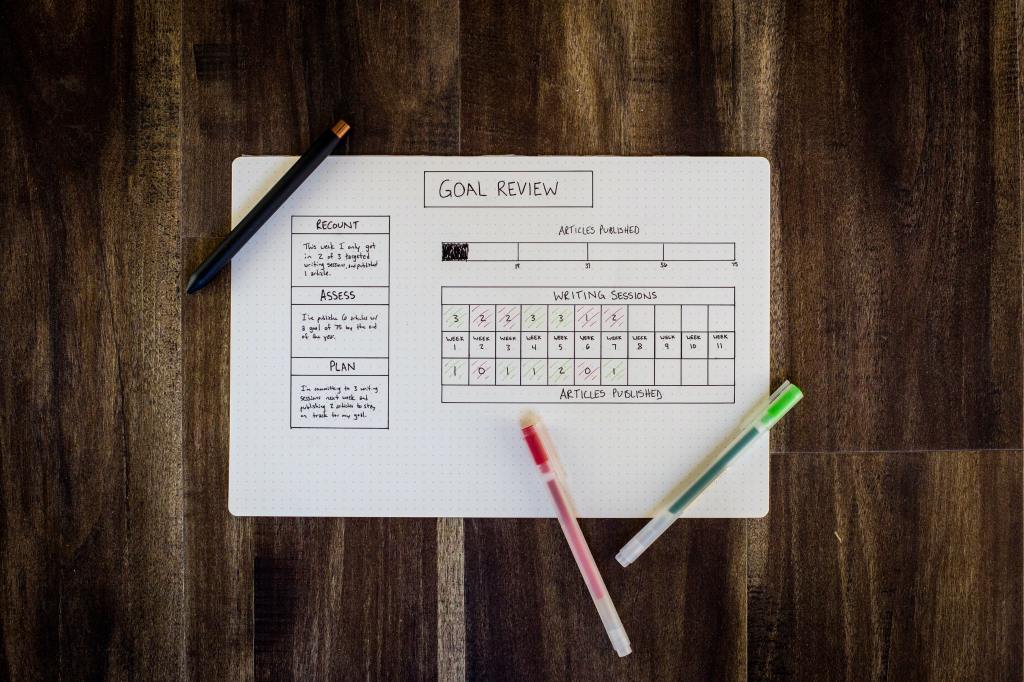
I’m present to goal-setting today, as I’ve created a new vision for some of my upcoming engagement on LinkedIn, and have set new goals within that vision. Of course, I’ve also created priorities that are connected to both the long-term, and short-term goals.

If goal-setting is something you’d like to learn more about, you can learn more about how I think about goal-setting in this article, Create A Vision For Your Future Self in 5 Minutes.

Photo by ThisisEngineering RAEng on Unsplash

Systems

And, when you have goals that live within your vision, whether that is personal or professional, you need a system to put it into. I’ve written a couple articles about creating systems, and will share my LinkedIn system with you here.

Venngage

There we go. That was fun. I do love venngage. Anyway, here we can see the department priorities, and then one way that I will take action next quarter to create more engagement through LinkedIn (LI). You will see there are some blog series listed, which are not actually a reality yet, however, that’s how goal-setting works.

First you create the vision, then the objectives, then the priorities, and then? Well, you get to work. I am excited about the opportunity to discuss the new series with you in the future.

Okay, let’s turn to holidays, shall we? Good. Here we go.

Photo by Andreas Dress on Unsplash

The Holidays

Wow, what a lovely time of year. I do love the holiday, as I’ve written about before. It’s more the time of year, when we are heading into deeper winter, and I can start to see the spring not far off.

Well, it’s still a ways off at this point, however, in the Pac Northwest, the days start to get noticeably longer in January. And, I do love longer days, and the possibility of more sun as we head towards March.

Though, we had a gorgeously sunny day today. Beautiful.

Though I didn’t travel this holiday, we did Zoom calls, like lots of people, and that was nice. I also spent time with my oldest son, playing frisbee golf in the rain and cold, yet it was so nice to spend time with him. We made a sweet potato and butternut squash chili, and had dark chocolate cranberry bread for dessert.

Yes, of course I made the bread from scratch! I love to cook and bake, which I don’t know that I’ve written about before. Anyway, the bread was delicious.

Alright, that’s all for this entry.

As we approach the New Year, I want to wish you all the best in the coming week, and in the coming year. I am so excited about this next year. Seriously. I am excited to continue to create and write, and continue to engage with your beautiful creations.

Stay healthy and well, and enjoy your week.

#poetry, #bloggers-diary, #blogging, #business, #diary, #goal-setting, #holidays, #leadership, #linkedin, #newyear, #objectives, #poem, #priorities, #systems, #videos, #vision, #writing

A Blogger’s Diary 12/13/20: On Writing, Reading, Videoing, and Vulnerability

Photo by Marcos Paulo Prado on Unsplash

Alright, another busy week, and, yep, also not busy. I’ve not started an entry that way before, have I? Nope. Why?

Well, it occurred to me this past week that in even the busiest times, when we feel like life is moving faster than we can follow along, there is always time. Now, granted, we have to create it, yet it does exist. In these pandemic days, I just wanted to make sure this is known. More time for yourself, for myself, is creatable.

Writing

Okay, now, into the writing that occurred this past week. Here we go.

  1. Tears
  2. Flight
  3. Ego
  4. A Developmental Moment #2: The 3 C’s of Authentic Productivity
  5. Silence
  6. The Reflection Series Part 6: Why is Creating Safety Important?
  7. Nature
  8. Breaking

And this week? Yep.

I’m currently working on a couple of new posts, which are.

  • The Social Construction Series Part 9: The Social Construction of Power
  • The Leadership Series Part 2.5: Why Developing the Self is Always the First Step in Leadership

I thought getting one of these published this week might happen, alas, that will not be the case. However, I do feel pretty confident about getting them both completed next week. We shall see. And, as I always say, or, rather, write, that is the fun part of the process. Not really knowing, and being at peace with that.

Now, let’s discuss the remote book club a little.

Photo by Jerry Wang on Unsplash

Reading

I’ve had so much fun with the remote book club. Last week, as we discussed in my last diary post, we finished Anxious People, and are now onto my choice, Killing Commendatore by Haruki Murakami. I’m a big Murakami fan, so I am super excited about this next book.

In my diary entry last week, I also wrote about connection and communication, and I’d like to report that having the additional connection and communication with the local folks in the remote book club has been amazing. Fun.

August, 2020

Videoing

Well, I’ve not written about creating videos in some time. Why? Well, I’ve been putting more time into my writing, and so the videos have been deprioritized. However, I have a whole new vision for video engagement, especially for LinkedIn, and so will be creating some new videos in the next quarter.

If you’ve not seen any of my videos, and are interested, due check out my Youtube channel. I’ve only had the channel for a short time, and find that creating videos is a beneficial way to connect with people from an audio/visual learning perspective.

You can also check out the videos on my site right here. Wow, I’ve not added a new video to the website since June. Phew. It’s been a little longer than I realized. Well, that just means there’s that much more to create!

Photo by Yukie Emiko on Unsplash

Vulnerability

I’ve written many articles on vulnerability. All of them intended to create the importance of actively being aware of how vulnerability can be transformational to both our personal and professional development. Seriously transformational.

I am resetting them here, as I do also believe that in the future we will need as much innovation as possible. And? Well, one of the gateways to unleashing creative potential is learning to be vulnerable. Alright, here are those articles.

  1. Vulnerability in Action: Three New Ways to Think About Vulnerability
  2. Writing and Life Series #1: On Writing and Vulnerability
  3. Living a Transformational Life: Authenticity and Vulnerability
  4. The Transformation Video Series – The 4 C’s of Vulnerability: Why Vulnerability is Transformational
  5. Vulnerability and Resilience
  6. 10 Reasons Why Embracing Vulnerability as a Strength is Important to Your Development
  7. The 4 C’s of Vulnerability: Why Vulnerability is Transformational

Wow. That’s fun.

Alright, that’s this week’s entry.

Please stay healthy and well, and have a wonderful week.

#blog, #blogger, #bloggers-diary, #blogging, #diary, #haruki-murakami, #innovation, #leadership, #leadershipdevelopment, #reading, #transformation, #videos, #vulnerability, #writing

The Reflection Series Part 6: Why is Creating Safety Important?

A 3-minute Reflection on 4 Things Every Leader Can Do to Create Safety on Teams

Photo by Annie Spratt on Unsplash

Well, we are 9-months into a pandemic, actually much more than 9-months, yet, here locally, 9-months ago was when the restrictions started. And?

I’ve been thinking about and reflecting upon just how important creating safety on teams is all the time; and, now? Even more important.

Developing safety within a team creates a context where possibilities abound. Meaning, when people feel safe, there is trust, and where there is trust, well, anything is possible. Seriously. Anything. And, now?

Living inside the pandemic for the past 9-months has been unsettling in many ways. Though I’ve written about, and we’ve discussed many times before, how much more there is to know and learn, than is known.

It is equally true that when the foundation of someone’s belief system is shaken, it can be really hard, and can make people begin to question what they thought they knew about how the world works.

Meaning that for some people, they already know there is much more to know than they know, and now what they thought they knew has been up-ended. Hard.

Right, so what can we do? How can we make sure to continue to create safety on teams so people feel like they have solid ground to stand on? Good questions. Let’s take a look at 4 ways we can do just that.

Photo by Matthew Waring on Unsplash

Reality

Have you ever heard about managing the real and ideal? Yes, no? Either way, it simply means that when in a leadership role it is important to always strive for an ideal, think vision, while being very clear on the current reality.

Basically you are managing the tension between what is and what you are creating. Super important. Why?

Because even though the current reality might be hard to hear, people need confirmation that what they are seeing, thinking, and feeling is accurate. The very last thing they need is false hope. Nope. They need reality.

When you stand in the current reality, there is workability. Why? Because when you are clear and the team is clear, you can continue to create the ideal free from the distraction, what if.

You will get more focus, concentration, and organization when you are clear on the current reality while continuing to create the ideal future state. More focus, concentration, and organization from yourself and the team.

Photo by Clay Banks on Unsplash

Listen

We all know how important it is to listen. Very important. There might not be a more important leadership skill. Seriously. This is especially true when times are stressful.

People need someone they can come to, someone they can depend upon. Someone that is going to be present, listen, and give honest feedback. They need that, their team members need that, and, as the leader, you need that. From? From each of them. Yep.

There is immense power in being present and being an active listener.

Active listening simply means being mindful in your conversations. Be present, pay attention, empathize, and use your conversational skills to really understand, take in, and respond in kind to the person you are talking to. Important.

You will get much more back when you practice and coach people to practice active listening. More for yourself, for your teammates, and the entire team. When people really listen, they know what’s going on with their teammates, which makes for a much more productive work environment.

Photo by Edvin Johansson on Unsplash

Collaborate

When the team understands the current reality and the ideal state you are creating, is practicing active listening, the likelihood for collaboration increases. Why?

Because when people feel comfortable, are able to focus, and know how their teammates feel and what they think, they are immediately more approachable. And, when we are more approachable, collaboration is just easier.

And, what do you get when your team is able to collaborate more effectively? Yep. Innovation.

When your team works together, there is a synergy that occurs, and inside of that synergy, you get ideas that take the team further. You don’t get these types of synergistic innovations from silos. Just doesn’t happen.

Photo by Jakob Owens on Unsplash

Action

Of course, you cannot create an ideal reality from a very clearly defined current reality without taking action. Nope. Not possible.

Actually, the coolest thing about creating an ideal, and generating all of the innovative ideas, is seeing them executed upon. Amazing. It is one of the things I love the most about working on teams.

Yep, it is so much fun to create, and, yes, I am very creative. Yet, it is equally beautiful and fun to watch the transformation of what can be months of innovative work into a new system, process, program, training, or class. Really.

Wow, that was fun.

Alright, remember, creating safety on teams is a powerful leadership skill. Truly.

As we discussed, creating safety ensures that people can feel comfortable in the current reality, even a very stressful one, while continuing to strive for the ideal reality.

Practicing and modeling active listening also fosters safety by creating a context of respect and mindfulness, while collaboration and taking action ensures that the bridge between innovation and execution is clearly articulated and navigated.

And, when the bridge between innovation and execution is clear and ideas are being executed upon, the team will feel a sense of accomplishment, which increases the team’s morale and feelings of security and safety.

Creating safety on teams may be one of the most important things a leader can do, especially during times that are more stressful and unknown. The ability for everyone to feel safe is that important.

#activelistening, #collaboration, #covid-19, #creatingsafety, #currentreality, #humandwevelopment, #idealreality, #leadership, #leadershipdevelopment, #listen, #pandemic, #safeteams, #selfdevelopment, #takingaction, #teamdevelopment, #vision

A Developmental Moment #2: The 3 C’s of Authentic Productivity

3 Reasons Why Being Authentic Will Increase Your Productivity

Photo by Arno Senoner on Unsplash

A few months ago I wrote the article, The Reflection Series Part 2: What Does it Mean to Live an Authentic Life?, where we discussed living an authentic life. The basic premise being how living an authentic life is an empowering experience.

Now, in this article, we will discuss how we can increase our productivity by simply being the human being we know ourselves to be. Yep. Ready? Good here. we go.

Have you ever seen behind the scenes of a theatrical production? Yes, no? Well, either way, there is a ton of work that goes into creating a stage production, even a small production at a local high-school.

I remember taking, what was then called stagecraft, in high-school, and that was our job. Creating the stage, or, in sociological terms, creating the visual context for the play. Was great fun.

Erving Goffman, an American-Canadian Sociologist from the 1950’s, talks about life in terms of a play. Noting that we all take on particular personas based on socialization, yes, the context we are working or living in, and the ideas we have about who we are, and, yep, the ideas we believe others hold of us. Phew. That’s a lot of information to hold, which, hint, hint, is part of the point of this article.

I digress, back on track. Here is a short, well, relatively short, synopsis of what Goffman terms dramaturgy.

Dramaturgy is a sociological perspective that is a component of symbolic interactionism and is used in sociological analysis of everyday life. Developed by American sociologist Erving Goffman in his seminal 1959 text The Presentation of Self in Everyday Life, dramaturgy uses the metaphor of theater to explain human behavior. According to this perspective, individuals perform actions in everyday life as if they were performers on a stage. Identity is performed through roles. Here, the term “role” works in two ways, referencing both the name for a theatrical character and the ways in which individuals fill roles in reality by acting as a mother, friend, husband, etc. Dramaturgy argues that the presentation of oneself through role is a way of engaging with society.

Social Science

Alright, now, you may be asking, okay, and?

Well, think about all of the roles you take on each day. Seriously. Count them real quick. Here, I’ll do it too. I came up with 7. And, that was just a quick inquiry. A more focused inquiry would reveal many, many, more. And, you? How many did you come up with? Yep. Good.

Now, with all of these roles, and what I will now term performances, how much preparation do you do to create, deliver, and sustain these performances? Hm. Quite a bit, I bet. And, time? Yep, preparation is time. And time is energy.

Alright, so we spend a lot of time backstage, in Goffman terms, preparing for our individual performances, even when we are unaware. Yep. And, then frontstage, delivering them? Exactly. We spend a lot of energy there too. True.

And, now, let’s add in being inauthentic. If we are, let us say, working even harder on our performances, because we believe we need to look, act, and behave a certain way, either because we feel we should, or, we feel that others expect that of us, that is even more tiring. Phew. That’s a lot of tiring. Yet, there is another way. How?

By being authentic. And, guess what? Yep. When we are authentic, we save energy.

Photo by Sharon McCutcheon on Unsplash

Authenticity and Productivity

When we are authentic, we save energy because, quite simply, we work less hard trying to convince ourselves and everyone around us that we are someone we’re not. As we’ve already seen, it takes a lot of time and energy just to perform our various roles, which does not include trying to perform them in ways we think we are supposed to.

Further, we all have a limited amount of energy to utilize throughout our day. We can think about our day in terms of exchanging units of energy for each task, project, or activity we take on.

As we exchange our units of energy, our stores become depleted. Now, we can recharge these energy stores by doing various things, such as taking a walk or sitting and breathing for a couple of minutes.

However, we should also covet these energy stores by being aware of our energy levels throughout the day. And? Well, when we are continuously thinking about our performances, our energy is depleted at a faster rate. Why?

Because we are distracted with thoughts and mentalizations that make the work we are engaged with more arduous. Pretty simple.

Photo by Brian Wangenheim on Unsplash

However, when we aren’t concerned about our performances, meaning we are being authentic and true to the person we know ourselves to be, our energy is saved from tasks such as worrying and overthinking. Important.

And, when we save our energy we can be more productive.

Alright, here then are three productivity byproducts that come from being authentic. Being who we really are. Just for fun, we will call these the 3 C’s of Authentic Productivity.

  • Capacity – when we are authentic, we have more energy for the aforementioned reasons, and we also have more capacity. More capacity to do the work we need to do, free from the constraints of spending time and energy concentrating on performing in ways that we think we are supposed to, or we think others expect us to.
  • Concentration – when we are authentic, we are also able to concentrate more easily. Our minds are not busy fretting about our performance. For instance, wondering what someone thinks about what we just said, or how we are acting in a particular context. When we are free from these mentalizations, we are much more clear.
  • Clarity – and, yes, when we have more capacity to concentrate on the work at hand, we are also more clear. We have more clarity in general about all things, and are able to complete tasks and projects with much greater efficiency and effectiveness.

There is one more bonus to being authentic. Insight.

Photo by Kyle Tran on Unsplash

When we have more capacity, are able to concentrate more effectively, and have more clarity, we create the possibility of receiving more insights. Insights occur when our minds are quiet. When we are quiet.

And, we are much more quiet when we are not in a continuous internal battle about who we are. When we are authentic, this battle drops away, and insights come more frequently.

Wow, that was fun.

Alright, that’s the 3 C’s of Authentic Productivity. Know there are many more benefits to being authentic. Seriously. Many more.

Pretty much everything we do, we do more effectively and efficiently when we are authentic. As we’ve seen in our discussion, worrying about our performances depletes our energy levels.

However, when we are authentic, we save our energy, and in doing so increase our capacity, ability to concentrate, and overall clarity.

You are already just as you are supposed to be. So be who you are, be authentic, embrace yourself, and enjoy each moment of every day.

Oh, yes, and, remember, when you do so, you’ll also enjoy more insights along the way. And, believe me, that’s super fun.

#authenticity, #authenticityandproductivity, #capacity, #clarity, #concentration, #energy, #humandevelopment, #insight, #leadership, #productivity, #selfawareness, #selfdevelopment, #selfimprovement