For me, it then follows to ask the question, is high sensitivity binary, as in you have it or you don’t? Or, rather, is high sensitivity a spectrum of experiences? Hm. Good questions. Let’s take a look, shall we?
Alright, so let’s first define binary and spectrum. Ready? Good. Here we go.
Well, that’s fun. Now, for the purpose of this conversation, think about being highly sensitive as a 1 and not being highly sensitive as a 0. Make sense? Okay, good. Now spectrum.
There we go. Again, for the purpose of this conversation, you can think about a complete or wide range of related sensitivities, as a spectrum of sensitivity. Make sense? Good.
Because if we think about sensitivity as binary, we limit the experience of being a sensitive human being; and, we also limit our own experience of what it means to be sensitive.
As we discussed in the previous post on sensitivity, being sensitive is not a problem or an issue, it is, rather a gift. And, being able to own that gift, and really internalize it as such is an important and empowering experience.
Really, important.
And, at the same time, it is equally important for everyone to have access to the possibility that they are also sensitive. Why?
Because understanding our sensitivities, whatever they might be, is such an important aspect of being a human being. Truly, truly, this is so.
People that are highly sensitive often turn to substance abuse and other forms of self-abuse in order to dull their sensitivity. And? It is extremely damaging.
Yes, of course, for the person with sensitivity, and also, for those around them. Both. Yet, it need not be that way. Truly.
Here are a couple of questions you can ask yourself to see if you too might be a highly sensitive person. Ready? Good. Here we go.
Are you sensitive to light?
How about being sensitive to cold or heat?
Maybe you are sensitive to noise?
Are you easily overwhelmed?
Do you feel your own emotions more?
How about feeling other people’s emotions more?
Now, you can use these questions, if you choose, to start an investigation into your own sensitivity. Yep. Oh, me?
Yes, to every question listed above, and more. I typically score between 17 and 19 on the highly sensitive person questionnaire, which I recommend everyone take. Everyone. Seriously. Why?
Because finding out that I was a highly sensitive person was pivotal in my life. A gift, as was previously stated.
Therefore, I want to make sure everyone has the opportunity to explore their sensitivity, free from bias and judgment. Yep, that’s about it.
Further, I believe that everyone is highly sensitive in some way. Really. I do.
Remember, sensitivity is a spectrum, not binary. Meaning, that it is quite possible that everyone in some way is highly sensitive to something. Yep. Possible. And?
Well, removing stigma about sensitivity, especially in the United States, is super important. Especially for young boys. Really.
Young boys are often raised to dissociate themselves from their sensitivity, yet, that is so very unhealthy. It is unhealthy for them as a developing child and youth, and is also unhealthy, as we’ve discussed, for them later in life.
What is healthy?
Proper education about sensitivity. For instance, positive reinforcement and education about what sensitivity means; and, knowledge about how to cope with emotions. All. Important.
Bottom line? Sure. Here we go.
We all have sensitivities. We have to. Why? Because we are all human, and all humans have senses. And, these senses are, at times, maybe all the time, sensitive. And?
That is perfectly okay. More, as we’ve discussed, it is a gift.
Embracing our sensitivity creates more possibility. More possibilities about ourselves and our lives, and more possibilities for those around us.
When we model acceptance of our sensitivity, we remove the stigma about sensitivity and create spaces that are more inclusive and loving.
And, I for one, think that acceptance, inclusivity, and love are needed in this world. Nay, they are very much needed in this world. Today, yep, and, well, tomorrow too. And, for all time.
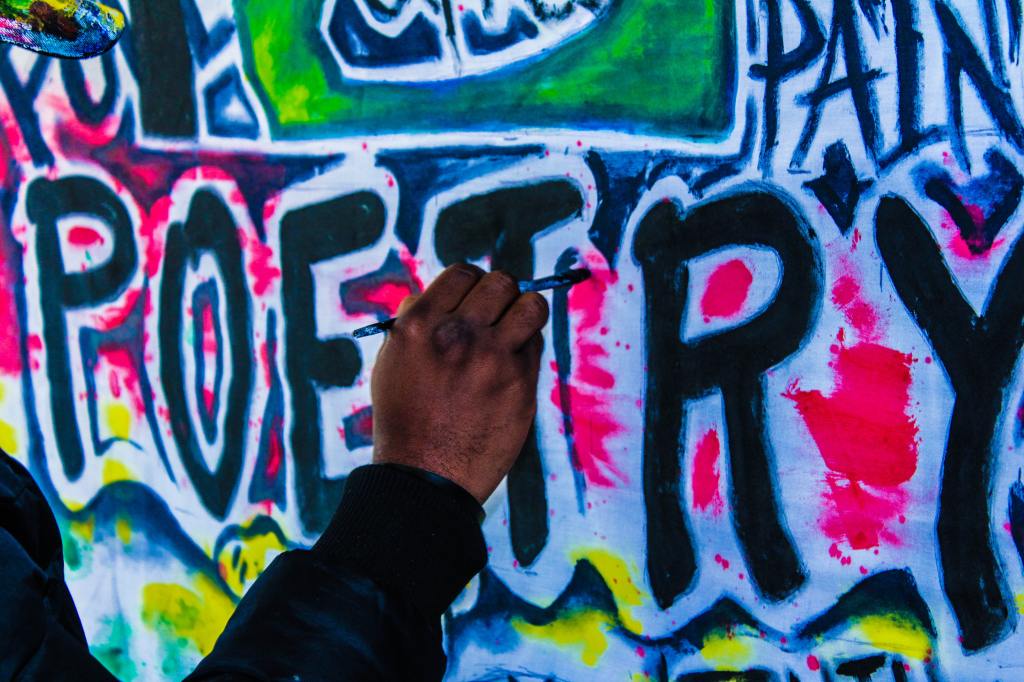
Well, we are two days away from the election, COVID-19 cases are up in Oregon, we are continuing to deliver classes and training remotely, and I’ve been writing more poetry lately. Hm. Interesting.
Right, so here’s what I was up to this week, in the event you missed it.
It is interesting to consider. I do like writing poetry, and am having a lot of fun doing so. Funnily enough, as I’ve written before, I haven’t read much poetry, though when I find poetry I like, I go back to it again and again.
And, I’ve been reading a lot more poetry lately from the blogs of some of the most outstanding poets and writers. Lovely.
I also love the challenge of writing poetry. It is an interesting paradox. In some ways it is easier than the other topics I choose to write about, and yet, in many ways much more difficult. Hm.
I enjoy sitting with a peice, pondering it, reflecting upon it, until the right words show up. Fun. I also like being out on a walk or hike, and find that inspiration stirring me to stop on the path, and make notes in my phone.
Is it like that for you? It is often that way for me.
Anyway, at this time, I have planned another installment on sensitivity, a piece on sociology, and, hm, ah yes, a post on wonder. That’s what I have for now anyway. The poetry, you ask? Good question.
You know that works a little differently than the other things I choose to write about. Well, sort of.
With poetry, I usually see something that inspires me, and then from that derive a concept and then write. So, in a way the process is similar to my other writing, and yet feels a little different.
Lastly, I wanted to acknowledge just how hard this year has been for everyone. Really. It has been.
Yet, I also want to acknowledge the resiliency of the human spirit. Very resilient. Much more resilient than people imagine. And, it is beautiful to be a part of and to witness.
I have found and read so many inspirational stories this year. Please know that you are all inspirational to me. All of you.
Though life has been extraordinarily hard this year, and, well, looks like it will continue to be, at least from a pandemic perspective, for some time; know that you are bringing people hope and joy each and every day by writing as you do. Just as you are and as you do. Wonderful.
I’ve laughed and teared more at my computer screen these past few months than at any other time in my life. And, I’m not young. Ha!
Right. Well, it is about time to wrap up this installment. Yet, before I do, let me leave you with two quotes I adore from two very inspirational people. Here you go.
“Although the world is full of suffering, it is also full of the overcoming of it.” ― Helen Keller
Have you ever thought about the word difference? And, maybe also considered, how that one word connotes a ton of power through the use of language? Hm.
Alright, well, whether you’ve ever considered that question or not, we are going to consider it, together, here. Ready? Good, let’s go.
Let’s define, as we always do, our key term. Here we go.
difference
noun /ˈdɪfrəns/ /ˈdɪfrəns/
[countable, uncountable] the way in which two people or things are not like each other; the way in which somebody/something has changed
Now, let’s reset quickly a social construction, shall we? Here we go.
social construct
noun /ˌsəʊʃl ˈkɒnstrʌkt/
A concept or perception of something based on the collective views developed and maintained within a society or social group; a social phenomenon or convention originating within and cultivated by society or a particular social group, as opposed to existing inherently or naturally.
Difference, then, is a concept or perception based on the collective views of a society or social group, which does not exist naturally.
Right, so difference does not occur naturally. However, the word difference is used constantly. Really. Think about how often you say that word. Now, think about how often you hear that word utilized. Often, I’m sure.
Yet, according to social constructionism difference is all created in language. All of it. Meaning that difference is only as real as long as we continue to create it as real. Think about that for a minute.
Difference is only as real as long as we continue to create it as real.
Phew, that’s pretty powerful. Why? Well, before we get to that question, there are two new aspects to social constructionism to introduce here. Ready? Good. Here we go.
Habitualization describes how “any action that is repeated frequently becomes cast into a pattern, which can then be … performed again in the future in the same manner and with the same economical effort” (Berger and Luckmann 1966). Not only do we construct our own society but we also accept it as it is because others have created it before us. Society is, in fact, “habit.”
For example, your school exists as a school and not just as a building because you and others agree that it is a school. If your school is older than you are, it was created by the agreement of others before you. In a sense, it exists by consensus, both prior and current. This is an example of the process of institutionalization, the act of implanting a convention or norm into society. Bear in mind that the institution, while socially constructed, is still quite real.
Now, why are habitualization and institutionalization important to the discussion of difference? Good question.
Because, essentially, society is in a pattern of continuously creating difference, which has thus become institutionalized and generally accepted as fact.
Even though difference is not a naturally occurring phenomenon or fact. Difference is still real in accord with the consequences that stem from such socially constructed differences.
Yep, that last part, that these social constructions are real in their consequences is another sociological theory. Here you go.
Thomas Theorem
Another way of looking at this concept is through W.I. Thomas’s notable Thomas theorem which states, “If [people] define situations as real, they are real in their consequences” (Thomas and Thomas 1928). That is, people’s behavior can be determined by their subjective construction of reality rather than by objective reality. For example, a teenager who is repeatedly given a label—overachiever, player, bum—might live up to the term even though it initially wasn’t a part of [their] character.
Now, what happens when you take a concept such as difference, defined as separate and not the same, and you habitulize and institutionalize that concept? You get the Thomas Theorem. Meaning?
That now you have a socially constructed concept, difference, and have created a reality that continuously creates difference each and every day. Yep. And, who does this you ask?
Well, everyone does. Remember, based on the definition, a social construct is a concept that is agreed upon in a society.
There is, of course, a spectrum here. Meaning, that some people are aware of how difference operates, and some are not. The former people may have noble intentions, and might not.
And, the latter, well, they are in habitualization without awareness. And, that happens too. It’s not a judgment, or justification, it just occurs that way.
And, what does this mean to individuals? Right, another good question. Here we go.
Self-fulfilling Prophecy
Like Berger and Luckmann in their description of habitualization, Thomas states that our moral codes and social norms are created by “successive definitions of the situation.” This concept is defined by sociologist Robert K. Merton as a self-fulfilling prophecy. Merton explains that with a self-fulfilling prophecy, even a false idea can become true if it is acted upon.
Now you have a society that has habituzlied and institutionalized difference, and when people internalize that social construct as truth, which is common, they act on that difference. Why?
Because that is what they are told, and that is what they are shown.
Right. That is just so. However, before our short analysis is complete, we must introduce one more important concept. Here we go.
(noun) The ability of an individual, group, or institution to influence or exercise control over other people and achieve their goals despite possible opposition or resistance.
There we go. And, let’s have one more important quote here to assist in our discussion.
“Most (and probably all) societies exist with systems of social division and social stratification, through which entire categories of people are elevated above others, providing one segment of the population with a disproportionate amount of money, power and prestige” (Macionis and Plummer 2012:232).
Because difference is not wielded within a vacuum. Nope. Difference is wielded though very distinct power structures, which continue to perpetuate that difference. Important.
Yet, what is really different? Not much in fact. Facts? Sure.
People are more similar to each other than they are different. Biologically, we are more homogenous than we are heterogeneous. That is the bottom line. Biologically we are very much alike. Almost identical, in fact.
What does this mean?
That all of the difference we ascribe to individuals and groups of people are created in language and acted out through socialization, creating habits that are continuously repeated, which are then institutionalized as factual, and affected to and by each and every one of us on some level.
Phew, that was a lot. Hm. Right, so where do we go from here?
Yep, awareness and resistance. And? Well, awareness is first.
When we are aware of how these concepts function in language and are codified in social structures, we can choose to let them go and create a new way of thinking and acting. Truth. And?
It all starts with us disrupting our patterns and habits. Really. All of them. Questioning why we do the things we do, and then looking internally to find out if those habits or patterns make sense any more.
If they do? Okay, keep doing them. If they don’t? Let them go and create something new.
Every time we create a new pattern or habit, we are actively releasing the continuation of what was, or the status quo, and that? Well, that is an act of resistance. Social resistance, if you will. And?
Well, often people mistakenly believe that the only social resistance that leads to social change must happen on a grand scale right away. There was a time I thought this way. Really. And?
It’s just not so. Social change more often happens within small actions that lead to larger actions that then lead to large-scale social change.
Just take a look around the United States right now, and you will see a legacy of active social resistance in the streets right now. Yep.
And, that started with various individuals actively disrupting and then releasing an old pattern or habit, and creating a new one. Just like that. Beautiful to see, and even more beautiful to be a part of.
Now, I have more to say, however, this is a series, therefore we will get to continue our discussion of social constructionism in the near future. Until then?
Question
Question the concepts you hold and the habits you have and see if they still work for you. And, if not, release them, and create something new. That’s pretty much it, and that is powerful. You are powerful.
When was the last time someone said something to you about being authentic? About living your life authentically, or about being your authentic self? Hm.
I’m actually not even sure how common these questions are, yet, I do know that inquiring into authenticity and our authentic-self is important. Yep.
Right, as this is the 3-minute series, let’s get right into the discussion, shall we? Good. Here we go.
“Authenticity is a collection of choices that we have to make every day. It’s about the choice to show up and be real. The choice to be honest. The choice to let our true selves be seen.” ― Brené Brown
Alright, now, let’s take each of these quotes, one at a time, and work through why authenticity is so important to all of our lives, your life. Ready? Good. Here we go.
Right, so what is good old, well, not old anymore, Socrates talking about here? You may ask yourself, I think for myself every day, that’s self-evident, so? Yet, do you?
What Socrates is pointing to in this quote is the awareness of the realization that oftentimes we think, and make decisions, about our life predicated on something that someone else taught us. Yep. Truth.
Meaning, that in order to live an authentic life, and to be who we really are, we must let go of all of the ideas, concepts, and notions of who we think we are, and create ourselves as we want to be.
What does this mean? Good question.
It means learning to let go of outdated ideas and concepts about ourselves, which were handed to us during our childhood. Yep.
Socialization is powerful. And, unless we do the internal work necessary to let go of these concepts, we will continue to make decisions about our life from these standpoints. And?
We will continue to live a life that someone else has created for us. Yet, it need not be that way. Nope. Being you, the you that you know yourself to be is most important.
In sociology, there is a theory that basically states that part of how we know who we are is by the confirmations we get from others about how we present ourselves (Goffman, 1959). The issue?
When we present ourselves as others would like us to, we are not being authentic. We are being a version of ourselves that other people would like us to be. Not authentic.
What Thoreau is saying is to let go of the need we have, a compulsion if you will, to please others, to be as they would like us to be. Instead, Thoreau is tasking us with being true to the person we know ourselves to be.
Further, to create ourselves again and again, as we want to be, not as someone else expects us to be. That is authentic; and, that is being you.
Alright, so what is Brené talking about here? What does it mean to show up and be real? Right. Here we go.
When we are authentic, we are authentic in all aspects of ourselves. We own and stand in our strengths and weaknesses. Both. We show up just as we are. Important. Why?
Well, to do otherwise is not being authentic. When we are being inauthentic, we are trying to conform to an idea. An idea of what or whom we are supposed to be. And, that is, well, painful. Really.
It is painful to deny aspects of ourselves under the guise that they don’t exist. Whether that is a strength we are hiding or a weakness we are hiding. Either way.
When we hide aspects of ourselves, we limit ourselves, and we limit the context we are in. Why?
Because we are human. We are supposed to have strengths and weaknesses. That’s part of being human.
However, if we perform, for instance, as if we don’t have a weakness, or an opportunity to develop, we are, at that moment, literally limiting our developmental potential. And, guess what?
It’s totally avoidable. We can choose to be the authentic-self we know ourselves to be. Full of strengths and weaknesses. Both fantastic and boring. Both. And, that is perfectly okay. Why?
Because we are human, and being both fantastic and boring, for instance, is a part of our shared humanity. Better to embrace it and be the authentic-self you know yourself to be. And?
Simple.
When you are true to your authentic self, and you embrace all aspects of yourself, you get to choose how you create yourself next. In each moment, every day. And, guess what else?
When you live your life that way, you are now living the authentic-life you’ve always dreamed about.
Live well. Live authentically.
Citation: Goffman, E. (1959). The presentation of self in everyday life. Doubleday.



















 Shadowlight Words