Creating Developmental Opportunities for Ourselves and Our Teams

6 Questions All Leaders Should Be Asking Themselves Right Now

Photo by Joshua Hibbert on Unsplash

As I continue to write the, well, second-and-a-half, installment of the Leadership Series: Why Developing The Self is Always The First Step in Leadership, another idea occurred to me. What occurred to me? Good question.

In fact, the idea lives inside of the first few installments of the Leadership Series, yet overviewing it in this article makes sense to me today, so here it is.

As we develop, there are six questions to ask ourselves, which can lead inward toward more awareness about who we are as a human being. And?

Well, as I’ve written about in other articles, the more we understand our own humanity, the more we can understand all humanity. Super helpful from a leadership perspective, and, well, a whole life perspective.

Without further ado, here are those six questions

Photo by Tachina Lee on Unsplash

1. What Do I Think?

Understanding yourself begins with getting a handle on how you think. What are your thoughts about the current reality, the state of your team, and the state of your life; a better question, maybe.

In order to lead teams effectively, we must first inquire into ourselves. When thoughts arise, it’s about letting go of the judgment we have about these thoughts, so we can understand them. When we can understand our thoughts, we are more effectively present to ourselves, and all of those around us.

Photo by bruce mars on Unsplash

2. How Do I Feel?

Emotions come and go. They are here, and then they are gone. However, human beings have a tendency to hold onto emotions, like thoughts, and carry them around throughout the day. This need not be the case.

We can learn to effectively have emotions, feel them, understand them, talk about them even, and then let them go, which is a large part of my own internal work today. And?

Just like our thinking, when we understand our emotions, we are better equipped to understand our own emotional states, and what led us to those states, and ultimately we are better able to understand the emotional states of the people around us. Important.

Photo by Jessica Da Rosa on Unsplash

3. How Do I Speak?

Several months ago I wrote the article, 4 Reasons Why Language is Power. And, it is true that language is very powerful. Therefore it is important to understand how we are speaking and what we are saying. This may sound simple, and, for some of you, this may be the case.

However, human beings have a tendency to use language as a currency without considering the replenishment of that currency, as if it is in a never-ending supply. And, whereas we can continue to create language as we like, we should question the necessity of the language and the communication that follows.

As I’ve written about many times, communication is key, as is the importance of making sure we are clear about our communication. It is far more important to communicate clearly than it is to communicate often.

Photo by Isi Parente on Unsplash

4. What Do I Hear?

As we get clearer on how we think, feel, and speak, we will begin to hear things that we may not have been previously present to.

For instance, someone on your team, or close to you, may say they feel great and that all is well. Yet, you may hear things in their tone of voice that tells a different story. It first takes being clear on yourself, and then you can begin to pick up on inconsistencies in behavior, speech, and emotion. And, guess what?

It may be your own inconsistency that you pick up on first. Actually, this is very likely. And? It’s not a demerit when this happens. It’s okay.

It does mean that investigating, or inquiring, into the inconsistency between our behavior, speech, and emotion is needed. Understanding why there is ant inconsistency, to begin with. Important.

Photo by Bruno Martins on Un,splash

5. What Do I See?

One of my favorites. As I continue my own development, which includes my own personal inquiry, a life coach, and a super dynamic and inquisitive team, I see so much more. More about my own humanity, and that of the teams. It works that way.

And, when you can see more facets of the human being you are, you are in a position to effect more change. More change for yourself, for your team, and for your organization, institution, or business.

Photo by mostafa meraji on Unsplash

6. How Do I Act?

Being in action is so important. And, how we act tells us, and everyone around us, a lot about who we are as a human being. How we act will, in fact, tell people how we see, hear, speak, feel, and think. For, ultimately, it’s the actions we take that say the most about who we are as human beings.

For instance, we can create language about creating and effecting change, however, without action, the language is just language. Action is where concepts in language become reality. Simple.

And, when we are clear on our own actions, we are able to discern differences in how people talk about their work, and actually do their work. An important distinction and discovery.

Alright, that was a brief overview of 6 questions all leaders should be asking themselves right now. And, in fact, these are questions that anyone interested in personal or professional development can ask themselves.

It’s inside the questions we first ask ourselves, and the work we do on ourselves, where we develop as a person and a leader.

And, as we develop, we create the possibility of development for everyone around us.

#development, #howdoyouact, #howdoyoufeel, #howdoyouhear, #howdoyousee, #howdoyouspeak, #howdoyouthink, #leadership, #leadershipdevelopment, #personaldevelopment, #professionaldevelopment, #self-development, #self-awareness, #sixquestionsallleadersshouldask, #teamdevelopment

A 3-minute Reflection on 3 Ways to Display and Visualize Linear Data

How Being Mindful About Our Learning Styles Creates Movement

Photo by You X Ventures on Unsplash

Several months ago, I wrote the article How We Learn, and Why it’s Important to Understand. Though I’ve always been interested in and engaged with learning styles, the pandemic has brought the need to consider new ways to continue to learn in a way that fits our particular learning styles even more present for me. And?

Well, I had an insight this week about visual learners, of which, I am one. And, thought about how important it is to ensure that no matter where we are called to work, or what data we are called to work on, that we can all access ideas and tools that can assist our efforts to continue to move ourselves forward.

Alright, so in this 3-minute reflection, I am including three ways that I create opportunities to feed the hyper-visual learner that I am. Ready? Good. Here we go.

Photo by Nareeta Martin on Unsplash

1. Print the Data and Display It

Much of the data our team uses is linear. Simply meaning that there is an order to whatever data we are handling, or using, such as step 1, 2, and then, 3. Simple.

Yet, when we are only looking at a set of steps, such as steps 1 through 3, for instance, we may not see how step 3 may be correlated, or, rather, affect step 17. And, it is important that we consider these other possible correlations.

I find great utility in printing and displaying data on an open surface. It allows me to see the data from a different perspective, and gets me away from the computer, which though very helpful, can become limiting. Limiting how? Good question. Here is an example.

The team I work on has many projects going on at the same time, with different leads from different programs. And, just like other team members, I lead my share. Now, with my projects, I will print out an aspect of that project, it may be the latest iteration of some language or numbers I want to consider, and display each one with all of the other projects I’m working on. It looks like this.

December 17, 2012

The reason that the printing and displaying technique is so effective is that it also allows me to see across programs, to possible correlations between them. The intersections of which create more synergy and foster new outputs and outcomes for our team. Super fun.

2. Display the Data Differently

Another technique we like to use is to simply display data differently. An example? Sure.

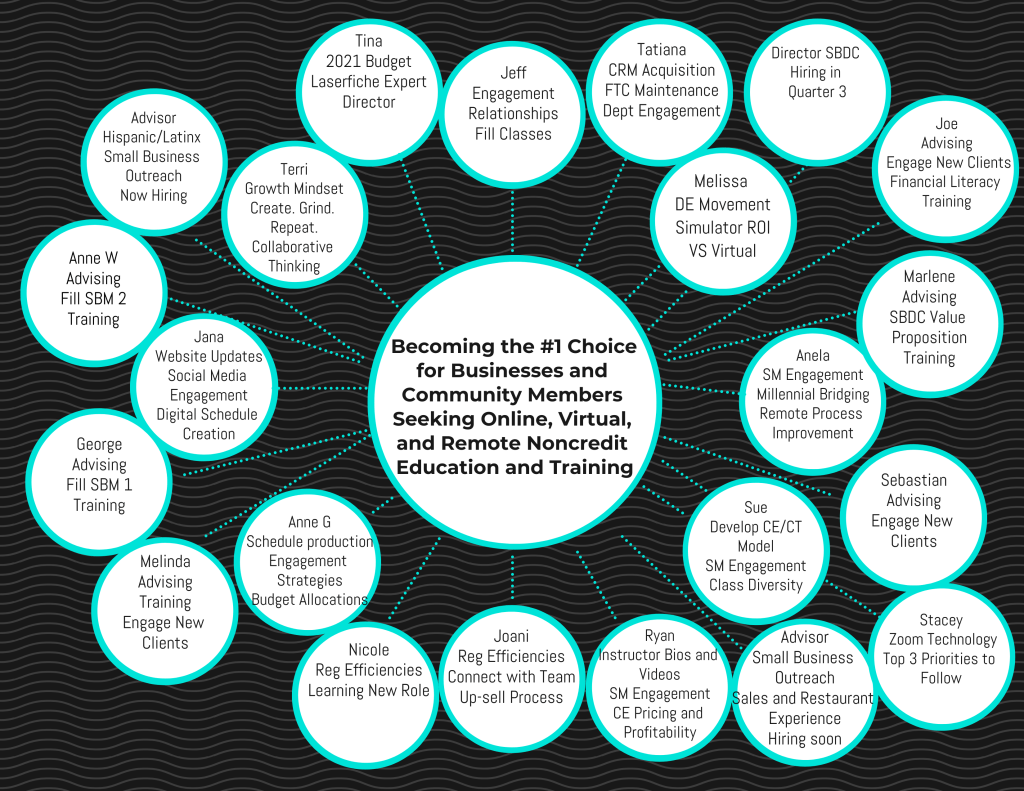
I’ve written previously about the vision we’ve created on this team, and have also written about department-level and individual-level priorities; and, how important it is that individual priorities connect to the department priorities and the larger departmental vision. These connections ensure that everyone is moving in the same direction, and that we are pointed towards our vision.

However, if you simply look at a list of priorities with a vision say as a header to a linear document, there is utility, yet it is rather lackluster. Meaning, we can do better to ensure that people see all of the priorities; and, fully understand how their priorities and the actions that live inside of those priorities are connected to the department.

Here is a very simple visual example of what that looks like.

December 17, 2020

This mind map was created using Venngage, which is a fun tool for taking linear data and making that data visual. Helpful.

These types of visualizations also let people see how their work is connected to their teammates. Especially teammates in other programs they might not see as much. Also helpful.

3. Whiteboards

Of course we’re going to discuss whiteboards, one of my favorite ways to display linear and nonlinear data and information. And, yep, it can go both ways.

Meaning, that you can start with linear data and then create nonlinear ideas and connections, just as you can start with nonlinear data and create a linear system that works for the project you are working on.

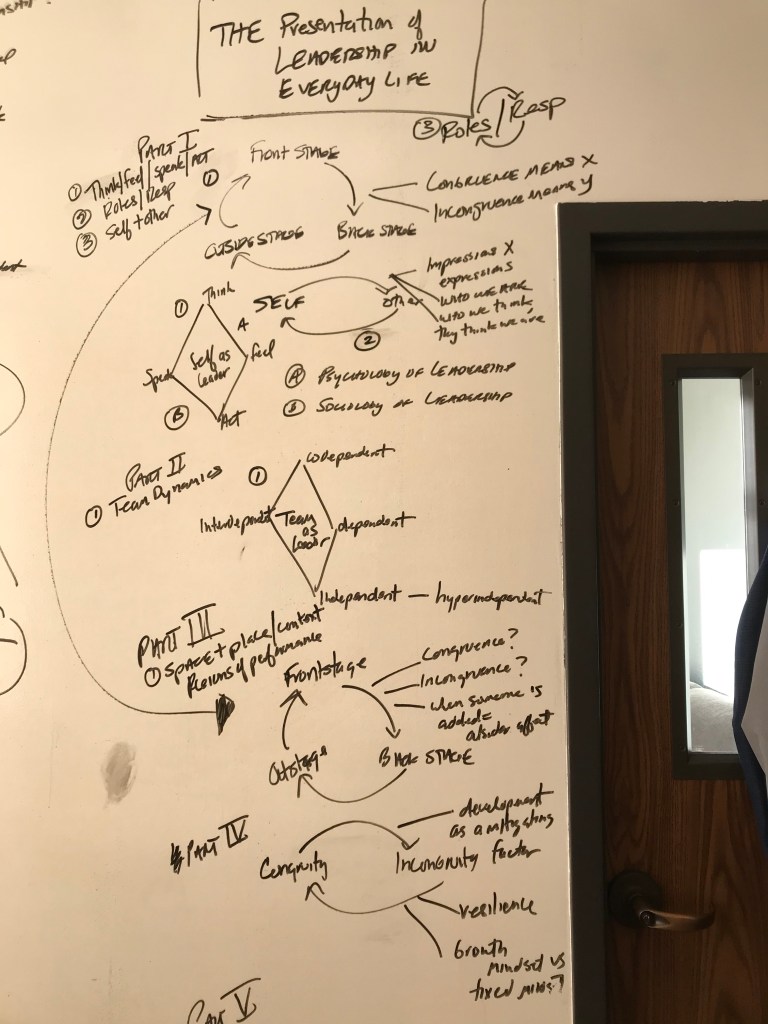
Here is an example of a linear and nonlinear whiteboard I did about some future writing I have in mind.

December 17, 2020

Here you can see the linear thinking in the sectioning off of information by parts, and then the nonlinear, which there is more of, in the variously, and in some ways haphazardly, written constructs and concepts. What am I doing? Good question.

I am getting ideas out of my mind and onto a medium that will allow me to continue to iterate these constructs and concepts for future use. As the work unfolds, there is always something I see differently and learn about, which would have been unavailable to me without working the whiteboard process as I do. Much fun.

How you manage to continue to feed your visual nature matters much less than you create the opportunity to visualize data and information in ways that continue to take your thinking, and that of your teams, further.

When we are mindful about how we learn, we can create all kinds of new possibilities that allow us to step outside of the limitations that are found in very helpful systems, like computer technology.

And, when we do so, we open up new ways to view, think, internalize, and reflect upon these data and information in ways that were previously unavailable to us, which can create more movement for ourselves and our teams.

#correlativedata, #data-and-information, #displaying, #intersectionswithinandbetweendata, #learningstyles, #linear, #movement, #nonlinear, #visualizing, #whiteboards

A Blogger’s Diary 12/13/20: On Writing, Reading, Videoing, and Vulnerability

Photo by Marcos Paulo Prado on Unsplash

Alright, another busy week, and, yep, also not busy. I’ve not started an entry that way before, have I? Nope. Why?

Well, it occurred to me this past week that in even the busiest times, when we feel like life is moving faster than we can follow along, there is always time. Now, granted, we have to create it, yet it does exist. In these pandemic days, I just wanted to make sure this is known. More time for yourself, for myself, is creatable.

Writing

Okay, now, into the writing that occurred this past week. Here we go.

  1. Tears
  2. Flight
  3. Ego
  4. A Developmental Moment #2: The 3 C’s of Authentic Productivity
  5. Silence
  6. The Reflection Series Part 6: Why is Creating Safety Important?
  7. Nature
  8. Breaking

And this week? Yep.

I’m currently working on a couple of new posts, which are.

  • The Social Construction Series Part 9: The Social Construction of Power
  • The Leadership Series Part 2.5: Why Developing the Self is Always the First Step in Leadership

I thought getting one of these published this week might happen, alas, that will not be the case. However, I do feel pretty confident about getting them both completed next week. We shall see. And, as I always say, or, rather, write, that is the fun part of the process. Not really knowing, and being at peace with that.

Now, let’s discuss the remote book club a little.

Photo by Jerry Wang on Unsplash

Reading

I’ve had so much fun with the remote book club. Last week, as we discussed in my last diary post, we finished Anxious People, and are now onto my choice, Killing Commendatore by Haruki Murakami. I’m a big Murakami fan, so I am super excited about this next book.

In my diary entry last week, I also wrote about connection and communication, and I’d like to report that having the additional connection and communication with the local folks in the remote book club has been amazing. Fun.

August, 2020

Videoing

Well, I’ve not written about creating videos in some time. Why? Well, I’ve been putting more time into my writing, and so the videos have been deprioritized. However, I have a whole new vision for video engagement, especially for LinkedIn, and so will be creating some new videos in the next quarter.

If you’ve not seen any of my videos, and are interested, due check out my Youtube channel. I’ve only had the channel for a short time, and find that creating videos is a beneficial way to connect with people from an audio/visual learning perspective.

You can also check out the videos on my site right here. Wow, I’ve not added a new video to the website since June. Phew. It’s been a little longer than I realized. Well, that just means there’s that much more to create!

Photo by Yukie Emiko on Unsplash

Vulnerability

I’ve written many articles on vulnerability. All of them intended to create the importance of actively being aware of how vulnerability can be transformational to both our personal and professional development. Seriously transformational.

I am resetting them here, as I do also believe that in the future we will need as much innovation as possible. And? Well, one of the gateways to unleashing creative potential is learning to be vulnerable. Alright, here are those articles.

  1. Vulnerability in Action: Three New Ways to Think About Vulnerability
  2. Writing and Life Series #1: On Writing and Vulnerability
  3. Living a Transformational Life: Authenticity and Vulnerability
  4. The Transformation Video Series – The 4 C’s of Vulnerability: Why Vulnerability is Transformational
  5. Vulnerability and Resilience
  6. 10 Reasons Why Embracing Vulnerability as a Strength is Important to Your Development
  7. The 4 C’s of Vulnerability: Why Vulnerability is Transformational

Wow. That’s fun.

Alright, that’s this week’s entry.

Please stay healthy and well, and have a wonderful week.

#blog, #blogger, #bloggers-diary, #blogging, #diary, #haruki-murakami, #innovation, #leadership, #leadershipdevelopment, #reading, #transformation, #videos, #vulnerability, #writing

The Reflection Series Part 6: Why is Creating Safety Important?

A 3-minute Reflection on 4 Things Every Leader Can Do to Create Safety on Teams

Photo by Annie Spratt on Unsplash

Well, we are 9-months into a pandemic, actually much more than 9-months, yet, here locally, 9-months ago was when the restrictions started. And?

I’ve been thinking about and reflecting upon just how important creating safety on teams is all the time; and, now? Even more important.

Developing safety within a team creates a context where possibilities abound. Meaning, when people feel safe, there is trust, and where there is trust, well, anything is possible. Seriously. Anything. And, now?

Living inside the pandemic for the past 9-months has been unsettling in many ways. Though I’ve written about, and we’ve discussed many times before, how much more there is to know and learn, than is known.

It is equally true that when the foundation of someone’s belief system is shaken, it can be really hard, and can make people begin to question what they thought they knew about how the world works.

Meaning that for some people, they already know there is much more to know than they know, and now what they thought they knew has been up-ended. Hard.

Right, so what can we do? How can we make sure to continue to create safety on teams so people feel like they have solid ground to stand on? Good questions. Let’s take a look at 4 ways we can do just that.

Photo by Matthew Waring on Unsplash

Reality

Have you ever heard about managing the real and ideal? Yes, no? Either way, it simply means that when in a leadership role it is important to always strive for an ideal, think vision, while being very clear on the current reality.

Basically you are managing the tension between what is and what you are creating. Super important. Why?

Because even though the current reality might be hard to hear, people need confirmation that what they are seeing, thinking, and feeling is accurate. The very last thing they need is false hope. Nope. They need reality.

When you stand in the current reality, there is workability. Why? Because when you are clear and the team is clear, you can continue to create the ideal free from the distraction, what if.

You will get more focus, concentration, and organization when you are clear on the current reality while continuing to create the ideal future state. More focus, concentration, and organization from yourself and the team.

Photo by Clay Banks on Unsplash

Listen

We all know how important it is to listen. Very important. There might not be a more important leadership skill. Seriously. This is especially true when times are stressful.

People need someone they can come to, someone they can depend upon. Someone that is going to be present, listen, and give honest feedback. They need that, their team members need that, and, as the leader, you need that. From? From each of them. Yep.

There is immense power in being present and being an active listener.

Active listening simply means being mindful in your conversations. Be present, pay attention, empathize, and use your conversational skills to really understand, take in, and respond in kind to the person you are talking to. Important.

You will get much more back when you practice and coach people to practice active listening. More for yourself, for your teammates, and the entire team. When people really listen, they know what’s going on with their teammates, which makes for a much more productive work environment.

Photo by Edvin Johansson on Unsplash

Collaborate

When the team understands the current reality and the ideal state you are creating, is practicing active listening, the likelihood for collaboration increases. Why?

Because when people feel comfortable, are able to focus, and know how their teammates feel and what they think, they are immediately more approachable. And, when we are more approachable, collaboration is just easier.

And, what do you get when your team is able to collaborate more effectively? Yep. Innovation.

When your team works together, there is a synergy that occurs, and inside of that synergy, you get ideas that take the team further. You don’t get these types of synergistic innovations from silos. Just doesn’t happen.

Photo by Jakob Owens on Unsplash

Action

Of course, you cannot create an ideal reality from a very clearly defined current reality without taking action. Nope. Not possible.

Actually, the coolest thing about creating an ideal, and generating all of the innovative ideas, is seeing them executed upon. Amazing. It is one of the things I love the most about working on teams.

Yep, it is so much fun to create, and, yes, I am very creative. Yet, it is equally beautiful and fun to watch the transformation of what can be months of innovative work into a new system, process, program, training, or class. Really.

Wow, that was fun.

Alright, remember, creating safety on teams is a powerful leadership skill. Truly.

As we discussed, creating safety ensures that people can feel comfortable in the current reality, even a very stressful one, while continuing to strive for the ideal reality.

Practicing and modeling active listening also fosters safety by creating a context of respect and mindfulness, while collaboration and taking action ensures that the bridge between innovation and execution is clearly articulated and navigated.

And, when the bridge between innovation and execution is clear and ideas are being executed upon, the team will feel a sense of accomplishment, which increases the team’s morale and feelings of security and safety.

Creating safety on teams may be one of the most important things a leader can do, especially during times that are more stressful and unknown. The ability for everyone to feel safe is that important.

#activelistening, #collaboration, #covid-19, #creatingsafety, #currentreality, #humandwevelopment, #idealreality, #leadership, #leadershipdevelopment, #listen, #pandemic, #safeteams, #selfdevelopment, #takingaction, #teamdevelopment, #vision

A Developmental Moment #2: The 3 C’s of Authentic Productivity

3 Reasons Why Being Authentic Will Increase Your Productivity

Photo by Arno Senoner on Unsplash

A few months ago I wrote the article, The Reflection Series Part 2: What Does it Mean to Live an Authentic Life?, where we discussed living an authentic life. The basic premise being how living an authentic life is an empowering experience.

Now, in this article, we will discuss how we can increase our productivity by simply being the human being we know ourselves to be. Yep. Ready? Good here. we go.

Have you ever seen behind the scenes of a theatrical production? Yes, no? Well, either way, there is a ton of work that goes into creating a stage production, even a small production at a local high-school.

I remember taking, what was then called stagecraft, in high-school, and that was our job. Creating the stage, or, in sociological terms, creating the visual context for the play. Was great fun.

Erving Goffman, an American-Canadian Sociologist from the 1950’s, talks about life in terms of a play. Noting that we all take on particular personas based on socialization, yes, the context we are working or living in, and the ideas we have about who we are, and, yep, the ideas we believe others hold of us. Phew. That’s a lot of information to hold, which, hint, hint, is part of the point of this article.

I digress, back on track. Here is a short, well, relatively short, synopsis of what Goffman terms dramaturgy.

Dramaturgy is a sociological perspective that is a component of symbolic interactionism and is used in sociological analysis of everyday life. Developed by American sociologist Erving Goffman in his seminal 1959 text The Presentation of Self in Everyday Life, dramaturgy uses the metaphor of theater to explain human behavior. According to this perspective, individuals perform actions in everyday life as if they were performers on a stage. Identity is performed through roles. Here, the term “role” works in two ways, referencing both the name for a theatrical character and the ways in which individuals fill roles in reality by acting as a mother, friend, husband, etc. Dramaturgy argues that the presentation of oneself through role is a way of engaging with society.

Social Science

Alright, now, you may be asking, okay, and?

Well, think about all of the roles you take on each day. Seriously. Count them real quick. Here, I’ll do it too. I came up with 7. And, that was just a quick inquiry. A more focused inquiry would reveal many, many, more. And, you? How many did you come up with? Yep. Good.

Now, with all of these roles, and what I will now term performances, how much preparation do you do to create, deliver, and sustain these performances? Hm. Quite a bit, I bet. And, time? Yep, preparation is time. And time is energy.

Alright, so we spend a lot of time backstage, in Goffman terms, preparing for our individual performances, even when we are unaware. Yep. And, then frontstage, delivering them? Exactly. We spend a lot of energy there too. True.

And, now, let’s add in being inauthentic. If we are, let us say, working even harder on our performances, because we believe we need to look, act, and behave a certain way, either because we feel we should, or, we feel that others expect that of us, that is even more tiring. Phew. That’s a lot of tiring. Yet, there is another way. How?

By being authentic. And, guess what? Yep. When we are authentic, we save energy.

Photo by Sharon McCutcheon on Unsplash

Authenticity and Productivity

When we are authentic, we save energy because, quite simply, we work less hard trying to convince ourselves and everyone around us that we are someone we’re not. As we’ve already seen, it takes a lot of time and energy just to perform our various roles, which does not include trying to perform them in ways we think we are supposed to.

Further, we all have a limited amount of energy to utilize throughout our day. We can think about our day in terms of exchanging units of energy for each task, project, or activity we take on.

As we exchange our units of energy, our stores become depleted. Now, we can recharge these energy stores by doing various things, such as taking a walk or sitting and breathing for a couple of minutes.

However, we should also covet these energy stores by being aware of our energy levels throughout the day. And? Well, when we are continuously thinking about our performances, our energy is depleted at a faster rate. Why?

Because we are distracted with thoughts and mentalizations that make the work we are engaged with more arduous. Pretty simple.

Photo by Brian Wangenheim on Unsplash

However, when we aren’t concerned about our performances, meaning we are being authentic and true to the person we know ourselves to be, our energy is saved from tasks such as worrying and overthinking. Important.

And, when we save our energy we can be more productive.

Alright, here then are three productivity byproducts that come from being authentic. Being who we really are. Just for fun, we will call these the 3 C’s of Authentic Productivity.

  • Capacity – when we are authentic, we have more energy for the aforementioned reasons, and we also have more capacity. More capacity to do the work we need to do, free from the constraints of spending time and energy concentrating on performing in ways that we think we are supposed to, or we think others expect us to.
  • Concentration – when we are authentic, we are also able to concentrate more easily. Our minds are not busy fretting about our performance. For instance, wondering what someone thinks about what we just said, or how we are acting in a particular context. When we are free from these mentalizations, we are much more clear.
  • Clarity – and, yes, when we have more capacity to concentrate on the work at hand, we are also more clear. We have more clarity in general about all things, and are able to complete tasks and projects with much greater efficiency and effectiveness.

There is one more bonus to being authentic. Insight.

Photo by Kyle Tran on Unsplash

When we have more capacity, are able to concentrate more effectively, and have more clarity, we create the possibility of receiving more insights. Insights occur when our minds are quiet. When we are quiet.

And, we are much more quiet when we are not in a continuous internal battle about who we are. When we are authentic, this battle drops away, and insights come more frequently.

Wow, that was fun.

Alright, that’s the 3 C’s of Authentic Productivity. Know there are many more benefits to being authentic. Seriously. Many more.

Pretty much everything we do, we do more effectively and efficiently when we are authentic. As we’ve seen in our discussion, worrying about our performances depletes our energy levels.

However, when we are authentic, we save our energy, and in doing so increase our capacity, ability to concentrate, and overall clarity.

You are already just as you are supposed to be. So be who you are, be authentic, embrace yourself, and enjoy each moment of every day.

Oh, yes, and, remember, when you do so, you’ll also enjoy more insights along the way. And, believe me, that’s super fun.

#authenticity, #authenticityandproductivity, #capacity, #clarity, #concentration, #energy, #humandevelopment, #insight, #leadership, #productivity, #selfawareness, #selfdevelopment, #selfimprovement

A Developmental Moment #1: Inspiration

How Inspiration Relates to Our Personal and Professional Development

Photo by Mona Eendra on Unsplash

In the article, The Leadership Series Part 1: What is Leadership, and Why is it so Important?, we discussed several leadership characteristics. And, it is these characteristics, which, by the way, are applicable to every aspect of our lives, that we will cover, one at a time, in this new series. Where to start? Let’s see.

Well, let’s start with this past week’s reflections, shall we? Good. Here we go.

Alright, so this past week, I’ve been reflecting a lot upon inspiration. What is inspiration, where does it come from, how can we get more of it, and what do we do if we run out of it. Very important questions. And?

Well, this week I’ve also been reflecting upon the creation of a new series. A series that can encompass a multitude of topics, and, yep, this is it, and inspiration will be the first topic.

Some of these developmental discussions will be longer, and some will be shorter. It will depend.

Alright, for this entry, let’s tackle the first question on inspiration. Ready? Good. Let’s go.

Photo by Melissa Askew on Unsplash

Where Does Inspiration Come From?

I really do love this topic, as it seems so simple, right? Inspiration, well, it’s all around us. Some people say they find nature inspirational, or other people in their lives, such as their friends and family, or coworkers. And, that is beautiful. Truely. Yet, there is something missing here. Do you know what it is? Hm.

It is the viewpoint. Meaning?

That inspiration does not live outside of you. Nope. It lives inside of you. We look outward and place inspiration onto other things and people, yet that inspiration comes from within. Always has come from within, and always will come from within.

Why does this matter to your development? Good question. Here is one, of many, reasons why.

  1. When we know inspiration comes from within, we stop looking outside of ourselves for our own inspiration. Being aware of the source of our inspiration is important to our development, because when we fully realize that our inspiration comes from within, we are not bound to the changing tides of people and things. Simple. And?
Photo by Mick Haupt on Unsplash

Well, we know that change is inevitable. It is part of life. Yep. And, when we get clear on the fact that inspiration does not live in the changing world, that, in fact, it can be developed, and maintained, regardless of external circumstances, we become more powerful. Really.

Does that mean that we don’t ever feel down, or stressed, or sad? No, it does not. We are meant to feel all of our emotions; to feel them, know them, and learn how to talk about them.

And, yet, we can still find our inspiration even during the most stressful times. Why? Because even though we may consider a situation stressful, we know that our inspiration is always there. Waiting for us.

Alright, so what can we do to connect, or reconnect, to our own inspiration? I think there is one thing we can all do that will assist in making our connection, or reconnection, to our inspiration stronger. What’s that?

  1. Make time for yourself. A must.

When we create time for ourselves, to be with ourselves, just for ourselves, we get to know ourselves better. And, the more we know ourselves, the more clear on our own inspiration we become. Really.

Next time, then, when things are really hectic, and you are feeling overwhelmed, stop. Stop doing what you are doing, and go for a walk, sit down under a tree and look around, or look up at the beautiful stars in the sky. Stop and just be.

For it is in this space, where your inspiration will find you.

#clarity, #compassion, #connection, #contemplation, #emotionalintelligence, #emotions, #inspiration, #leadershipdevelopment, #meditation, #mindfulness, #overwhelm, #personal-development, #professionaldevelopment, #reflection, #selfdevelopment, #selfimprovement

The Leadership Series Part 2: Why Developing the Self is Always the First Step in Leadership

The Leadership Psychology of How We Think and Feel

Photo by Morgan Housel on Unsplash

This past week a colleague of mine and I were talking about leadership. Well, to be more accurate, we are always talking about leadership. Fun.

Anway, this colleague was talking about the upcoming leadership group training they would be facilitating, and they were talking about how important it is for leaders to understand how they think, feel, and act.

After reflecting upon the concept of thinking, feeling, and acting, which I totally agree with, another concept occured to me. Speaking. Also important.

Thus, the idea for this first-half of the two-part article on Developing the Self was created. Before we get into our discussion, however, let’s reset the first installment in the Leadership Series.

In the first installment of the Leadership Series, The Leadership Series Part 1: What is Leadership, and Why is it so Important?, we unpacked leadership as a concept and practice.

We also discussed 2 things that are very important to be clear about early on in any leadership development journey, which are

  1. Understanding yourself.
  2. Understanding your leadership style.

In this second installment, we will discuss understanding yourself as the very first step in a leadership development journey. Why? Good question.

Let’s take a look, shall we.

There are two ways we will approach this discussion.

  1. Psychologically
  2. Sociologically

Ready? Good, let’s go.

Leadership Psychology

Right, so, what in the world is leadership psychology? Well, in this context, we are going to address two main concepts. Thinking and feeling. Both are very important to understand for anyone in leadership.

If you don’t know why you think and feel as you do, you’ll never be able to understand how and why others think and feel as they do. Simple.

And, as a leader, you must understand how the people in your team, organization, business, and or family, or friend network think and feel. Very important.

Having an impact starts with us. Each of us. Understanding how and why we think and feel as we do is a necessity in any leadership role. Any and all leadership roles.

Photo by Brooke Cagle on Unsplash

Thinking

An entire article, nay, book can be written about how we think in regards to, well, just about everything in life. Leadership included. It’s that important.

In fact, how we think drives everything else we will discuss in this article. It all starts with the mind. The quality of our mind. Meaning? Good question.

As I’ve written about in other articles, human beings are meaning-makers. Meaning, pun intended, that we take in data, information or stimuli, and we convert those stimuli, whatever they are, into narratives.

We do this to make sense of the world, and our place in it. A simple example can illustrate this point.

If my thinking is about the past, and all of the wrongs I’ve suffered, or bad things that have happened, I will bring these thoughts, feelings, verbalizations, and actions into the present moment. And?

I, in essence, will recreate the past. Reliving, as possible, past trauma again and again. And, so will everyone else I am interacting with and in relationship with.

Photo by Zachary Kadolph on Unsplash

However, if I am aware of my thoughts, and how I think, I can work on the thought impressions, called samskaras in sanskrit, and, over time, release them.

When they are released they stop showing up as a thought. It takes time.

These samskaras, thought impressions of old patterns and habits, loose power when you inquire into why they are there in the first place. Meaning, that creating self-awareness for a leader is a crucial aspect of leadership development.

When we have some sense of our own self, we can step outside of those thought patterns or habits and create new ones.

And, it is in the creation of new thought patterns where true empowerment is found for leaders, first, yes, for themselves, and then for their teams, organizations, families, and friends.

There are four things I do on a regular basis to increase my self-awareness.

  1. Meditation
  2. Diet
  3. Exercise
  4. Coaching

Each of these contributes to self-awareness in unique ways, and they combine to increase clarity, calmness of mind, well-being, and insight into who you are as a human being, and how you relate to yourself and everyone else. Very important.

Photo by Caique Silva on Unsplash

Feeling

As was aforementioned, how we think really does affect, even predict, how we feel, speak, and act, and how we feel on a general level and even on a more specific level, which is very important.

Important to how we relate to ourselves and everyone else.

I grew up in a household where people definitely displayed emotion, yet it was still hidden, and definitely not talked about. And, that’s not a demerit. Why?

Because my parents were not shown how to understand their emotions and then how to constructively talk about them. It is far more normal, especially in the United States, than people might imagine. And?

Not helpful to your own development, nor is it to your teams, organizations, families, or friends. If you don’t know why you feel the way you do, you will not understand how others feel.

And, if you are unable to understand how you and the people around you feel, you cannot talk about feelings in productive and constructive ways.

However, when you know how you feel, understand why you feel as you do, and learn how to talk about emotions in healthy ways, you can navigate more complex conversations and situations as they arise.

Photo by Christina @ wocintechchat.com on Unsplash

And, in leadership roles, nay, in life, complex situations and conversations happen all the time. Sometimes every day.

In addition to meditation, diet, exercise, and weekly coaching, there are a couple of other things I do to understand my feelings and emotional state.

  1. Journaling
  2. Reflecting

Journaling, and reflecting upon how you feel, is a very important process; especially when we are truly interested in understanding how and why we feel as we do. Some questions I typically ask myself are as follows.

  1. What is the feeling that I am feeling?
  2. What is the thought that is driving that feeling?
  3. Where did that thought come from?

When you understand what you’re feeling, what thought is driving the feeling, and where the thought came from, you can begin to acknowledge the feeling.

When we can acknowledge how we truly feel, we can then release that feeling once we’ve gained true understanding. And, true understanding may mean working on a thought/feeling combination for some time.

Now, I’ve written most of this section with an assumption in mind. That, the work we do to understand how we feel, is needed mostly when we experience “negative” feelings, or emotions.

The emotions and associated feelings that bring us pain, discomfort, worry, and anxiety, for instance.

Photo by Anh Nguyen on Unsplash

Why is it important to work on these “negative” emotions and feelings?

Because if we don’t understand how we feel and why we feel as we do, we will regularly give out all of that “negative” emotion to other people. And?

And, then, yes, we are giving out all of our anger, frustration, sadness, or whatever other feeling we have to everyone around us, and we are doing so unintentionally.

If you want to see an example of how this looks, just go to the grocery store and hang out for a while. You will encounter someone that is completely unaware of their emotional state. It won’t take long.

It happens all the time, every day. As was aforementioned, especially in the United States, where there is still, yes even in 2020, stigma about talking about our emotions. Not helpful and extremely unhealthy.

Now, understanding our feelings does not mean that we run out and tell everyone that we meet that we are frustrated, for instance, and here are the reasons why. A paradox? Yes?

Understanding your emotions and why you feel as you do, helps you do the exact opposite.

When we understand why we feel as we do, we can hold our emotions more, and find the right times to talk about them in appropriate ways; meaning healthy and constructive ways. Very important.

Photo by Joshua Earle on Unsplash

In Closing

Alright, though I have more to say on both of the aforementioned topics, for now, that concludes the first part of this second installment in the leadership series. Next?

We will take a look at Leadership Sociology. And, yep, you are correct, Leadership Sociology and Leadership Psychology are connected. They influence each other. A reciprocal relationship, if you like.

For now, remember, leadership psychology as defined here, understanding how we think and feel is an important first step in developing ourselves, yes, as leaders, and even more importantly as human beings.

When we are open to our own development, we can create contexts that are growth-oriented for everyone. It works that way.

Remember, it starts with you, with me, with each of us. Therefore, when we catch ourselves looking outside of ourselves for answers to why we think and feel as we do, we must remember to look within.

Because, my friends, within ourselves is the only place we will find the answers.

#coaching, #diet, #emotionalintelligence, #emotions, #exercise, #feeling, #journaling, #leadership, #leadershipdevelopment, #leadershippsychology, #meditation, #mindfulness, #reflecting, #samskaras, #self-development, #thinking, #thinkingandfeeling, #thoughtimpressions, #understandingyourself

The Leadership Series Part 1: What is Leadership, and Why is it so Important?

Leadership As A Part of Everyday Life

Photo by img.ly on Unsplash

I am always thinking about, learning about, and practicing leadership. Really. Always. It is such an important concept and practice. Yes, professionally, and even more importantly, for me, in every aspect of my life.

Why?

Well, that’s what we’ll look at in this new series. There are so many questions to look at and discuss when it comes to leadership. Seriously. So many. Here are just a couple.

  • Why is leadership such an important concept?
  • Why is it so important to practice?
  • Why is it important to understand?
  • What are the types of leadership?
  • Why are there so many types?
  • What’s the right type for me?
  • How do I become a leader?

And? Oh, there are so many more.

Alright, in this first article, we are going to unpack leadership as a concept and practice. Ready? Great. Let’s get started by defining leadership. Yep. here we go.

leadership

Pronunciation /ˈlēdərˌSHip/ /ˈlidərˌʃɪp/ 

See synonyms for leadership

Translate leadership into Spanish

NOUN

The action of leading a group of people or an organization.

The state or position of being a leader.

The leaders of an organization, country, etc.

Lexico

Okay. Here we see that leadership is identified with leading a group of people or organization or being in a leadership position.

Yet, what does that really mean?

Before we get to that question, let’s try one more definition. The definitions are all a little different. Here we go.

leadership

noun US  /ˈliː.dɚ.ʃɪp/ UK  /ˈliː.də.ʃɪp/

the set of characteristics that make a good leader

the position or fact of being the leader

Cambridge Dictionary

Alright, we now have an additional concept in this new definition. Leadership in this definition is also associated with a particular set of characteristics. Yet, which ones? Hm. Confusing.

And, now?

Well, let’s assuage some of our confusion by unpacking these definitions, shall we? Good. Here we go.

Photo by Jehyun Sung on Unsplash

Leadership as Leading People

Right, so leading people. Yes, yes, that is a part of leadership. Or, as I usually like to write, one piece of a whole. The whole you ask? Good question.

The whole of leadership as a principle and practice is a system. And, like all systems, it starts with each of us. The way we think and feel about leadership; our hopes, dreams, goals, and objectives. Yep, all of them.

In fact, all leadership starts with leading oneself. What does that mean?

It means that the way we treat ourselves, the principles and values we believe in, and the way we practice those principles and values are exactly how we lead.

Some people think that you can lead your life at home one way, and then lead your life at work in another way. Not so. Believe me, I’ve tried it. It just doesn’t work.

How you lead at home is the same as the way you lead at work. They are one.

Photo by Yoann Boyer on Unsplash

Some of you right now might be thinking, as I once did, that’s not true; I have a set of values at home and a different set of values at work.

However, I am inviting you to consider that, in fact, believing that we hold different values at home than we hold at work is mere confusion. And?

That confusion will seep out into all that we do.

We can call that discord. And, that discord will confuse you, yes, and everyone else around you. Really. And, with confusion comes tension, disagreement, and disengagement.

The soultion?

Well, getting clear on your principles and values is a start. As is understanding why you treat yourself as you do; meaning, creating an awareness of yourself for yourself. Important. Then?

Let go of the principles and values that no longer serve you, and create new ones. We are creative beings first, and leaders second. All of us. Create symmetry between the self you are at home and the self you are at work.

You are one person after all. Create the leader you know yourself to be. One step at a time. Then?

Creating leadership symmetry

  1. What are your hopes, dreams, and aspirations?
  2. What do you value and why?
  3. Why are you the person you are today?
  4. Why do you do what you do?

And, then?

Create symmetry between your personal life and your professional life. As was aforementioned, they are one and the same anyway. Time to connect the two. There is tremendous power in this conceptual and practical example. And, then?

Well, with symmetry and practice, you will lead people. And, you will lead them from a space that is centered and clear on what you intend to create.

Photo by Unseen Histories on Unsplash

Leadership as a Position

Leadership is not a position. Director, supervisor, and manager are a position, or even better yet, are a title.

Leadership is a philosophy and a practical way you live your life. Every aspect of your life in fact. If you think about leadership as a position, then?

You will create separateness between leadership and other aspects of your life. And, as we’ve just discussed, that leads to confusion and disengagement. You from yourself, and your team from you.

It is inevitable. People know when we are genuine and authentic. They can feel it, they can see it, and they can hear it. Simple.

One of the reasons people struggle in leadership is they are not clear on who they are as a human being. Listen, it’s not a demerit. I once had this same issue, and?

It’s hard. Very hard.

When you are not clear on who you are, how can you be clear on who your team is? You cannot. It’s just not possible. What is possible?

Get clear on you

  • Why are you a leader?
  • What do you value in leadership?
  • What types of leadership do you associate yourself with?
  • What kinds of impact do you want to make in this world?
  • What change do you want to create?

I could go on. Well, and we will, in future posts. For now, know that there are two things at this stage that are critical.

  1. Understanding yourself.
  2. Understanding your leadership style.

And, we will cover both of these topics in the next two articles. Now, let’s take a look at leadership as characteristics.

Photo by Daoudi Aissa on Unsplash

Leadership as Characteristics

There are many places to look for and find lists, articles, even whole books on leadership characteristics. And?

Well, it is important to understand these characteristics, yet it is just as important to understand that these characteristics are a product of what leaders believe and think, and how they act.

Meaning, that understanding characteristics are only as good as actually developing a relationship with yourself, and understanding how that relationship will translate into your personal leadership style.

Here are a few leadership characteristics I think are pretty important.

  • Authenticity
  • Inspiration
  • Vulnerability
  • Influence
  • Clarity
  • Vision
  • Grit
  • Determination
  • Perseverance
  • Compassion
  • Empathy
  • Integrity
  • Self-awareness
  • Accountability
  • Collaboration
  • Passion

Know there are many more. These are the ones I’m most present to now, and the ones that I’m always present to actually.

Photo by Miguel Bruna on Unsplash

Leadership as Life

I prefer to think about and practice leadership as another part of my life. A very important part of my life. Really.

If we think about leadership in regard to taking care of and leading ourselves through life, and then expand that to include the other people in our lives, it’s very important.

Let’s close this first installment with a few quotes, shall we? Good. Here we go.

“If your actions inspire others to dream more, learn more, do more and become more, you are a leader.” – John Quincy Adams

Benchmark

“Alone we can do so little, together we can do so much.” – Helen Keller

Benchmark

“As for the best leaders, the people do not notice their existence.” – Lao Tzu

Benchmark

There we go.

Inspiration is an important part of leadership. And? Well, the leader must first find their inspiration, as we’ve discussed, and, then? It will go out to everyone else. Fun.

Ah, yes, collaboration is such an important leadership characteristic. Difficult, and yet so much fun and so worth the process.

I am fond of saying to the team I work on something like, you know we chose to institute the collaborative model we use today. It’s not the easiest way to do things, yet we believe it is the best way.

Lao Tzu makes a lovely point here about influence. When a team is rallied around a common purpose or goal, it is infectious, and it is as if the leader simply disappears. In fact, each person on the team, in their own way, becomes a leader. Beautiful.

Alright, we’ve made it to the conclusion of the first entry into this new series on leadership. And, I am excited about continuing it with you.

In the next installment, we will take a look at leadership from the perspective of the self. It is, as we’ve discussed, where everything starts.

And, it is exactly where we will start again next time.

#clarity, #collaboration, #helenkeller, #influence, #inspiration, #johnadams, #laotzu, #leadership, #leadershipasasystem, #leadershipaslife, #leadershipconcepts, #leadershipdefined, #leadershipdevelopment, #leadershipmindset, #leadershipprinciples, #leadershipquestions, #leadershipsymmetry, #leadershipvalues, #leading-people, #leadingorganizations, #selfdevelopment, #strategy, #vision

The Reflection Series Part 4: What Do Coaching, Communication, and Insight Have in Common?

A 3-minute Reflection on Leadership and Systems Thinking

Photo by Cam Bradford on Unsplash

What do you think that coaching, communication, and insight have in common? Hm. Not sure?

Or, maybe, you’re thinking it’s that they’re interactive, and that’s what they have in common, and, yep, that is true. Yet there is one more. Yep.

They are all part of a single system. Each one, coaching, communication, and insight, all of them, is a piece of a larger whole. Let’s take a look at these pieces so we can see the whole. Ready? Here we go.

Creating Coaching

Alright, I’ve written about coaching before, and, even wrote about a developed model that works pretty well. Yet, guess what? Yep. That model has iterated. Today? Here’s what it looks like now.

  1. Creating Safety
  2. Current Reality
  3. Future Reality
  4. Define the Gap
  5. Create Next Actions
  6. Create Safety

Yep, it is a complete system. And, yes, it is a system within a system. Meaning, that coaching is, yes, one piece in an overall system, and, yep, you begin with safety and end with it. Every time. Why?

Because creating safety for people is one of the most important aspects of developing high-functioning teams. Seriously. Watch.

What does it take to have a high-functioning team? Any ideas? Yep. Here we go.

  1. Trust
  2. Reciprocity
  3. Vulnerability
  4. Innovation
  5. Execution

There’s five. And, to have those five? Yep. Safety. Always.

Photo by Amy Hirschi on Unsplash

Creating Communication

In order to have high-quality coaching conversations, good communication must also be present. And, what, pray, are the components of good communication. Here are a few.

  1. Listen
  2. Be present
  3. Tell your truth
  4. Reciprocity

Sounds simple, yes? Well, it is, and yet, is a paradox, like most things in life. Why? Because it takes practice, and a commitment to persevere. You will make mistakes. And?

That’s okay. It’s part of it.

If we think that good communication feels good all the time, or looks one way or another, we set ourselves up for disappointment. Most of my favorite conversations today are loaded with work, for both people.

Here are a few more important concepts to develop good communication.

  1. Patience
  2. Grace
  3. Compassion
  4. Understanding

It takes work and time. Yet, when you practice listening and being present, all kinds of wondrous things happen. Really.

Photo by Rohan Makhecha on Unsplash

Creating Insight

Ah, yes, one of my favorite topics. Insight. Beautiful.

Well, what’s the deal with insight anyway? When we typically think about insight, we think about that moment of clarity where we learn something we’d not considered before. Right? Yep.

However, insight can come in many forms. Seriously. Here are a few.

  1. Self
  2. One-on-One
  3. Team
  4. Organization
  5. Community

Yep. Insights are created through collaboration, whether that is through collaboration with yourself, yes, that’s true, or with another individual or team member, or with the entire team, organization, or community.

Insights are a product of high-quality communicative contexts that are safe. Period.

Photo by Sai De Silva on Unsplash

A Single System

Alright, so what does creating coaching, good communication, and insight have to do with each other? Yep, you got it.

They are all a part of the relationship system. First, the relationships we have with ourselves, then, the team, organization, and community. True.

And, the relationship system is applicable in all social contexts. Meaning, you can substitute family with the team in the aforementioned example, and you have a whole and complete system for the family. Same.

There we go. That’s my 3-minute reflection on the relationships system, and why considering these pieces as connected and a part of a larger whole is very important for leaders, and, well, for everyone. Really.

In fact, one could argue, as I would, that your very relationships depend on it. Truth. Phew. That was fun.

#coaching, #communication, #insight, #interactions, #leadership, #relationshsipsystem, #selfdevelopment

3 Paradoxes of Leadership All Leaders Should Know

A Journey From the Unknown to the Known

Photo by Lucas Ludwig on Unsplash

I often write about paradoxes, well, because life is full of them. Really. And, as we recognize a paradox, we are poised to reconcile what is seemingly unknown into something that is known. Yep.

And, how does that aid leaders? Well, first, I consider leadership something that lives inside of everyone. Yep.

Leadership is something we can all do; and, in fact, leadership is something that most of us already do. Really. In some way in our life, we lead. Even if the leading you do is just for you; you are still leading.

And, we also know that in leadership the self is where it all starts. Yep. Also tue. Leadership goes out from you to everyone and everything else. It’s just how it works.

Leaders also need to know that most things are unknown, and that we know far less than is knowable. Important.

Therefore, inside of a paradox, there is an opportunity to turn something unknown into known, which is helpful for yourself, yep, and for everyone you are leading.

Now, before we go further, let’s define leadership, so we are all on the same page. Okay? Good. Here we go.

leadership

Pronunciation /ˈlēdərˌSHip/ /ˈlidərˌʃɪp/ 

NOUN

The action of leading a group of people or an organization.

The state or position of being a leader.

Lexico

Right. Pretty ambiguous. Hm.

Let’s try lead instead. Here we go.

lead

Pronunciation /lēd/ /lid/ 

TRANSITIVE VERB led

[WITH OBJECT]

Cause (a person or animal) to go with one by holding them by the hand, a halter, a rope, etc. while moving forward.

Show (someone or something) the way to a destination by going in front of or beside them.

Lexico

Ah, much better. Here is what we have so far. A leader is someone that goes with someone, or shows someone something by going in front of or beside them. Very good.

Alright, so what are these three paradoxes? Right. Let’s get right into our discussion, shall we? Good. Here we go.

Photo by Kevar Whilby on Unsplash

1. The Real and The Ideal

As a leader it is important to know the current reality. Meaning to know your strengths and weaknesses, and that of the teams. Super important. Yet, that’s not all. Nope.

You must also communicate that reality, and do so often. One of the most important functions in leadership is setting the pace and the reality. A reality that will include both strengths and weaknesses. It has to.

We all have areas to develop, as do teams, and when we own them, guess what?

We have now created a context that welcomes development, one that is open and growth-oriented. Fun.

Now, once you know and have communicated the current reality, it is time to begin to balance the real (current state or reality) with the ideal (future state or reality). Very important.

And, how this is done is predicated on knowing that everything we do today informs tomorrow, and that tomorrow is simply a mirror of today. Yep. Say more? Of course. Here we go.

Photo by Christina @ wocintechchat.com on Unsplash

2. Today and Tomorrow

Alright, so when we cast a vision for our life or our team, we are setting down in language that which we want to accomplish in a certain amount of time. Might be a week, a month, a year, or several years. Depends.

What matters is that we tie that vision, those specific goals, to objectives and priorities that we can set our sights on and work towards each day. Yep.

When we connect our daily actions to our long-term goals, we are actively creating tomorrow today. Wait, what? Yes. It’s true.

When we take actions today that are connected to goals we have in the future, we are creating our future from this very moment. Therefore, when we take action today, tomorrow ends up being a mirror of today. Meaning?

We are actively actualizing tomorrow’s goals today. One action at a time. Fun. And, truth.

The concept of creating your future from today is a very powerful concept for leaders, teams, and, well, everyone. And, what happens when we create a context full of this type of possibility?

Well, we lead, yes, and so do those around us. It works that way.

Photo by Joseph Pearson on Unsplash

3. Lead and Follow

Right, so leadership as we’ve defined it has to do with going out in front, paving the way, if you will, with a vision that ties back to objectives and priorities that you, and your team, if you have one, work on each day. Yep.

And, when you are out in front like that, sometimes, you will have to pull back a bit, as the team moves closer to you. Yep. Or, if they are moving quickly, you may have to go out in front even further. Depends. And, guess what?

Sometimes, your team will move right on past you. Yep. Can and does happen. It is a beautiful thing to see really. And, when that happens?

No problem here, you, like they would, catch back up. Simple. The point?

That leadership is a complex, and yet very simple, set of relationships you have. First with yourself. Always with yourself first. And, then with everyone else around you.

Relationships are leadership. And, leadership is about having high-quality relationships. Yep. Bottom line? Sure.

Leaders lead and follow, both. They are, in fact, one and the same. Not separate at all. One.

Alright, so there are three leadership paradoxes that, when we have an awareness of how they function, create a context where we are connecting the unknown of tomorrow, or 5 years from now, to today. Meaning?

That we are creating the known from the unknown. In this very moment, in fact. And, well, that’s fun, and powerful.

#creatingthefuture, #fromtheunknowntothenkown, #humandevelopment, #leadandfollow, #leadership, #leadershipdevelopment, #leadershipmindset, #leadershipparadox, #therealandtheideal, #todayandtomorrow